
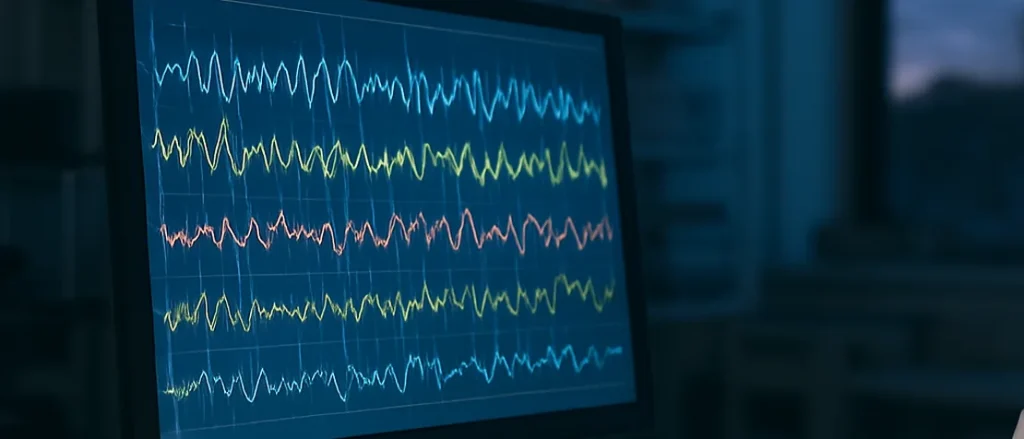

Scientists have found that word meanings are stored in complex patterns across many neurons in the hippocampus, a brain area known for memory. The findings come from a study by a team from Baylor College of Medicine, Rice University, UC Berkeley and Texas Children’s Hospital, published in the journal Nature Neuroscience.
Neuroscientists are interested in how the brain goes beyond hearing sounds to work out what words mean and how those meanings shift with the situation. The team drew on ideas from large language models (LLMs), the systems that power tools such as ChatGPT and Gemini, to examine these patterns.
How researchers recorded brain activity during listening
The scientists recorded brain activity from 10 people as they listened to stories. They used tiny wire electrodes, which were temporarily placed in the patients’ brains during routine epilepsy monitoring.
After collecting the data, the team used mathematical models to analyse the language. They compared the recorded brain activity with word data created by AI models that processed the same stories.
Brain activity matched closely with GPT-2 data
The recorded brain activity matched most closely with data from AI models such as GPT-2. The researchers found that the patterns held detailed information about how word meanings change with context.
The scientists also studied polysemy, where one word has several related meanings. They found that the human brain uses wide networks of neurons to understand spoken language, much as AI systems use mathematical measures of differences between data points.
What the findings could mean for brain research
The study offers a new way to understand how hippocampal neurons store word meanings during everyday conversation. In the future, the approach could help scientists use advanced AI to explore how the human brain works.