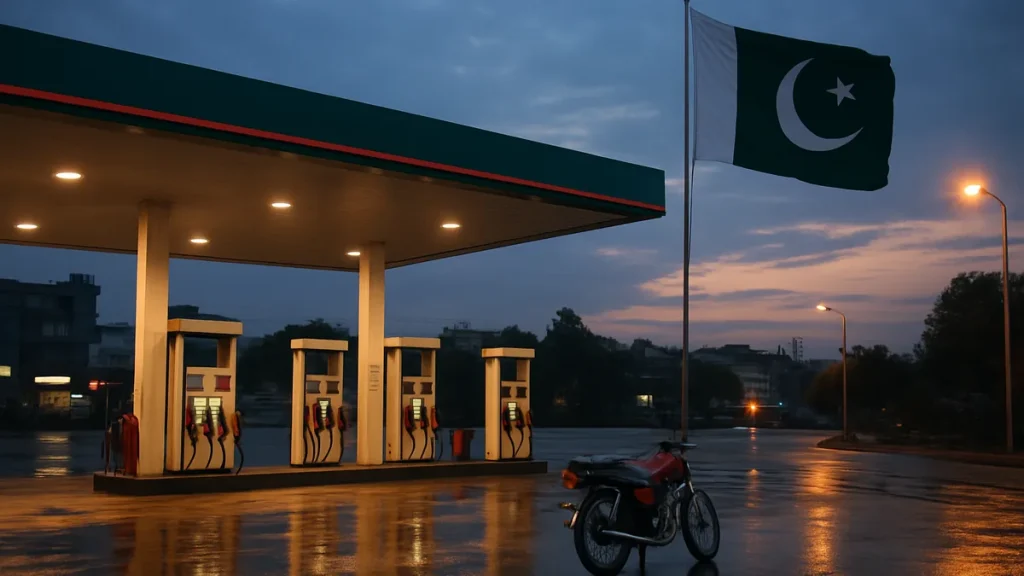
Jamaat-e-Islami (JI) chief Hafiz Naeemur Rehman said on Tuesday that the party will hold its planned march on Islamabad in mid-November and will not delay it again. He made the announcement at a press conference in the capital after meeting Prime Minister Shehbaz Sharif, a meeting that did not produce a breakthrough over the petroleum levy.
The government had asked for more time to work out relief measures on the levy. Rehman said the march would take place regardless of what happens next, and he said the party would keep preparing for it.
Mid-November march date confirmed after Sharif meeting
Rehman said the party had already announced protests and sit-ins in 150 cities across Pakistan against the levy. He warned at that time that JI was preparing a long march to Islamabad if the government did not give the public relief. He repeated that warning on Tuesday.
Also read: PM Shehbaz to chair apex committee meeting in Peshawar
He said the party would launch a nationwide mobilisation campaign while leaving room for further talks. “We will continue negotiations, but we will not abandon our Islamabad march,” he said. He added that the government should announce a relief package and take concrete steps to end the levy before the protest takes place.
Rehman also warned that, if no relief came, JI could stage a sit-in on the streets. He said the party was ready for every option.
Dispute over immediate abolition and IMF commitments
Rehman said the government had agreed to widen the scope of relief, but the two sides still disagreed on how it should be delivered. JI wants the levy scrapped at once, while the government has proposed phasing it out gradually. “We want the levy abolished. They say they can phase it out,” Rehman said.
He said the government needed to offer relief that people could actually see in lower fuel prices. According to Rehman, the government has asked for another seven to 10 days to refine its proposed measures. He said JI would keep talking but would not pause its preparations for the march.
Responding to reports that the government was considering an initial cut of Rs20 to Rs30 per litre in the levy, Rehman said the government had several options. He said JI remained firm on full abolition. He also said the government had pointed to its commitments under the International Monetary Fund (IMF) programme as a constraint, an argument he said successive governments had used while imposing hardship on the public.
“Governments should not pass the burden of their incompetence on to the people,” he said. He added that JI had presented alternatives and was ready to explain them in detail.
Rehman questioned why refinery margins had risen while international oil prices were climbing. He said consumers should benefit from changes to the domestic pricing structure as well as from the removal of the levy. He acknowledged that regional instability and the ongoing conflict had affected global oil prices, but he said the government should still ease the burden on consumers.
JI cites past protest wins and wider economic grievances
Rehman claimed that earlier protests organised by JI had pushed the government into reversing some fuel price increases. He cited an increase in the petroleum levy from Rs80 to Rs160 per litre, saying protests had forced the government to back down. He also recalled a Rs32 cut in diesel prices during the party’s sit-ins.
Rehman rejected criticism that JI was negotiating with the government. He said it was necessary to deal with those holding executive authority in order to secure relief. “Whether they are called a Form 47 or a Form 48 government, the prime minister is the signing authority,” he said, referring to allegations about the legitimacy of the government formed after the 2024 general elections.
He said JI regarded peaceful protest as its responsibility and urged other political parties to back the campaign. He added that the party wanted the dispute settled peacefully, arguing that Pakistan could not afford a further deterioration in the situation.
Rehman said JI was also raising other economic concerns, including falling cotton production, difficulties faced by farmers, rising liquefied petroleum gas (LPG) prices and gas shortages. He accused the government of failing to address these problems adequately.