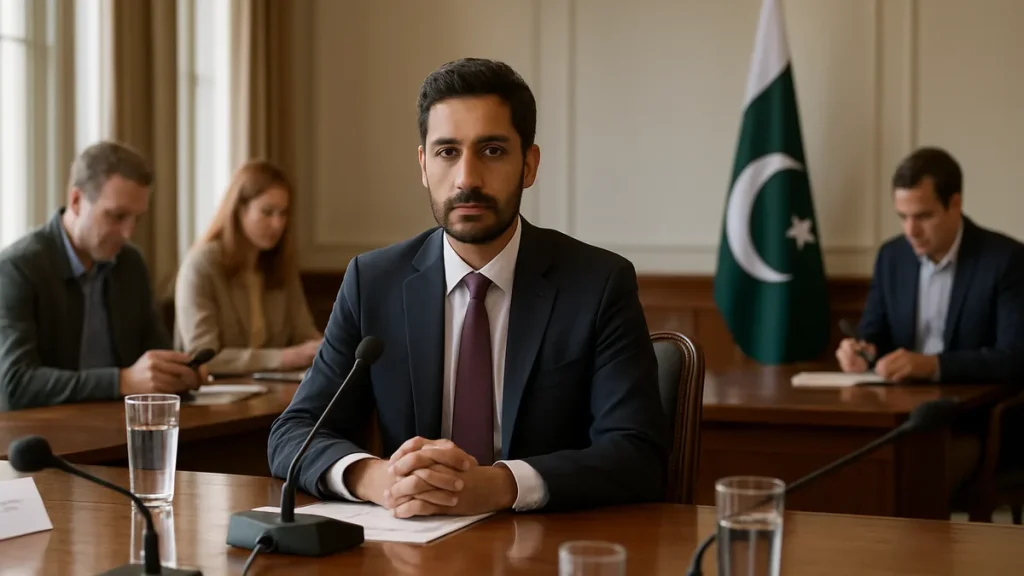
Senior journalists, anchorpersons, press union representatives, political leaders and civil society members have formed a united alliance in Islamabad to protect freedom of expression and expand civic space. The move came at a roundtable titled “How to Strengthen the Custodians of Free Speech to Expand the Space for Freedom of Expression?”, which was moderated by senior journalist Munizae Jahangir and presided over by veteran journalist Nasir Zaidi.
Speakers warned that censorship, legal harassment, economic insecurity and restrictions on digital communication were weakening independent journalism across the country. The gathering brought together elected journalist unions from Punjab, Sindh, Khyber Pakhtunkhwa, Balochistan, Azad Jammu and Kashmir and Gilgit-Baltistan to assess the challenges and discuss practical ways to protect reporters.
Speakers call for records of restrictions and party roles
Prominent anchorperson Hamid Mir said journalists from the provinces and regions had described long-standing limits on expression. He argued that the part played by political parties in introducing and passing restrictive laws needed to be documented. Mir cited figures of around 500 cases registered under the Prevention of Electronic Crimes Act (PECA), including 35 against journalists, but said these numbers required independent verification.
Mir also pointed to a proposed bill to regulate social media use by children under 16, which he said would penalise parents for violations committed by their children. He proposed preparing a white paper that would record restrictions on expression and the role of parties in enacting them.
Veteran journalist Mujeebur Rehman Shami said the core problem was not a lack of laws but the failure to enforce existing ones. He said legislation had been enacted repeatedly while enforcement stayed weak, and he proposed a comprehensive document analysing the relevant laws, how they were implemented and their effect on expression.
Senior journalist Sohail Warraich said protecting free expression was a responsibility shared by society as a whole. He called on political and social forums to state their position openly and ensure that their actions matched those commitments.
Veteran journalist Najam Sethi said political parties were not strong defenders of expression and were failing to protect people’s rights. He said self-censorship had damaged journalism and that media owners imposed restrictions when journalists did not censor themselves. Sethi described the situation as dismal and argued that sustained protest was one of the few ways to resist restrictions, but only if journalists and their organisations put aside their differences.
Senior journalist Asma Shirazi said PECA should not be enacted or used to suppress journalists. She expressed particular concern about online trolling and harassment targeting women, which she said was often dismissed as a minor offence even though it pushed many women off social media. Senior journalist and editor Arifa Noor said violations against journalists and media censorship were not being properly documented, and that this gap needed to be closed.

Provincial reporters describe threats and economic strain
Senior journalist Saleem Shahid said reporters in Balochistan faced threats from non-state actors, political parties and religious groups, and that self-censorship was spreading. He said television channels had cut their provincial reporting teams to a single reporter and cameraman, leaving many journalists out of work, and that the provincial government had not provided adequate relief to unemployed media workers.
Karachi Union of Journalists President Tahir Hasan said self-censorship had become the norm across Pakistan, although journalists working in Sindhi-language media continued to report relatively freely in Sindh. He said the economic crisis had pushed many journalists out of the profession and that political divisions had weakened journalists’ organisations. He urged all stakeholders to take an active part in defending free expression.
PFUJ Khyber Pakhtunkhwa chapter Vice President Nasir Hussain said the situation in KP resembled that in Balochistan, with security threats, censorship and economic hardship. He said more than 30 journalists had been killed in the province since 9/11 and that the Peshawar Press Club had been targeted in a terrorist attack. According to Hussain, 22 journalists faced threats in 2025, and he estimated that around 60% of journalists in the province had lost their jobs.
Punjab Union of Journalists Secretary General Qamar Bhatti said PECA cases were frequently used to threaten and intimidate reporters. He raised concerns about alleged excesses by Punjab Enforcement and Regulatory Authority (PERA) officials against ordinary citizens and questioned why large government advertising budgets were flowing to media organisations without scrutiny of whether journalists were paid on time. Senior journalist Arif Wahab said reporters in AJK were working in an atmosphere of fear, and that an internet disruption lasting more than three months had badly affected them.
Government defends cybercrime rules and social media oversight
Federal Information Minister Attaullah Tarar said freedom of expression was a fundamental right, while noting that the Constitution recognised it subject to certain conditions. He defended proposed amendments to cybercrime legislation, arguing that the rules governing traditional media could not adequately deal with social media. He said newspapers and television channels had mechanisms such as codes of ethics and the Pakistan Electronic Media Regulatory Authority (PEMRA) for handling complaints, and that PEMRA’s complaints councils included journalists’ representation.
Tarar said the absence of comparable mechanisms for social media had left gaps in dealing with online threats, harassment and blackmail. He also said terrorists and radical elements were active online, and that the government’s position was not intended to undermine free expression. He said the Journalists Protection Commission had been established and was now operational, and that consultations on the National Cyber Crime Investigation Agency had included assurances that journalists would not face action under multiple laws for the same offence.
Tarar urged media organisations to submit their concerns in writing so that the law could be implemented better, and he called for closer coordination between the government and media bodies. Former PPP senator and human rights activist Farhatullah Babar, meanwhile, urged the alliance to engage political parties directly and to present clear demands. He also said the Journalists Protection Commission’s membership remained incomplete and called for a personal data protection law and a legal framework governing surveillance.
Pakistan Federal Union of Journalists Secretary General Arshad Ansari said a united alliance was urgently needed and that journalists’ unions must lead the effort. He said press clubs served as social platforms, while unions were responsible for defending professional and economic rights. Ansari expressed concern over the lack of arrests or convictions in the killings of 51 journalists and said PFUJ had challenged PECA in court, though the case remained undecided.
Ansari criticised the 2025 amendments to PECA and questioned whether parties that had opposed the law while in opposition would back journalists if they launched a long march against it. He warned that the proposed expansion of cybercrime enforcement powers could deepen impunity without safeguards. He said journalists would invite other sections of society to join a protest camp in Islamabad as part of a coordinated agitation.