San Francisco is enjoying an AI-driven revival, with new hiring, rising property costs and fuller office buildings. At the same time, concern is growing that a significant downward correction in AI share prices could hit the city’s economy hard.
The city is home to leading AI firms OpenAI and Anthropic, which have been recruiting top engineers, often on very high salaries. Anthropic, the company behind the Claude chatbot, listed on New York’s Nasdaq stock exchange last week, and thousands of smaller AI start-ups have also emerged in the city.
How the AI boom is lifting local businesses
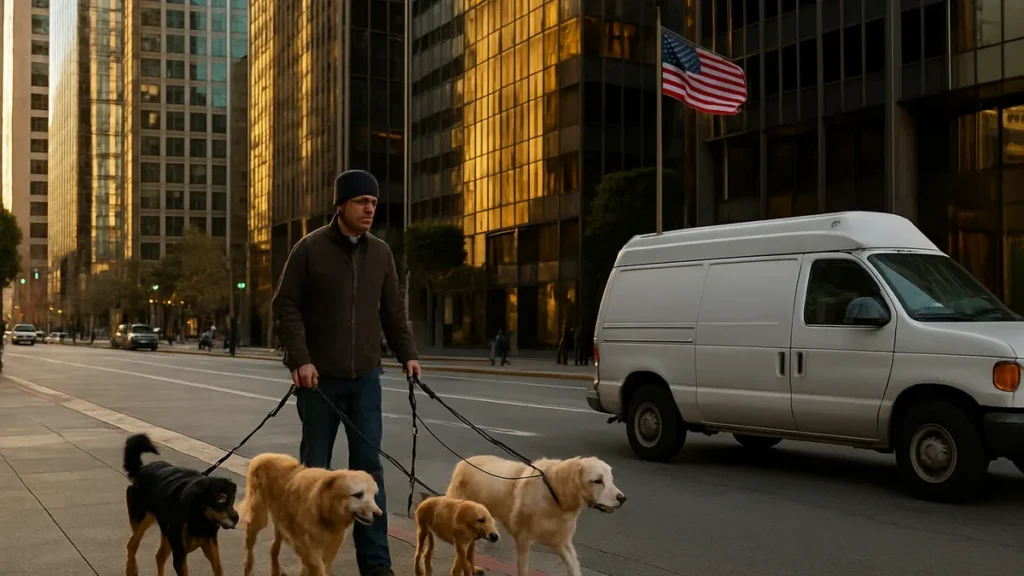
Lauren Goldboss, who owns a small dog-walking company in San Francisco, has been hiring staff and buying vans to keep up with demand. Much of that growth comes from her office dog-walking service, Paw Perk, which is popular with some local AI start-ups.
Also read: Anthropic debuts on Nasdaq at $2 trillion valuation after IPO
Her experience reflects a wider pattern in which the AI boom is benefiting other sectors. San Francisco lost many residents during the pandemic and its downtown was weakened by remote working, but AI has become the main force driving a recovery.
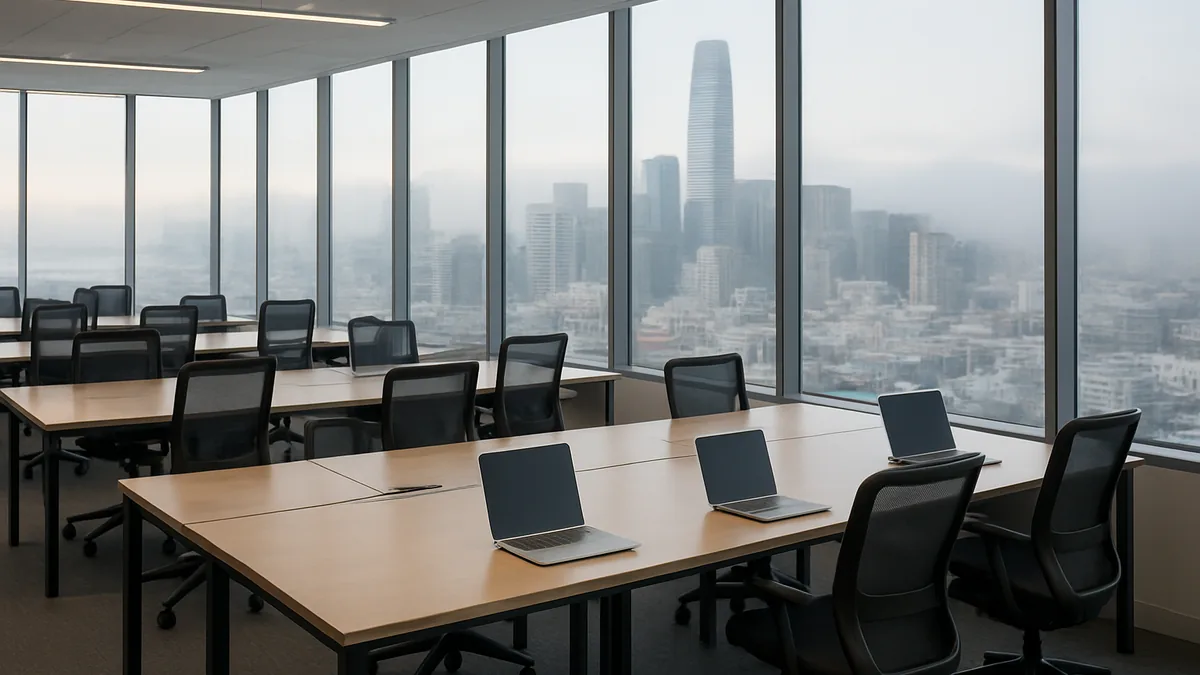
The signs are visible across the city. Rents and house prices are rising sharply, office vacancies are falling, and buses and billboards are covered in cryptic AI adverts.
Workers and economists weigh the risk of a crash
The International Monetary Fund last month warned that a sharp fall in AI share prices and a resulting drop in investment in the industry was a possibility. Those concerns have continued since then, following a scandal involving Jensen Huang, the former head of the chipmaker Nvidia, which is based south of San Francisco. The scandal has contributed to some wider falls in AI stocks.
Nvidia nonetheless remains highly profitable. This week it reported that its latest quarterly profits had doubled from a year earlier to $65bn (£49bn).
One AI worker at one of the city’s largest companies said he was convinced a crash was coming. He asked not to be named and said: “I am certain that the house of cards will come down… and I’m sure it will affect me.” He questioned whether leading US AI companies could generate enough revenue to justify their huge spending commitments, especially as cheaper and increasingly capable models emerge, particularly from China. Still, he said he was not losing sleep over it.
Another AI worker in the city, who also asked to remain anonymous, said a significant market correction was “totally possible”. He said that most people did not see this as the core risk, and that his own bigger concern was the existential risk that AI could pose to humanity.
San Francisco could be hit harder than Silicon Valley, which lies 40 miles to the south, because the AI boom is concentrated in the city itself rather than the wider Bay Area. One study found that 60% of all venture capital invested in US AI firms from 2023 to 2025 went to companies located in San Francisco, far more than the much smaller share going to Silicon Valley.
Why the impact of a downturn may be softer
Some factors suggest the effect of a crash may be less severe than some fear. Despite the large sums invested, AI companies employ relatively few workers in the city compared with previous tech booms, so there may not be many jobs to lose.
Jeff Bellisario, executive director of the Bay Area Council Economic Institute, a think tank affiliated with business, said hiring was not necessarily on the scale expected given the level of venture capital and new company formation. Ted Egan, the chief economist for the City and County of San Francisco, said that because of AI it was a good time for tech in the city again, but that overall tech job growth was not strong.
Enrico Moretti, an economics professor at the University of California, Berkeley, estimates that the city remains about 35,000 jobs short of its pre-pandemic peak. Much of the AI spending across the US is also going to data centres and computing power, relatively little of which is located in the Bay Area.
Moretti nonetheless warned that a significant correction could be “very painful” for San Francisco. Reduced AI hiring and potential layoffs would ripple through the local service sector, affecting restaurants, retail and personal services such as dog walking. Emptier offices could also reduce downtown foot traffic, while rents and house prices could weaken.
Healthcare and tourism are also growing, which may help cushion the city against an AI downturn. Egan said tourism was not fully back but that its growth had been healthy. Egan does not expect a crash to fundamentally change the city’s economic path, describing it as “primarily a hiccup that we should expect, rather than a major course correction.”
Bellisario and Moretti noted that the city government has limited options, but said that encouraging growth in sectors beyond technology and maintaining financial reserves could help. For Goldboss, the approach is to “build while it is here”. If the next tech bust comes, she said she would try to adapt to what the market needs, adding that it is “just the risk you kind of have to take.”