Russia is stalling US-mediated talks on ending the war in Ukraine, and the demands it has put forward go far beyond any peace settlement, according to analysts. Russian diplomats presented the demands to US negotiators in Abu Dhabi last week, during trilateral talks that also involved Kyiv and Washington. Analysts said that if accepted, the demands could dismantle Europe’s post-Cold War security framework.
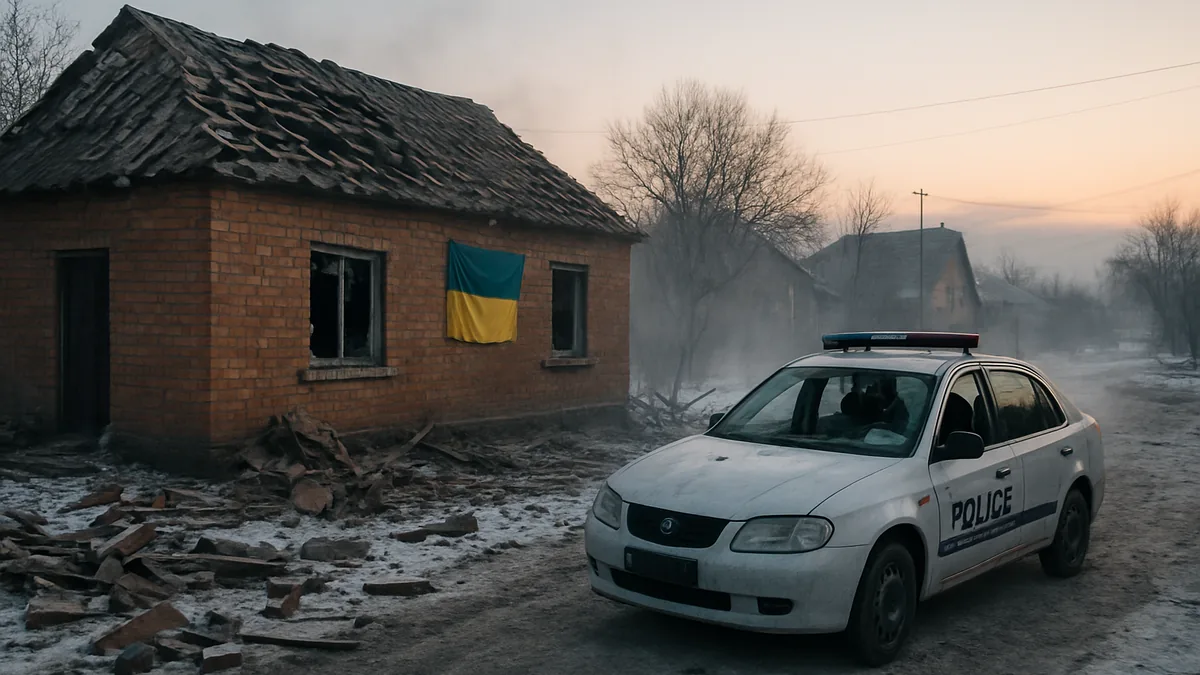
The human cost of the war was also highlighted this week. A Russian drone struck a small house in the northern Ukrainian town of Hlukhiv, trapping a nine-year-old boy and his grandmother under the debris. Two police officers arrived on Saturday to dig them out and take the injured grandmother away, but a second drone hit their vehicle. The Ministry of Internal Affairs said one of the officers, Mykola Savchenko, was killed after shielding the boy with his body.
Russian demands reach well beyond a settlement
On the surface, Moscow is taking part in diplomacy led by the United States. However, the talks have not moved toward the ceasefire that Kyiv has sought. Russia has not agreed to Ukraine’s proposal to freeze the fighting along the current front lines. Kyiv’s position is weaker because Ukraine lacks Western missile interceptors to shoot down Russian missiles and jet-powered drones.
Also read: Ukraine peace talks resume in Abu Dhabi with new flexibility · Russia Setting Traps in Ukraine Talks, Kallas Warns
Analysts said the Kremlin has shifted the focus of the talks away from a ceasefire and peace toward a set of security demands. According to leaked documents obtained by several newspapers and Ukrainian media outlets, Russia wants NATO to pull its troops out of Central and Eastern Europe. Moscow also wants the alliance to be barred from further expansion.
Bilateral pacts could erode NATO’s collective defence
Russia has also proposed nonaggression pacts with individual European countries, an offer that could appeal to neighbours such as Estonia and Finland. Russian negotiator Alexey Drobinin said at a news conference after the Abu Dhabi talks that such agreements could come with individual security guarantees from Moscow for NATO members.
Critics warn that a series of such deals could effectively cancel NATO’s core principle that an armed attack on one member is an attack on all of its 32 members. Boris Bondarev, a former Russian diplomat who left the foreign ministry in protest against Moscow’s full-scale invasion of Ukraine in 2022, was blunt about the risk. “NATO will collapse, and European nations will [individually] be face to face with Russia,” he said.
Bondarev also argued that such pacts would likely include conditions barring a signatory from joining any future conflict between Russia and another European country. In his view, this would destroy the possibility of collective defence against Moscow. He described the approach as an attempt to demolish Europe’s unity and undermine NATO’s unity.
Divided responses to the Abu Dhabi round
Russia’s demands were presented to US special envoys Jared Kushner and Steve Witkoff, but not to European leaders. Maria Kucherenko, executive director at the Strategic Intelligence Institute, a Kyiv-based think tank, said Moscow wants to deal with Washington rather than Europe. She said the “maximalist” demands reflect the Kremlin’s long-standing habit of asking for everything, and she warned that Moscow would put politics ahead of security.
Kushner, a real estate developer and son-in-law of US President Donald Trump, described the talks as very hard and complex. “It’s a very hot war,” he said at a news conference. Ukrainian President Volodymyr Zelenskyy, for his part, said Putin “lives in a different reality” in a post on X on Wednesday. Speaking later at a news conference, he said that no one fully understands what Russia wants.
Davyd Arakhamia, a top Ukrainian negotiator who has taken part in every round of talks since 2022, said the latest round was among the most difficult. He said he believed the Russians had arrived with very strict instructions, which made it hard to ease the discussions.
Upcoming votes in France and Germany raise stakes
Stalling the talks may not only weaken Kyiv and demoralise Ukrainians. It could also give Russia time until it is politically stronger in key European nations. French far-right leader Marine Le Pen has pledged to phase out France’s military and financial aid to Ukraine within six months if she wins the presidential election in April. She is currently the frontrunner.
In Germany, the ruling coalition faces strains over the budget, debt and economic stagnation. If it collapses, the far-right Alternative for Germany (AfD) is positioned to win a snap vote, leading national polls and well ahead of the Christian Democratic Union of Chancellor Friedrich Merz. The AfD also wants to end aid to Ukraine, push for immediate peace talks with Moscow and lift sanctions so Germany can again buy Russian oil and gas.
If Le Pen and the AfD succeed, Ukraine would face greater strain with its allies at a time when the Trump administration is already pressing Kyiv to compromise on its sovereignty. Aleksey Kusch, a Kyiv-based analyst, warned that Ukraine would struggle to withstand a joint position from the European Union and the United States. “A chance to manoeuvre between Washington and Brussels will be lost,” he told the source outlet.