The race to replace outgoing United Nations Secretary-General Antonio Guterres is entering its final weeks, with global powers sparring over candidates in an opaque selection process. Guterres must leave office on December 31, and the choice of his successor remains unresolved. Diplomats and analysts have raised the prospect that the new year could begin without a leader at the head of the world’s central diplomatic organisation, which would be unprecedented.
Eight candidates are in the running, and secret polls and geopolitical rivalries are shaping the contest. The late entry of two nominees, Emirati diplomat Lana Nusseibeh and Turkish nominee Feridun Sinirlioglu, has further opened up the race. So far, no candidate has overcome opposition from all five permanent members of the UN Security Council, which hold veto power.
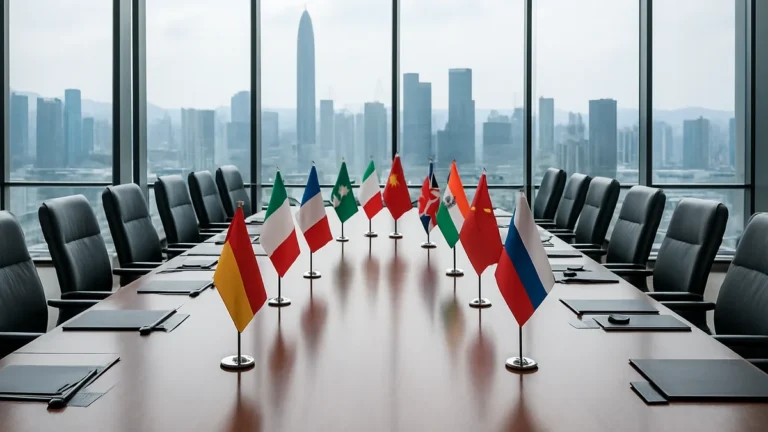
Great-power rivalries complicate the Security Council contest
Georgina Holmes, a senior lecturer in politics and international studies at the Open University in the United Kingdom, described the contest as a struggle over who will wield political influence within the UN. She said this is taking place at a time when multilateralism is under considerable pressure. Holmes also said the permanent members of the Security Council are less politically aligned than in previous eras, arguably even during the Cold War.
The secretary-general is often compared to a “secular pope”, a figure expected to unite countries and lead global diplomacy. The post is also the UN’s top administrative role, responsible for appointing senior officials and overseeing the Secretariat’s tens of thousands of staff. Jan Klabbers, a professor of international law at the University of Cambridge, said the job requires a skilled politician, diplomat, mediator and administrator. He described it as “the most difficult job in the world”.
The contest comes as the UN is under heavy strain. The organisation has been sidelined from conflicts in Iran and Ukraine, has faced sharp criticism from US President Donald Trump, and is dealing with a financial crisis that has forced it to cut thousands of staff. Candidates are also being scrutinised over their nationalities and policy positions, reflecting wider rivalries among member states.
Grynspan leads straw polls while rivals lobby for support
Eight candidates have been appointed by UN member states. Most come from Latin America or the Caribbean, in line with informal UN protocol on regional representation. Five of the eight are women, amid a push for the UN to choose its first female secretary-general.
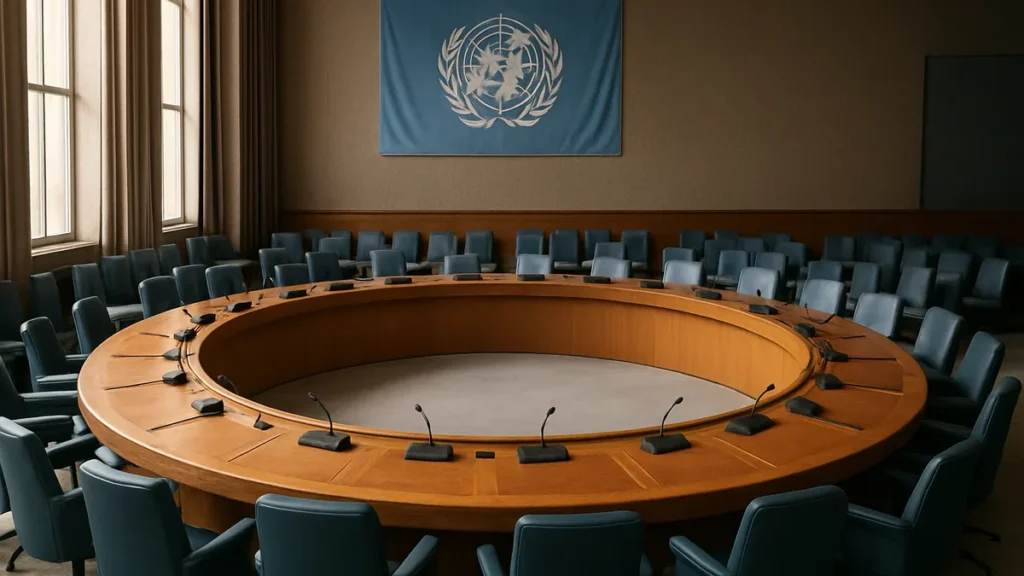
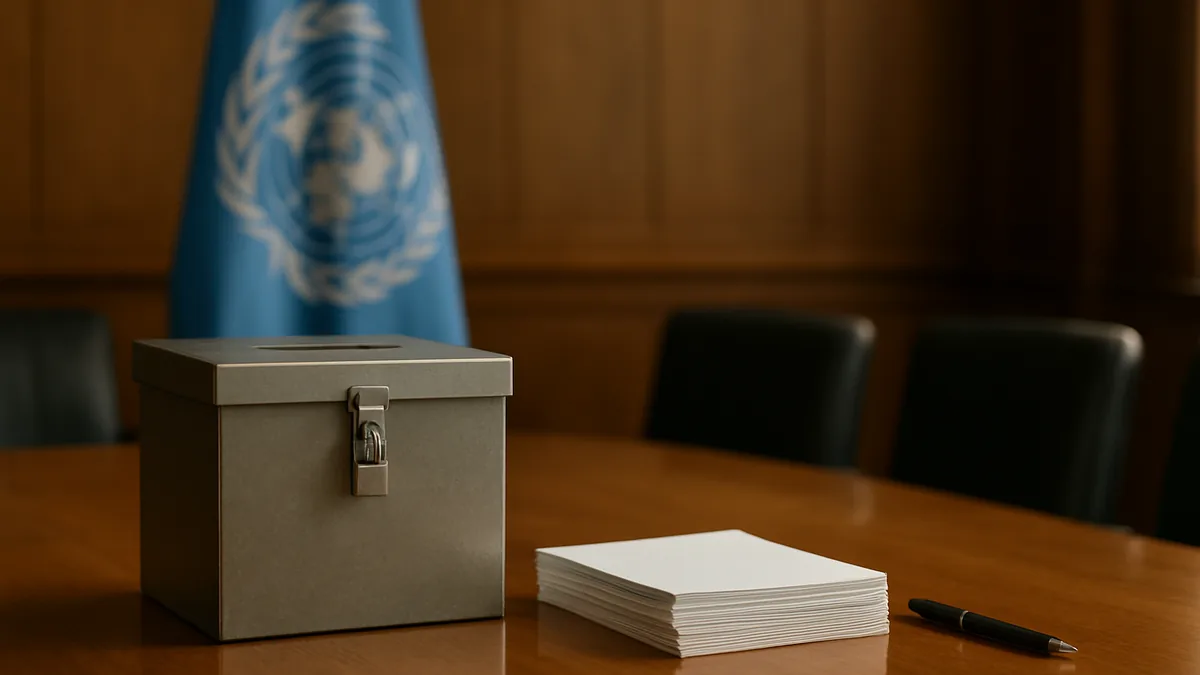
The Security Council holds anonymous straw polls to gauge support, and the results do not show how individual members voted. According to a nonprofit that reports on UN affairs, the latest poll on November 5 gave the following results:
- Costa Rican diplomat Rebeca Grynspan: 12 “encourage” votes and three “discourage” votes
- Argentinian Rafael Grossi, head of the International Atomic Energy Agency: nine “encourage” and four “discourage” votes
- Lana Nusseibeh of the UAE: six “discourage” votes
- Feridun Sinirlioglu of Turkiye: eight “discourage” votes
- Ugandan politician Olara Otunnu: nine “discourage” votes
- Guyanese diplomat Carolyn Rodrigues Birkett: five “discourage” votes
- Maria Fernanda Espinosa of Antigua and Barbuda: 10 “discourage” votes
- Ecuadorian diplomat Ivonne A-Baki: 14 “discourage” votes
Grynspan, who heads the UN Conference on Trade and Development, has been described as a “continuity candidate”. Some observers, however, question whether she would bring enough reform to an organisation under severe political and financial pressure. Richard Gowan, programme director for global issues and institutions at the International Crisis Group, said she had “solidified her position as the frontrunner”. He added that she still appears to face opposition from the US and Russia, both of which could veto her bid.
Grynspan has avoided directly confronting any veto-holding country. Some of her reports as UNCTAD head, however, have raised concerns about Israel’s actions in Gaza and the occupied West Bank, a position at odds with Washington’s firm support for Israel. She has also disagreed with Russian justifications for suspending a Black Sea grain transport deal. Like other candidates, she is reportedly lobbying key member states, and in April she met Russian Foreign Minister Sergei Lavrov about her candidacy.
Grossi finished second in the latest poll, but his close alignment with Washington is expected to count against him with some permanent members, especially China and Russia. Gowan said Grynspan’s team believes it can still persuade Washington and Moscow to accept her, and that US officials appear open to working with her.
Late entrants face opposition and the veto threshold
To be elected, a candidate needs at least nine votes in favour in the 15-member Security Council and must avoid any veto from the US, the UK, France, Russia or China. The 193-member General Assembly must then formally approve the choice. Ben Donaldson, an adviser to the 1 for 8 Billion campaign, a civil society group pushing for a fair and open selection process, noted that opposition in a straw poll does not automatically mean a veto later.
Donaldson said such opposition has in the past been used to extract concessions, often in the form of backroom deals to place a permanent member’s national in a senior role in the future secretary-general’s cabinet. Nusseibeh is reportedly favoured by the US and Russia, but her candidacy has faced pushback over the alleged arming of paramilitary forces accused of atrocities in Sudan. The UAE has denied the allegation. Gowan said her main challenge is winning over China, which has so far appeared sceptical. Diplomats cited by a media platform said the US and Russia had backed Nusseibeh earlier this month, while France and the UK offered little resistance. Press reports said China has signalled a preference for a Latin American candidate, although Beijing has not publicly endorsed anyone.
Greece is expected to oppose Sinirlioglu’s candidacy. Separately, reports said the US had floated far-right former Hungarian Prime Minister Viktor Orban as an outside option, although he is not an official candidate. Several analysts said Grynspan appears best placed, but the influence of permanent members could still change the race.
Timing concerns as the year-end deadline approaches
Adam Day, head of the Geneva office of the United Nations University Centre for Policy Research, said this year’s contest has been longer and more contested than the races that elected Guterres in 2016 and Ban Ki-moon in 2006. He noted that some earlier races also ran into December. Day added that the longer the process takes, the less time the incoming secretary-general has to prepare for a transition.
The UN Charter does not set out an automatic interim successor if no one is chosen by the end of the year. Any gap would therefore require the Security Council and other UN bodies to agree on how to manage leadership and operations. Ellen Ravndal, an associate professor of political science at the University of Stavanger in Norway, said the drawn-out process reflects an era of “more geopolitical tensions” and a UN in “near-constant crisis mode”.
Donaldson warned that there is widespread concern that the US and possibly other influential states are running down the clock. He said this could be aimed at pressuring member states to settle for a less popular candidate, or at leaving the UN without a leader and weakened for a period.