Trilateral talks in Abu Dhabi between Russia, Ukraine and the United States, aimed at ending the war in Ukraine, have concluded after a second day without any breakthrough. The American side said it saw “some openings”, but there was no sign of a deal that could bring the nearly five-year conflict, which was sparked by Russia’s invasion, to an end.
Ukraine’s negotiator Davyd Arakhamia described this round, the first since February, as “one of the hardest”. He said the Russian side had arrived with very strict directives, which made it extremely difficult to soften the discussion. Even so, he said he felt “good momentum” and urged that a second round be organised as soon as possible. Both Moscow and Kyiv confirmed that a large-scale prisoner of war exchange was being prepared and could take place soon.
Abu Dhabi talks centre on Europe’s security architecture
The latest round had been framed around the “security architecture” of Europe. For Kyiv, this may include assurances that allies would come to its aid if Ukraine were attacked again, even though it is not a Nato member. For Moscow, it is likely to involve limiting Nato’s influence in eastern Europe, a long-standing concern for the Kremlin since the alliance expanded eastward.
Also read: Europe Must Have a Say in Ukraine Peace Deal, G7 Ministers Say
Earlier in the week, Jared Kushner said Washington hoped to “create a new framework” of security between Ukraine, Russia and Europe that could “secure lasting peace”. Kremlin negotiator Vladimir Medinsky said the world needed a “new” and “fair” security system.
After the talks, it was announced that on Thursday the US negotiators, Steve Witkoff and Kushner, would travel to Moscow to meet President Vladimir Putin. They will then go to Dublin to speak with Ukrainian President Volodymyr Zelensky. Kushner is President Donald Trump’s son-in-law.
Ceasefire timing and Europe’s role remain disputed
Representatives of Britain, Nato and several EU countries were also in Abu Dhabi and met with US and Ukrainian negotiators. The Kremlin, with which the EU does not officially communicate, said its delegation had not had any contact with them. Moscow has been dismissive of European involvement, although European countries have long argued that they are central to any post-war arrangements on their continent.
Ukraine and Europe have long worried about the current US administration’s commitment to European security and its softer stance towards the Kremlin. Many people in eastern Europe feel their own security is tied to that of Ukraine. A German government spokesperson said on Wednesday that agreements cannot be implemented “if no consensus can be reached among Nato members”.
Kushner said the US was keen to bring the Europeans on board and that getting them “added to the format” would be on the agenda when he meets Putin. The sides also disagree on sequencing. The Europeans and Kyiv want a ceasefire before discussions on a future security framework, while the Kremlin has insisted that fighting stops only after an agreement is reached.
Kushner said any agreement on a peacetime security framework depends on the war ending. However, he said that cannot happen “until there’s an agreement on territory and on all other bilateral issues”.
Donetsk territory remains the main obstacle to a settlement
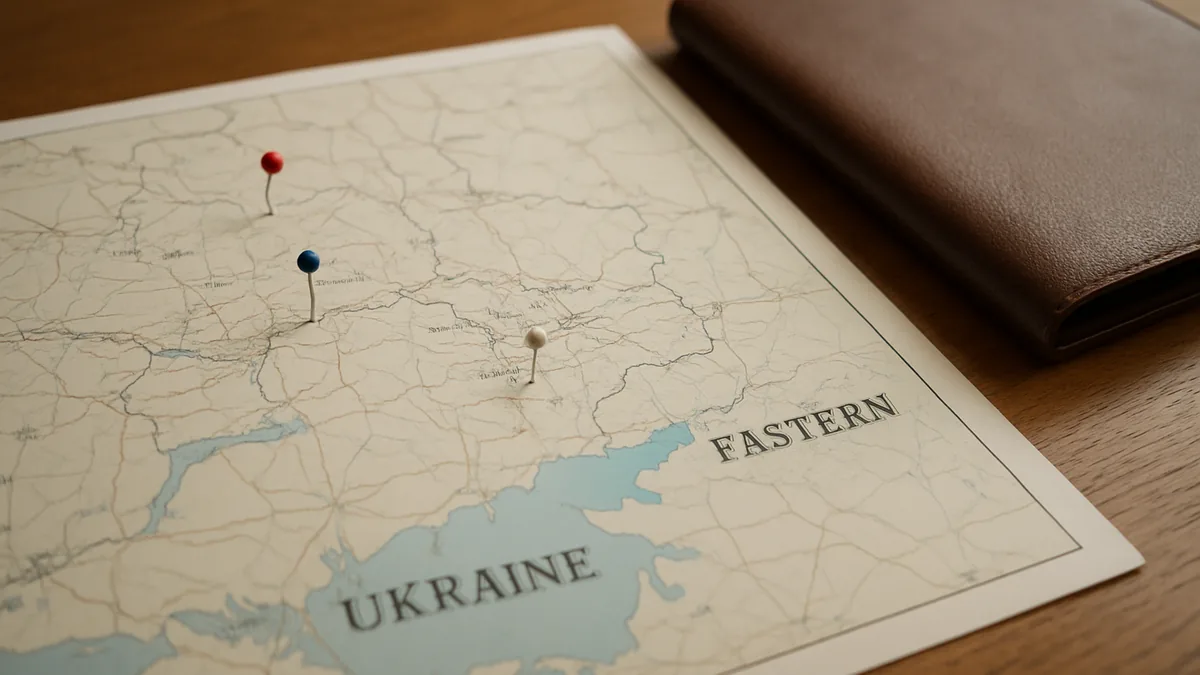
Since talks began last year, a core obstacle has been Ukraine’s eastern region of Donetsk, which is mostly occupied by Russia. Moscow has demanded that Ukraine give up the parts of Donetsk it still holds. Kyiv wants the contact line frozen so it can keep control of those areas.
Kushner acknowledged that this issue was the “hardest”. Zelensky’s chief of staff and negotiator, Kyrylo Budanov, declined to say whether Russia was still demanding a Ukrainian withdrawal from the region.
Kushner also described the situation in broader terms. “These deals are very hard and complex, and this one is very emotional, very complex,” he said. “The reality is there is no trust right now between the sides and that is to be expected after a conflict like this.”