Ukraine’s military said it had caused more than 26,000 Russian casualties in the first 10 days of November, a figure that could make this month a new record, topping October’s 54,400. The claim came as Ukraine, Russia and the United States held their first peace talks since February, in Abu Dhabi on November 10-11. Casualties refer to those killed and seriously wounded. cannot independently verify casualty claims from either side.
The front lines continued to shift against Moscow, according to Kyiv’s account, even though Russia has made no significant territorial gains. Ukraine’s military also said it had inflicted 2,980 Russian casualties on November 9, which it described as a new daily record and the fourth reported daily record this year.
Record casualty claims and little territorial gain
The cluster of record casualty figures this autumn, combined with the lack of major Russian advances, suggested Moscow was not getting closer to its goal of seizing the last quarter of Ukraine’s eastern Donbas region this year. Independent assessments indicate that Russia has seized a net 117 square kilometres (45 square miles) this year, which analysts described as a poor return for its losses.
A group of pro-Ukrainian hackers from Belarus said they had accessed records of Russia’s state statistics service, Rosstat. They said the records showed an official tally of 450,000 Russian fatalities since the full-scale invasion began in 2022. The figure has not been independently confirmed.
Hard positions at the Abu Dhabi talks
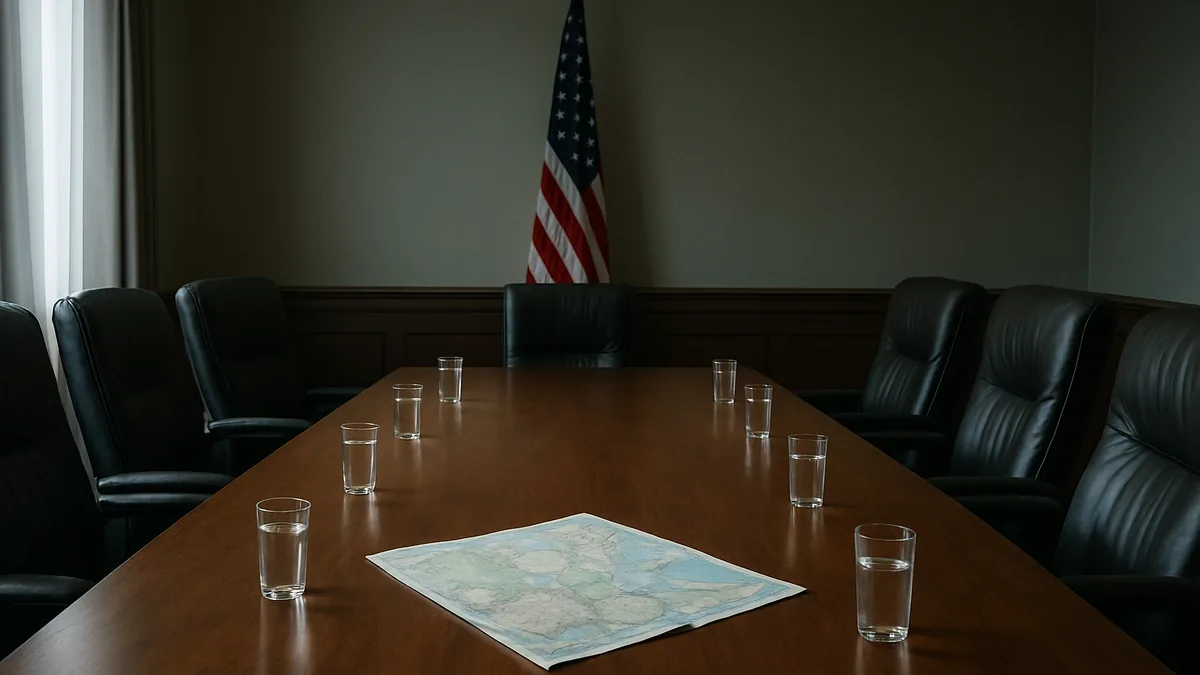
Despite the setbacks on the battlefield, Russia remained firm at the Abu Dhabi talks. Presidential aide Vladimir Medinsky, who led the Russian delegation, told Vesti television after the talks ended that he would be satisfied “only when we win and sign a peace agreement on our terms”. Russia has demanded territory that Ukraine is not willing to give up, and has said NATO must withdraw from all former Soviet bloc countries that joined the alliance after 1997.
Medinsky called for “a new, comprehensive, and just security system in Europe”, arguing that the system created after World War II was functioning poorly. Ukrainian President Volodymyr Zelenskyy rejected that framing. Speaking to the Danish parliament, the Folketing, he accused Russia of wanting to interfere freely in the affairs of other countries and to use force whenever it chose.
European powers were largely sidelined. US negotiators agreed to table the question of a European security architecture, but Germany, France and the United Kingdom, which were present, did not table it and were excluded from the proceedings. Medinsky said, “We did not communicate with them. We don’t really understand what their status is here.” Zelenskyy said that discussing European-Russian security was a complex and potentially dangerous idea, and that the war itself had to be ended first.
Ukraine has asked for a firm guarantee of military intervention if it is attacked again, similar to NATO’s Article 5. Zelenskyy said the Trump administration had instead offered “something similar to NATO”. Russian President Vladimir Putin met the US negotiating team in Saint Petersburg after the Abu Dhabi talks and repeated Moscow’s position that European peacekeepers in a post-war Ukraine would be “absolutely unacceptable”.
Zelenskyy said Russia’s uncompromising stance reflected a distorted view of the battlefield. He told journalists in Copenhagen that Russian military officers and intelligence had claimed to have occupied half of the Donbas territory that is actually under Ukrainian control. “Putin lives in a different reality,” he said. Russia’s defence ministry has claimed to have seized 3,600 square kilometres (1,400 square miles) of Ukraine this year, and Putin has repeated that claim.
Strikes on missile sites, refineries and energy grid
Ukraine’s General Staff said Russia had launched 3,519 drones over 10 days in the run-up to the talks, and that Ukraine had intercepted 3,068 of them. It said 83 percent of the jet-powered drones, which now make up roughly half the swarm, were stopped. On the night of November 7, Russia fired 36 ballistic missiles at Ukraine, some reportedly made in North Korea, striking energy infrastructure. Prime Minister Serhiy Koretskyi asked European allies for generators, battery packs, mobile shelters and buses to keep transport running during blackouts.
Ukraine also said it had lost some Starlink satellite access, which it needs to coordinate interceptors against incoming Russian drones. Zelenskyy said, “Due to the speed limitations, we simply cannot intercept them in time.” Kyiv has also been striking targets inside Russia. Ukraine’s strikes listed in the reporting included:
- November 7: a fire at a storage area next to an Almaz factory in Rostov, with no confirmation of Ukrainian involvement; Neptune missiles fired at the Proton-Electrotex conglomerate; and two ballistic missile launchers destroyed.
- November 9: the Morozov plant near St Petersburg, which makes solid rocket fuel, and the Redkino plant in Tver, which makes chemical products used in missiles.
- November 10: the 123rd Aircraft Repair Plant in Novgorod, which services Russia’s A-50 early warning aircraft.
- November 11: a cruiser that launches Kalibr and Onyx cruise missiles.
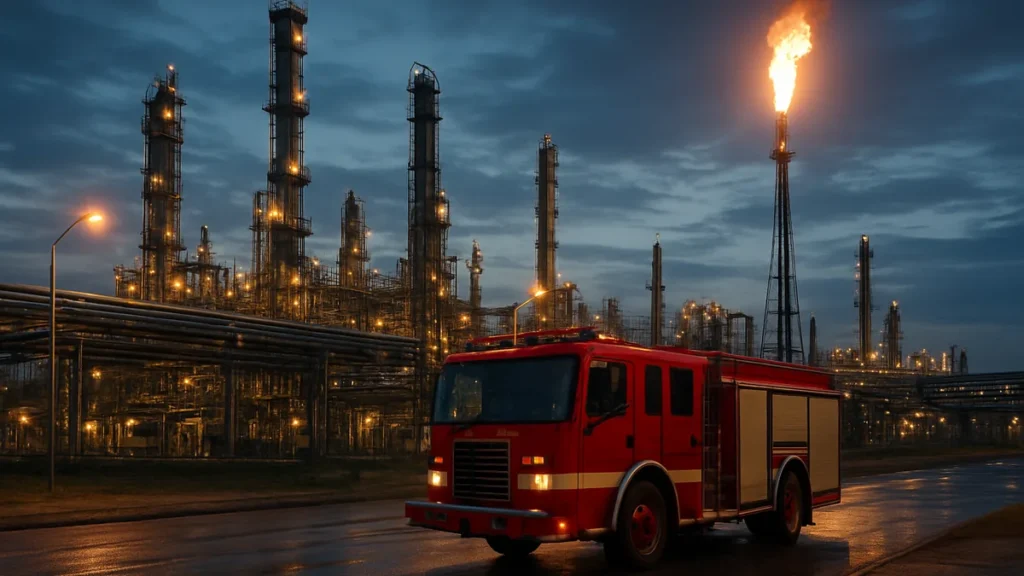
Ukrainian Defence Minister Yevhenii Khmara told his Dutch counterpart, “We are acting asymmetrically.” He said Ukraine had struck 12 ballistic missile launch sites inside Russia, without giving a timeframe, and that the factory strikes were reducing Russian production capacity. Zelenskyy again called for German Taurus missiles to hit Russian launchers. Ukraine also struck several refineries, including those at Afipsky, Saratov, Kirishi, Ust-Luga and Omsk. Russian military reporters said three Russian helicopters were downed by friendly fire while trying to defend the Ust-Luga refinery.
Economic pressure and prisoner exchange plans
Ukraine’s General Staff said it had hit Russia’s five biggest refineries since the end of October. Sources told Reuters that Ukraine had destroyed at least 30 percent of Russia’s refining capacity. The refinery strikes are aimed at cutting Russian export revenue for petroleum products and disrupting its economy.
Ukraine’s Foreign Intelligence Service reported that Moscow was projecting a deficit of $63bn to $67bn for 2026, double its intended figure. Russian media also reported staff layoffs at the parliament, or Duma, and the Federation Council.
Not all the talks’ outcomes were negative. Russia and Ukraine said they would carry out a new prisoner of war exchange of at least 1,000 prisoners on each side, and possibly 1,500. Zelenskyy said de-escalation steps had also been discussed.