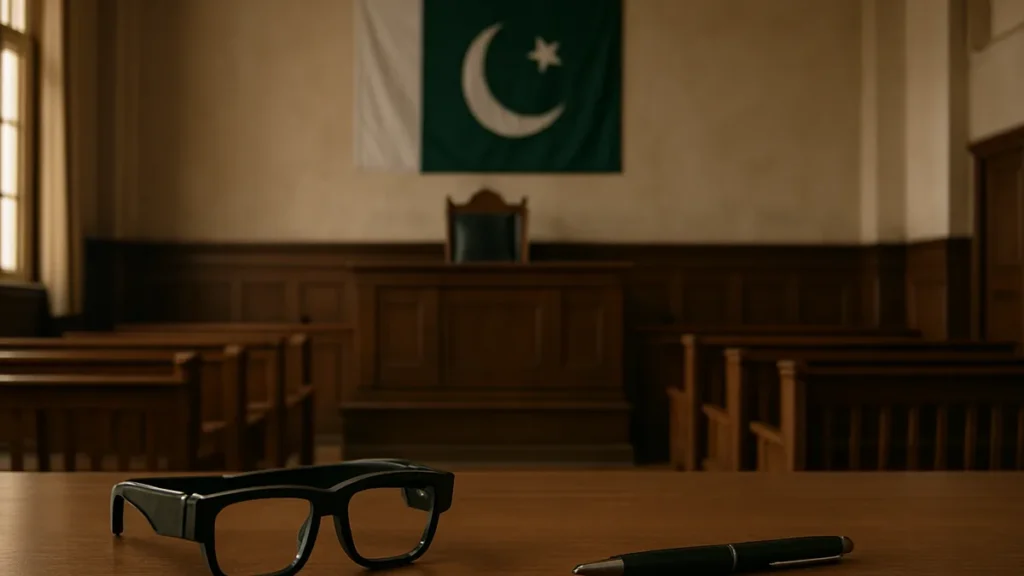
The Lahore High Court (LHC) has directed the Punjab government to submit a report on the steps it has taken to enforce restrictions on spy glasses and other covert recording devices. The order came on Thursday, several weeks after the provincial government announced a ban on their use under Section 144.
The provincial government had said it planned to use Section 144 to prohibit spy glasses, camera-equipped pens, key chains and button cameras, citing concerns about privacy violations and covert recording. Punjab Information Minister Azma Bukhari announced the decision on October 19. She said Chief Minister Maryam Nawaz had ordered the Home Department to crack down on the devices to protect citizens’ privacy and personal information.
Court presses provincial and federal governments for action
During Thursday’s hearing, the chief justice asked the provincial government’s counsel to file a report setting out the practical steps taken. The court also reviewed a report from the Ministry of Commerce, which told the court that provincial governments had also been approached on the matter.
Also read: CM Maryam Nawaz hits back at corruption critics in Punjab
The chief justice then asked the federal government’s counsel whether smart glasses had formally been taken up. The federal lawyer said the issue had been raised in line with judicial directions and sent to the Economic Coordination Committee (ECC). From there, it would go to the federal cabinet, the lawyer added, and letters had been sent to both federal and provincial governments. The chief justice asked the federal representative to clarify when the cabinet would take up the matter, and told the authorities to take practical measures before filing their report.
NCCIA reports no pending smart glasses complaints
Atif Amir, Additional Director of the National Cyber Crime Investigation Agency (NCCIA), appeared before the court and submitted a report. According to it, no complaint about recordings made through smart glasses was pending before the agency, and no application from a citizen affected by such recording was on file.
The petition seeks regulatory action against smart glasses that can capture photographs, audio and video. It cites concerns that the devices could be misused for harassment, illegal surveillance and blackmail.
The court adjourned further proceedings until November 18.