Syria has confirmed that it sent soldiers to Saudi Arabia, days after the Syrian president’s visit to Riyadh and as the kingdom continues its fight against Yemen’s Houthis. A Syrian government official told the state news agency SANA that the troops went in a “training, expertise exchange and military consultations” capacity. The confirmation came after Damascus had earlier denied initial reports of its involvement.
The reports followed a meeting between Syrian President Ahmed al-Sharaa and Saudi Crown Prince Mohammed bin Salman. Security and financial aid were central to the talks, which ended with Riyadh pledging $403m in loans to help Syria rebuild infrastructure damaged by 13 years of civil war.
Visit to Riyadh brings security and aid pledges
Syria’s Ministry of Foreign Affairs and Expatriates said cooperation between the two countries’ defence ministries was the “most notable” of the agreements reached. It did not give further details.
Days after the visit ended, media reports suggested Syria was sending fighters to Saudi Arabia to help against the Houthis. Reuters reported that Syria was providing Riyadh with military advice and training inside the kingdom, after Saudi cities were hit by hundreds of Houthi missile attacks.
The Houthis, also known as Ansar Allah and backed by Iran, have been a major concern for Saudi Arabia since they captured the capital, Sanaa, in September 2014. Riyadh has led an Arab military coalition supporting Yemen’s internationally recognised government since March 2015, providing material and air support to anti-Houthi forces.
Conflicting accounts over the scale of Syria’s role
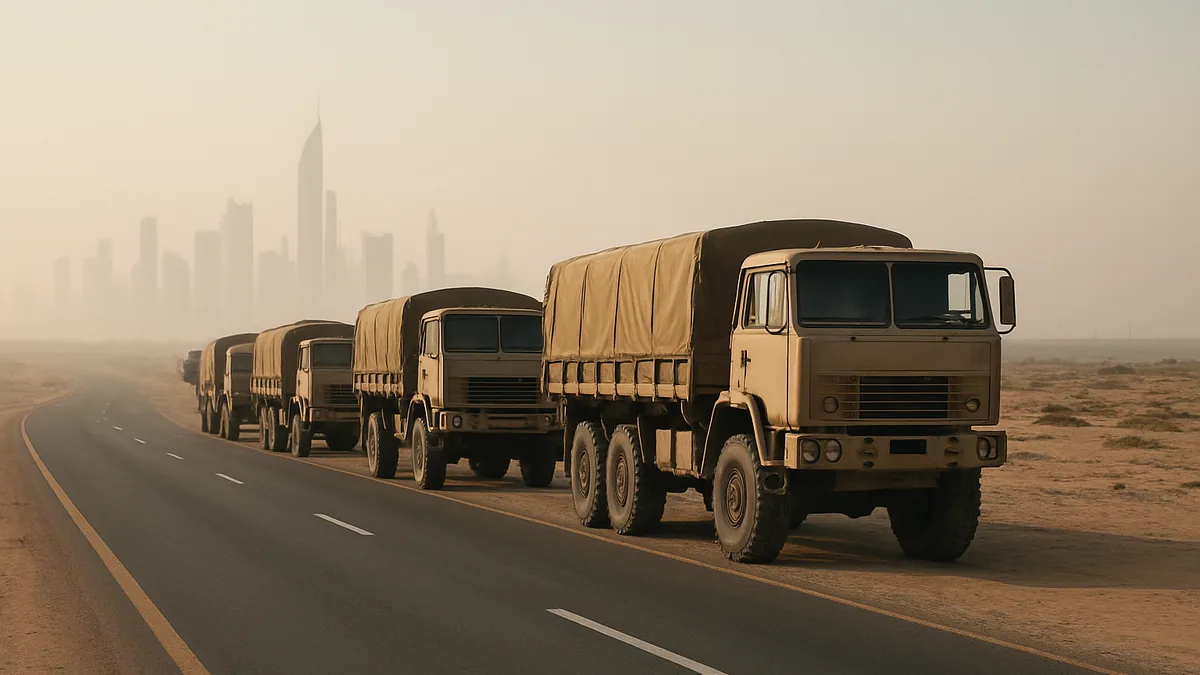
On Sunday, Syrian officials told the Associated Press that Damascus had already sent military advisers to Saudi Arabia. They also said 600 special forces were due to arrive in the kingdom the following week.
Separately, AFP reported that Syrians in Yemen were now leading drone operations against the Houthis. The Syrian government has denied those claims. The accounts therefore differ on whether Syrian forces are training Saudi and Yemeni personnel in the kingdom or taking part in fighting on Yemen’s front lines.
Nanar Hawach, a Syrian analyst, said the reports and denials could both be partly accurate. “Syrian officers training Yemeni forces inside the kingdom is different from Syrian troops fighting in Yemen,” she said. She added that if Syrian forces were involved, Damascus had reasons to avoid acknowledging it, including the risk of retaliation and the need to reassure Syrians that rebuilding at home came first.
Hawach also said a training and support role, rather than a direct combat role, would probably carry weight in Riyadh because it would show that the new Syria can share a partner’s security burden.
Analysts link Syria’s move to a wider regional security alliance
Saudi Arabia has sought a regional military alliance to counter threats from the Houthis and their patron, Iran. Tehran’s attacks on its Gulf neighbours since the US-Israel war on Iran began on February 28, along with recent Houthi missile strikes on Saudi cities, have highlighted the need for a regional security umbrella, according to the report.
The Mecca Joint Defence Agreement, agreed by Saudi Arabia, Turkiye and Pakistan in August, has been seen by many in Riyadh as a mechanism for collective defence. Syria’s thousands of battle-hardened soldiers, some with expertise in drone warfare, would be considered a useful addition. The Syrian official who spoke to SANA said the current military arrangement could lead to Syria joining the Mecca Defence Alliance.
Hawach said Syria’s interest in the Mecca pact could reflect a wish to anchor its recovery in a regional security framework. She noted that Yemen is far enough away for Damascus to present any role as support for an Arab partner, while Lebanon is next door and intervention there could reopen Syria’s history with it. She also warned that distance did not make the move cost-free, because confronting Iran’s allies anywhere invites retaliation.
Samy Akil, a senior programme adviser at a Syria-focused research outlet, said the cooperation gives Riyadh another regional ally and a potential partner in the Mecca Defence Alliance. He said Syria had tried to avoid aligning with any one regional camp but would eventually need to settle on a hierarchy of partners, with Saudi Arabia among the leading candidates.
Rob Geist Pinfold, a lecturer on security studies at King’s College London, said Syrian combat experience could offer a tactical advantage. He described the arrangement as a common Saudi approach, relying on partners it had courted through diplomatic links.
Syria’s post-war government has already faced pressure to act militarily beyond its borders. US President Donald Trump has repeatedly spoken this year about getting Syria to intervene in Lebanon to help disarm Hezbollah, another Iran-backed group. Israeli raids and attacks in southwestern Syria are also continuing, and Akil’s and Hawach’s assessments suggest Damascus could see a regional partner such as Saudi Arabia as a counterweight to further Israeli encroachment in Quneitra and Daraa.