
Hezbollah has announced financial support for Lebanese families whose homes were lost in the latest war with Israel, a move analysts say is adding pressure on the government in Beirut. The group’s distribution drive, announced on October 13, comes as authorities have seized hundreds of kilogrammes of explosives linked to Hezbollah.
The group has long provided money and other help to its supporters and paid compensation to people whose homes were damaged by Israeli bombing. Although Hezbollah has historically received funding from Iran, it also has independent sources of money that allow it to help members of its base, which is made up mainly of Lebanese Shia.
Compensation payments and Hezbollah’s stated aims
Ali Damoush, the executive council chairman of Hezbollah, said on Tuesday that the group would keep supporting its constituents who had been on the front lines of the war with Israel. He said the group felt a religious and moral duty to serve its people and protect their dignity and honour.
Damoush said the payments were intended for displaced people and for those whose homes had been destroyed or damaged so badly that they could no longer be lived in. According to the group, the amounts are:
- Families in Beirut and its suburbs whose homes were destroyed will receive $14,000 each.
- Families outside the capital with destroyed homes will receive $12,000.
- Financing will also be provided for furniture.
Hezbollah said its members had surveyed damage in Beirut’s southern suburbs and in southern Lebanon. It also said that “everyone who has suffered harm in our country, regardless of their political position” would receive support. That wording suggests people who openly criticised the group over the war with Israel could also qualify.
The group added that anyone who owns another home should give up the housing allowance in solidarity, though they would still receive the furniture allowance.
Reported Iranian funding and the US response
The payments follow a Reuters report claiming that Iran had provided Hezbollah with $200 million. According to the report, the money was meant to ease the burden on Lebanon’s Shia population after three years of devastating war with Israel.
A United States Department of State official denied that Iran, which is under strict economic pressure, had been able to transfer the funds to its Lebanese ally. Nicholas Blanford, a nonresident senior fellow at the Atlantic Council and the author of a book about Hezbollah, told that the money would be a major advantage for the group.
Blanford said the funds would generally help, arguing that Hezbollah pays close attention to the needs of its Shia support base. He added that this may be one reason the group has not returned to fighting Israel. He also said that while Iran ultimately makes the key decisions, Hezbollah appeared aware that it needed to give its people some relief.
Israeli offensive and displacement across southern Lebanon
Israel intensified its war on Lebanon on March 2 this year, the second such escalation in less than two years. Hours earlier, Hezbollah had attacked Israel for the first time in more than a year, after joint US-Israeli strikes on Tehran killed Iran’s Supreme Leader, Ayatollah Ali Khamenei, an ally of the group. Hezbollah also said that Israel’s repeated violations of a 2024 ceasefire in southern Lebanon were another reason it had opened hostilities.
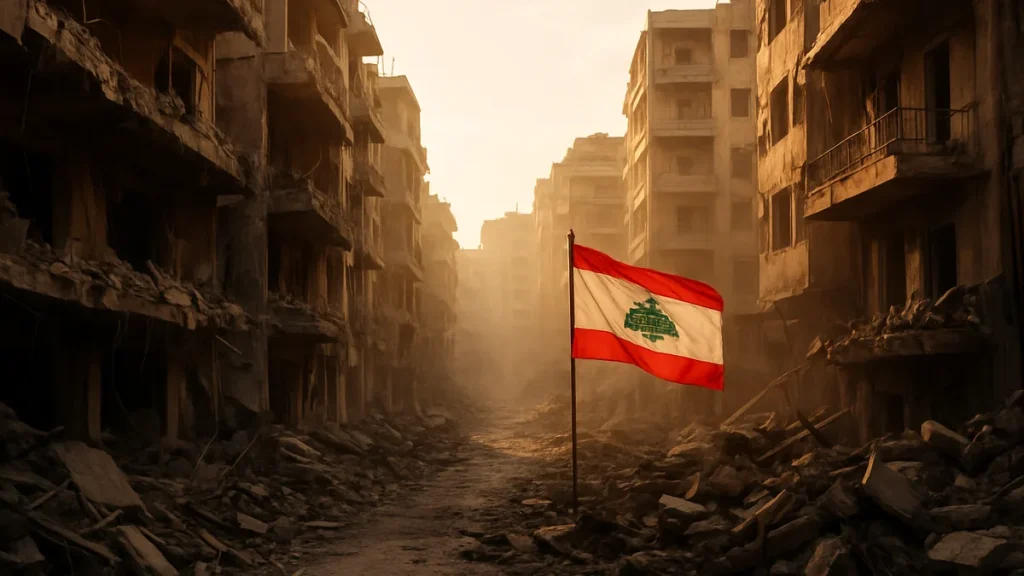
In the days that followed, Israel reinvaded southern Lebanon. The fighting displaced more than a million people and killed about 4,300 others, while Israeli forces stepped up aerial attacks on villages and towns that they said held Hezbollah positions.
In June, Israel and Lebanon agreed a trilateral framework brokered by the United States. It aimed to see Israel pull back from parts of southern Lebanon and the Lebanese army deploy to disarm Hezbollah. Israel has yet to enter two of the first three pilot zones where the programme was due to begin.
Israel has largely not withdrawn from Lebanese territory, and analysts believe it has settled in for what could become a long-term occupation. More than 50 front-line villages and towns have been completely destroyed, and Israel continues to demolish houses south of the so-called “Yellow Line”. Tens of thousands of people are still displaced, staying with relatives, renting apartments or living in hotels.
Pressure on the Lebanese government over Hezbollah
Marcel Baloukji, a Lebanese political analyst, told that Hezbollah has access to money from the state, wealthy individuals, various entities, companies and hospitals. Analysts also point to funding from the diaspora. Despite heavy sanctions, the group is able to move money through domestic financial institutions or cryptocurrency.
Dania Arayssi, assistant director at the New Lines Institute for Strategy and Policy, told that the payments were a way for Hezbollah to keep its support on the ground. She said the group had seen declining backing and growing frustration with the war, which made the payments especially important.
Arayssi also said the move would be a challenge for the Lebanese government, which faces growing Israeli and US pressure to act against Hezbollah’s influence. US Secretary of State Marco Rubio phoned Lebanese President Joseph Aoun last Thursday to press him on the explosives that Lebanese forces had confiscated.
“The Lebanese government is facing a real test and challenge to build and win the trust of the international community, and particularly the United States,” Arayssi said. She warned that the funding could make it harder to negotiate with Israel over a verification plan and the withdrawal from remaining territory, if the government is seen as failing to control the group’s finances.