
An investigation has found that claims an Israeli counter-film to the award-winning documentary NAZA drew more than 44 million views do not hold up. The probe examined domain registries, web archives, source code and three independent traffic tools, and concluded that the figures promoted by official Israeli bodies were fabricated.
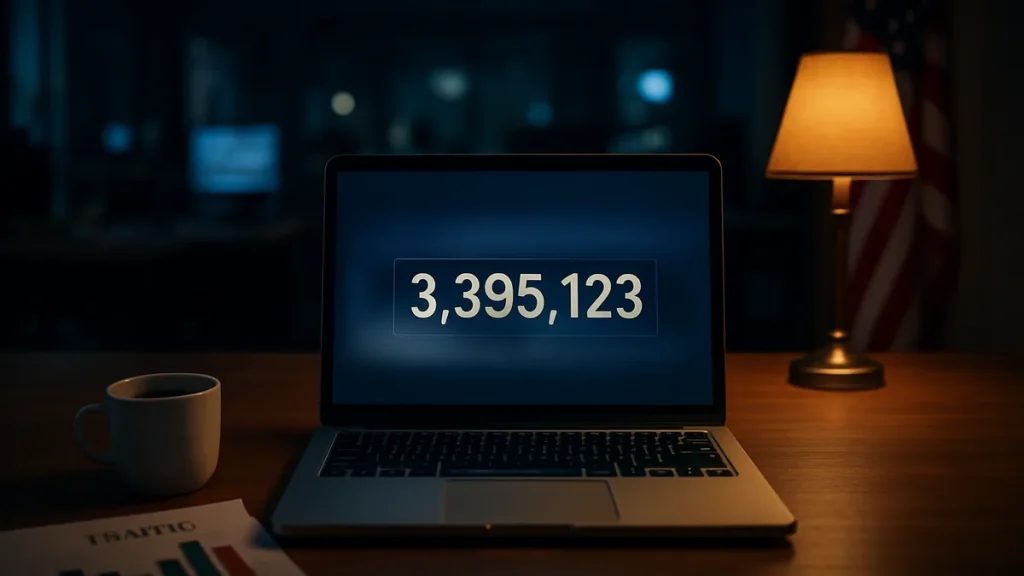
On the morning of October 14, the counter-film’s website showed 43,758,421 views. It gave no source for that number and did not explain how it was calculated. Public platforms painted a far smaller picture, and the investigation said the site’s figure was roughly 336 times the actual viewership.
How the original NAZA documentary provoked a backlash
NAZA draws on testimony from 24 unnamed Israeli military whistleblowers. They accuse the army of using artificial intelligence-powered targeting systems to kill many civilians in Gaza. The title comes from an Israeli military term for the civilian deaths expected from air strikes.
The film won the special jury prize at the Venice International Film Festival and received a 25-minute standing ovation. It was scheduled to screen in 56 countries. Prime Minister Benjamin Netanyahu then asked the chief of general staff, the head of the Shin Bet and the attorney general to open a comprehensive investigation into the participants, with a view to prosecuting them for information security violations. The directors, Yuval Abraham and Rachel Szor, were accused of treason, and Netanyahu and Culture Minister Miki Zohar threatened to revoke their Israeli citizenship.

Hidden registrations and a shifting website identity
The domain nazadocumentary.com was registered on September 16 through Cloudflare, just days after NAZA premiered. The owner’s details were concealed. Archived copies of the site on the Internet Archive’s Wayback Machine show that it first presented itself as the official NAZA website, listing the directors’ names and information on screenings and press.
The same archived pages described the film as exposing the systems behind what they called the calculated mass killing of terrorists in Gaza. By September 30, that page had disappeared and been replaced with a new title, “NAZA: The Real Story”. The 49-minute counter-film is attributed to Ariel Averbuch, Roy Danino and Hagai Gutman, who said the work was self-funded. Two further domains, whatisnaza.com and watchnaza.com, were later registered to send visitors to the counter-film.
Traffic data and page code contradict the counter
The full film on its official YouTube channel had not passed 130,000 views by the same date. The channel had fewer than 2,000 subscribers, and the film’s account on X had only 170 followers. Independent traffic platforms also pointed in the same direction. Semrush estimated the site’s total visits by October 8 at about half a million, while Israeli-founded Similarweb estimated just 326 visits for September. The domains also did not appear on the Tranco list of the world’s one million most visited domains.
The investigation’s review of the page’s source code found that the element showing the large number was tagged internally as “visitors” but displayed to users as “views”. The figure is delivered straight from the server, so its calculation cannot be seen from outside. When a visitor opens the page, the counter starts at 97 percent of its value and counts up over three seconds, creating the appearance of a live tally. The site also sends a “watch-tracker” file after about 25 seconds of playback, which records the viewing session and the parts watched. The investigation said it was unknown whether the counter draws on that data.
Israeli officials promoted the disputed figures
Official Israeli accounts nonetheless helped promote the counter-film. The Israeli Embassy in Washington shared it on social media on October 3. Tzipi Hotovely, head of Israel’s National Public Diplomacy Directorate, gave the three creators certificates of recognition for countering the original film. Hotovely said the film had garnered tens of millions of views, turning what the investigation describes as an unsupported number into an official talking point.
The campaign unfolds against Israel’s war on Gaza, which began in October 2023. According to Gaza’s Ministry of Health, Israel has killed at least 74,000 Palestinians since the conflict started, including at least 21,000 children.