


JERUSALEM: One year after the introduction of a US-backed plan to resolve the Gaza conflict, progress remains elusive as Israeli military actions persist and humanitarian conditions deteriorate in the territory. Despite an initial ceasefire and some prisoner exchanges, the broader goals of disarming Hamas, securing Israeli withdrawal, and rebuilding Gaza have yet to be realized.
The plan, introduced by former US President Donald Trump, outlined a phased approach beginning with a suspension of hostilities, partial Israeli withdrawal, release of hostages and prisoners, and increased humanitarian aid. Subsequent phases envisioned Hamas disarming and governance transitioning to a Palestinian body overseen by a US-led Board of Peace, with an International Stabilization Force (ISF) gradually taking over security responsibilities.
While a ceasefire was declared on October 10, 2025, Israeli airstrikes have continued intermittently. Gaza’s health authorities report that at least 1,400 Palestinians, including many women and children, have died since the ceasefire, though militant casualties are not specified. Recent attacks have resulted in additional Palestinian casualties, while Israel maintains its strikes target Hamas militants accused of attempting to rearm and launch attacks, claims Hamas denies. Israeli forces report five soldier fatalities since the ceasefire.
Contrary to the plan’s initial expectation that Israel would control 53% of Gaza, Israeli military presence has expanded to approximately two-thirds of the territory. This expansion has displaced more Palestinians, forcing the population of two million into an increasingly confined coastal area. Israeli-backed Palestinian militias operate within the occupied zone to conduct operations against Hamas-held areas.
Humanitarian aid has increased but remains insufficient. The global hunger monitoring body IPC reports that over 1.2 million Gazans face acute hunger despite aid scale-up. From the ceasefire through May, an average of 227 aid trucks entered Gaza daily—less than half the 600 trucks per day stipulated in the plan. Israeli authorities claim they meet aid obligations and allow around 600 trucks daily, but aid groups contend that critical supplies such as metal tent poles, engine oil, and spare parts are blocked due to concerns they could be repurposed for military use.
Hamas has indicated willingness to disarm under a 15-point roadmap developed by the Board of Peace, which includes storing weapons under the control of a US-backed Palestinian technocratic government. However, Israel rejects this plan, demanding full disarmament before any troop withdrawal.
The International Stabilization Force, intended to secure Gaza alongside a new Palestinian police force, remains unassembled despite commitments from countries including Indonesia, Morocco, Kazakhstan, Albania, Kosovo, and Uganda. US Major General Jasper Jeffers leads the effort, envisioning a force of 20,000 troops and training for 12,000 Palestinian police. The technocratic governing body for Gaza, appointed in January and led by Ali Shaath, has yet to enter the territory.
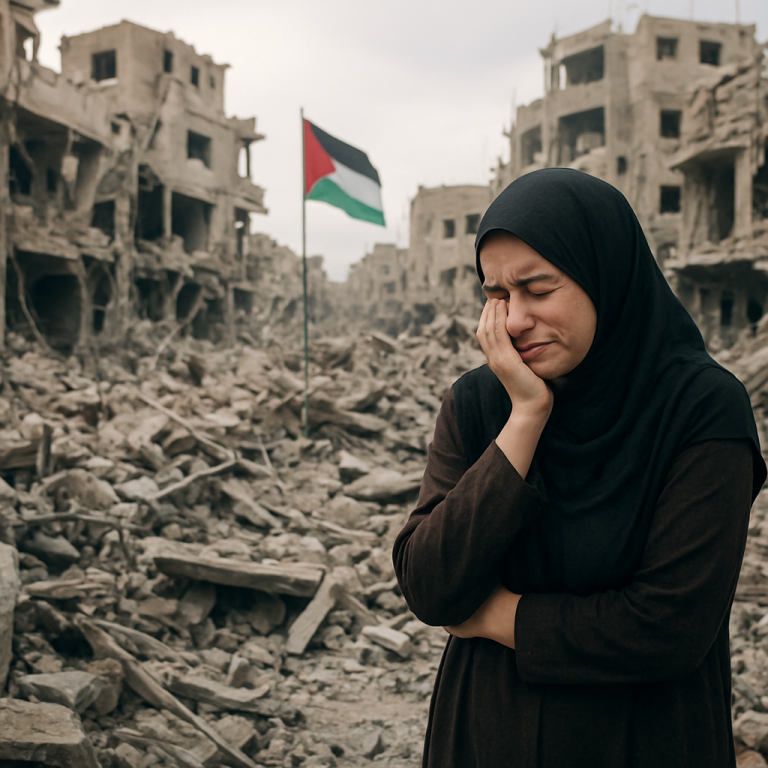
Reconstruction efforts lag significantly. Palestinians continue to rely on salvaged materials to repair shelters amid widespread destruction. The Board of Peace proposed a $2.45 billion rebuilding plan in September, a fraction of the $71.4 billion estimated by EU and UN assessments as necessary for recovery over the next decade.
Meanwhile, some Israeli politicians advocate for the mass relocation of Gaza’s Palestinian population through so-called “voluntary emigration.” Israeli Defence Minister Israel Katz recently stated that no lasting solution exists without such migration. An office dedicated to overseeing this policy was established by Israel’s defence ministry in 2025, following controversial remarks by Trump suggesting permanent displacement of Gazans. These proposals have faced strong opposition from Arab states and the international community, and Israeli officials deny plans for forced population transfers.
Israel is set to hold a general election on October 27, its first since the Hamas attack on October 7, 2023. Opposition leaders have expressed support for Trump’s plan, while polls indicate a close race between pro- and anti-Netanyahu parties.











Leave an opinion