


A biotechnology startup says a genetically modified microbe it is developing could one day benefit people and open the door to settling Mars. The company’s researchers at Pioneer Labs in Emeryville see the organism as a possible early step toward making the planet more hospitable to life.
Why Martian soil poses a major hurdle
Anyone living on Mars could not depend on shipments from Earth, so they would have to draw air, food and building materials from local resources. The long-term aim is to reshape Mars so that it can sustain life as people know it.
The planet’s surface is a serious obstacle. Although Mars holds many of the raw materials life requires, its soil contains toxins such as perchlorates and salts, which make it difficult for most organisms to grow.
Why earlier approaches fall short
Earlier proposals for growing plants on Mars relied on stripping out those toxins and importing large amounts of fertilizer from Earth. Pioneer Labs argues that these methods are neither practical nor efficient when scaled up.
How scientists tested microbes in Mars-like conditions
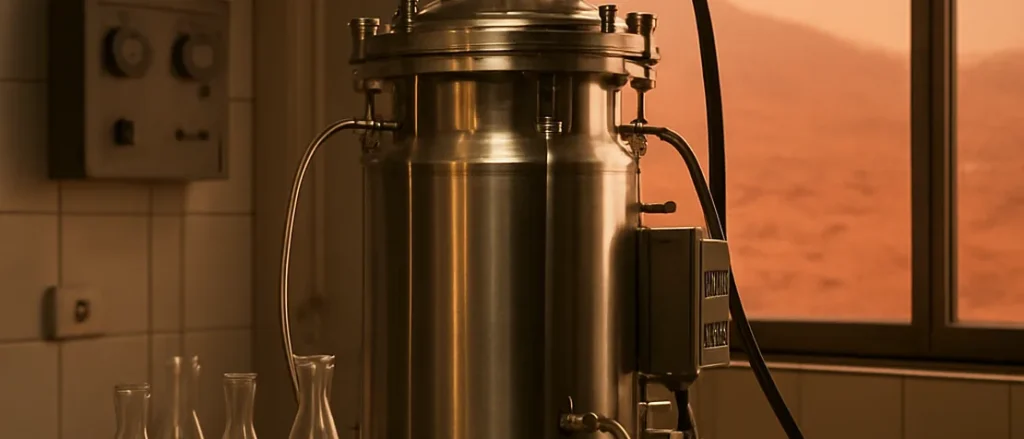
In a new study, scientists started with Earth microbes capable of producing bioplastics and gradually exposed them to conditions that increasingly resembled those on Mars. The organisms must grow in a stirred, heated bioreactor that shields them from extreme temperatures.
DeBenedictis said the first attempt to grow Earth microbes under Mars conditions produced no growth at all. The team had to test many more organisms before concluding that the initial result was simply bad luck.
The researchers also built in limits so that the microbe could not survive on Mars without outside help. These safeguards are meant to reduce the risk of the organism spreading and harming the planet, particularly if native life exists underground or in water pockets.
Possible benefits beyond the Red Planet
McKee said he is excited about how this research could affect efforts to address climate change on Earth, as well as habitats in extreme environments. He added that the team will be closely watching for the day the microbes are finally sent to the Martian surface.