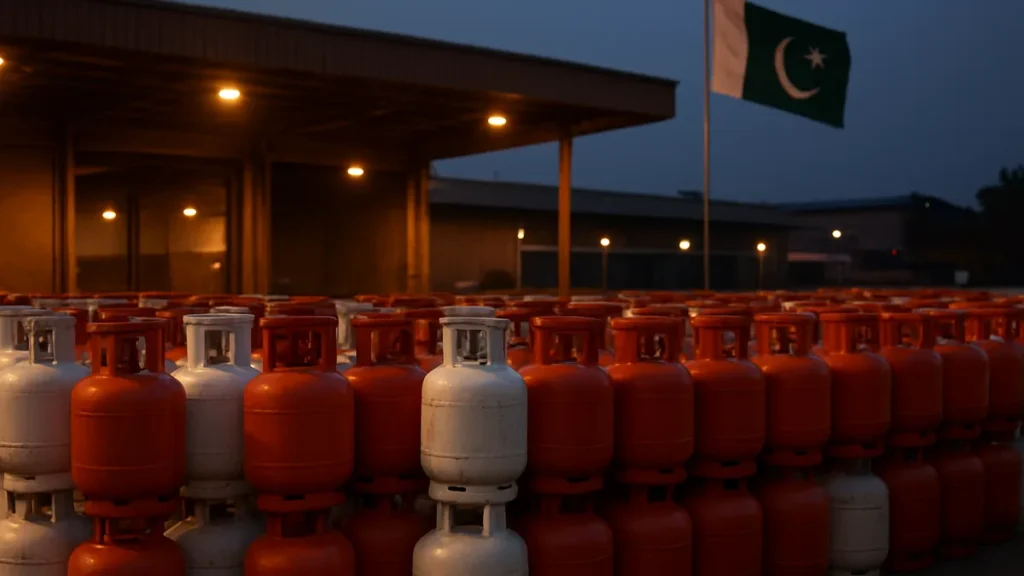
The federal government has decided to open Pakistan’s liquefied petroleum gas (LPG) sector to more competition. By dropping a long-standing discretionary quota system and curbing monopolistic conduct, it will move to competitive auctions.
The decision was discussed at the first meeting of a committee set up to oversee transparent LPG auctions. The federal cabinet approved the auction framework on November 4, 2026.
Remote areas get reserved share, remainder auctioned
Under the proposed framework, local LPG producers will hand over 10 per cent of their output to government-owned marketing companies, which will supply remote areas. The other 90 per cent will be sold through auctions held in the presence of the media.
Also read: Pakistan LPG prices rise by Rs 14.73 per kg as OGRA revises · LPG price surge forces Pakistan rickshaw drivers to cut meals
According to the committee, a participating company may buy no more than 20 metric tonnes of LPG per day. The committee will also track daily production to check transparency and compliance.
Minister links reform to prices and energy security
Petroleum Minister Ali Pervaiz Malik said that tackling public concerns about LPG availability and unfair pricing was the government’s top priority. He said the auction mechanism would distribute domestically produced LPG fairly, steady the supply chain and support energy security.
Malik added that all eligible companies would have equal chances to take part, and that the aim was better availability for consumers at reasonable prices.
Earlier, Information and Broadcasting Minister Attaullah Tarar said Prime Minister Shehbaz Sharif had ordered a merit-based, transparent system for the sector. Tarar described the move as a historic step, arguing that earlier governments had never tried to break the grip of a few individuals on the market.
Petroleum Division stresses a level playing field
In a statement, the Petroleum Division said a transparent and competitive system for allocating locally produced LPG remained a government priority. It said the government wants supply distributed through a competitive process that gives industry players equal footing and reduces the concentration of supplies among a limited number of market participants.