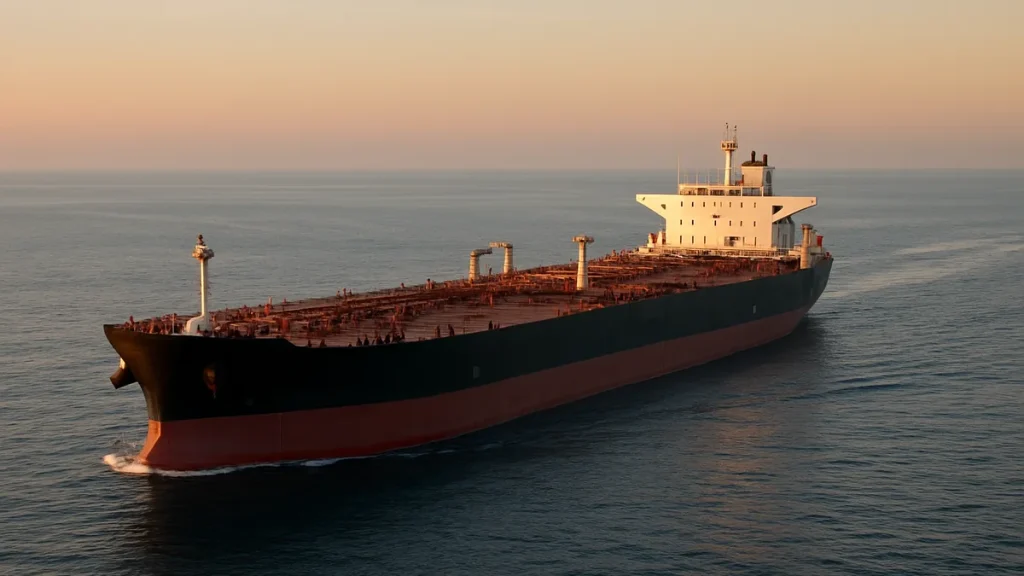

Shipping crude oil has become far more expensive, and the added cost is starting to filter through to petrol pumps and supermarket shelves. The supertanker Esteem Explorer is due to carry about 2 million barrels of crude from the United States to Japan in late November, and the trip is expected to cost $81 million. The same journey would have cost $9.1 million last year, on average.
That bill equates to $40.50 per barrel, roughly nine times last year’s rate. While headlines have focused on the rising price of oil itself, the voyage of the Esteem Explorer shows how transport expenses are pushing prices higher still. Refiners turn crude into fuel that moves food, consumer goods and building materials, so higher freight costs are feeding inflation in countries that rely on imports.
How freight costs feed into petrol and grocery prices
Kenneth Medlock, a fellow in energy and resource economics at the Houston-based Baker Institute for Public Policy, said every $10-per-barrel increase in shipping costs adds about 23 cents per gallon to gasoline. Applying that rule to the Esteem Explorer, the shipping cost works out to at least 80 cents more per gallon of gasoline than a year ago, based on calculations made for this report.
Medlock said the effect builds gradually rather than all at once. “It’s sort of like a slow-moving train. It doesn’t all happen instantly … but the longer this drags on, the more sticky it becomes,” he said. He added that the impact tends to last, showing up at the grocery store, the convenience store and the mall.
“Everything gets more expensive because that’s how we move stuff around,” Medlock said.
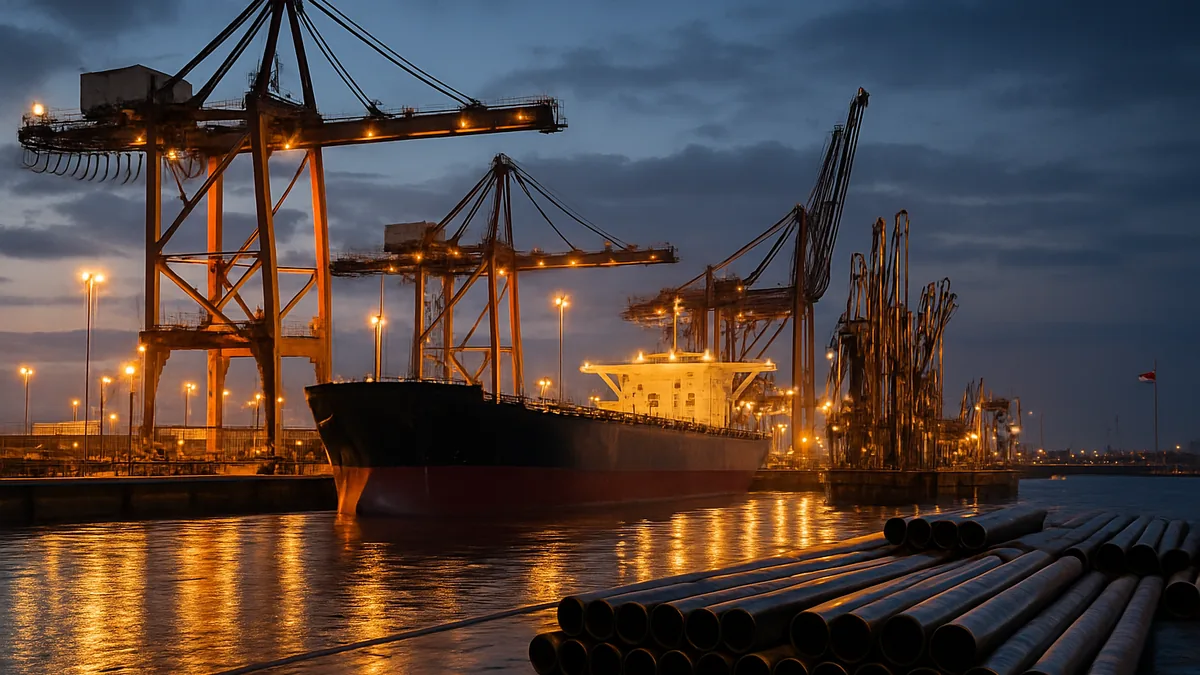
Freight now takes a much bigger share of oil’s price
Freight rates account for more than 40% of the price of US oil, according to LSEG shipping and oil price data. That calculation uses Wednesday’s price of around $95 per barrel. In 2025, freight made up 7% of the price on average.
Medlock said countries that depend on imported oil, including India, the Philippines and Indonesia, are bearing the heaviest burden. The International Energy Agency said on Wednesday that record tanker rates were already cutting into the profits of Asian refiners.
Attacks on ships linked to the US-Iran war and the Russia-Ukraine war have pushed up both freight and insurance rates. Shipping oil from the Strait of Hormuz and the Red Sea to Asia reached a record high of around $34 per barrel this week, as shippers add a risk premium for attacks on vessels. Ships are also taking longer routes to avoid danger, which keeps tankers tied up for longer periods.
Tanker owners reap a windfall as ship supply tightens
Shippers moving Saudi oil are now using more vessels and transferring cargo from ship to ship. The aim is to spread risk across several ships after attacks on Saudi Arabia’s main pipeline pushed more exports through the Strait of Hormuz. The approach has reduced the number of ships available, raising costs and lengthening the time cargoes spend at sea.
The shortage of very large crude carriers such as the Esteem Explorer has also lifted rates for smaller vessels. According to Signal Ocean, freight rates have quadrupled since the Iran war began in February for Suezmax ships, which can carry up to 1 million barrels, on the US Gulf Coast to Asia route. The same increase applies to Aframaxes, which carry up to 750,000 barrels, on the US Gulf Coast to Europe route.
Some shippers lock in vessels on contracts lasting three to five years, while many others charter ships on the spot market about a month before loading. Long-term deals, in which shippers and vessel owners fix prices in advance, could prove to be bargains if rates keep climbing.
Georgios Sakellariou, a freight analyst at Signal Ocean, said tanker owners have recently earned as much as $1.3 million per ship per day on a round trip from the Persian Gulf through the Strait of Hormuz to Asia. That compares with average earnings of $55,000 per ship per day in 2025.
Michelle Wiese Bockmann, senior analyst at maritime intelligence firm Windward, said that six weeks earlier she would not have believed daily earnings of a million dollars were possible. A person at a company that owns and operates tankers mainly in the Americas said this year may turn out to be the most profitable ever.
Erik Broekhuizen, head of tanker research and consulting at ship broker Poten & Partners, said rates would stay strong as long as crude demand exceeded supply. “However, as soon as the crude oil market loosens, tanker rates will come off the boil quickly,” he said.