The Saudi-led coalition fighting in Yemen has said the war could end “tomorrow” if the Houthis, an armed group also known as Ansar Allah, agree to a United Nations-endorsed peace plan. Coalition spokesman Turki al-Maliki made the remarks in an interview published on Sunday.
Al-Maliki said a political settlement was the best way forward. He added, however, that coalition forces would keep pressuring the Houthis militarily until the group chose to negotiate. He also said the coalition would support Yemen’s internationally recognised government to “achieve their objective”.
Aden named as Riyadh’s red line
Al-Maliki said Riyadh’s “red line” was Aden, the interim capital of the internationally recognised government. Houthi fighters have recently advanced towards the port city, and he said the coalition would do “whatever it takes” to safeguard it.
Also read: Houthis Target Saudi Red Sea Ports as Strikes Escalate · Houthi advance on Aden puts Yemen aid lifeline at risk
Fighting escalated this summer, when the Houthis seized much of Yemen’s Red Sea coastline. The Yemeni government army and forces loyal to it are now focused on defending Aden and breaking a Houthi siege of Taiz.
Many analysts see the escalation as an extension of the United States-Israel war on Iran, according to the report. In recent months, thousands of people have been killed and hundreds of thousands displaced in Yemen.

Houthi attacks and threats against Saudi ports
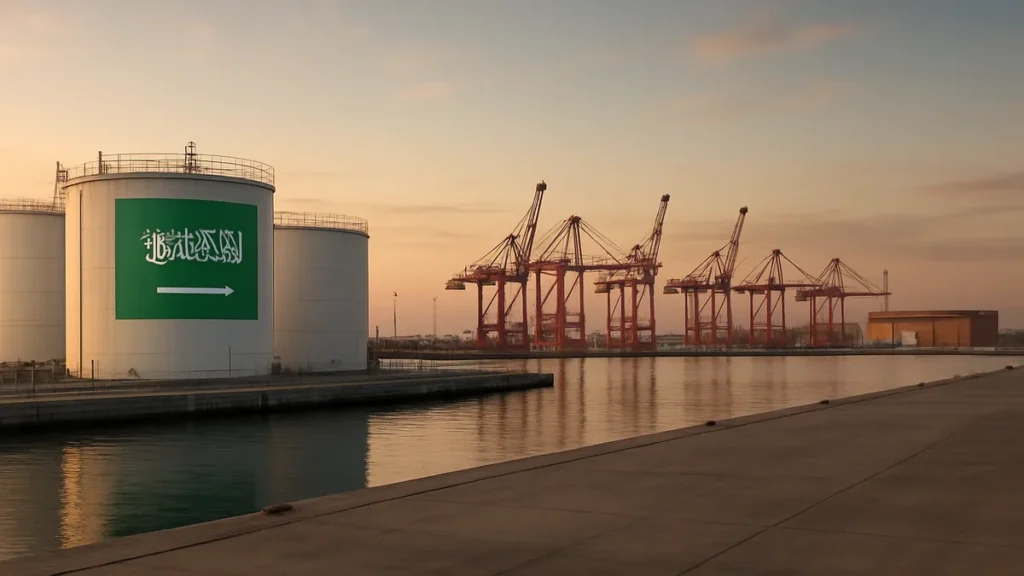
Saudi Arabia has faced regular Houthi attacks on its infrastructure, including airports and oil facilities, which have killed dozens of people. On Sunday, the Houthis threatened to strike Saudi Red Sea ports, including Jeddah.
The threat came as Houthi-affiliated media reported a Saudi attack on Yemen’s Ras Isa port, located in Hodeidah governorate. Earlier, the coalition had urged civilians to evacuate the fuel port “for their safety”.
The Houthis have made several demands. They want Saudi Arabia to withdraw its support for the internationally recognised government, which the kingdom trains, arms, funds and partially hosts in Riyadh. They also want:
- Restrictions on air and sea ports lifted
- Financial compensation provided
Coalition accuses Houthis of terror tactics
Al-Maliki told the interviewer that the Houthis are difficult to deal with because they do not abide by the rules of armed conflict. He described their actions as a terror act against civilians and civilian objects, rather than a military operation.
He also acknowledged coordination problems between the coalition and the Yemeni government army. He said there had been several battlefield “gaps” in recent months, which the coalition was working to correct.
Al-Maliki said that while the Houthis refuse a peace roadmap, the coalition would keep relying on military force. This would include non-stop air support for Saudi-backed Yemeni forces and efforts to degrade Houthi military capabilities. He claimed the coalition was destroying theatre ballistic missiles, launchers, missile components and unmanned aerial vehicles.