
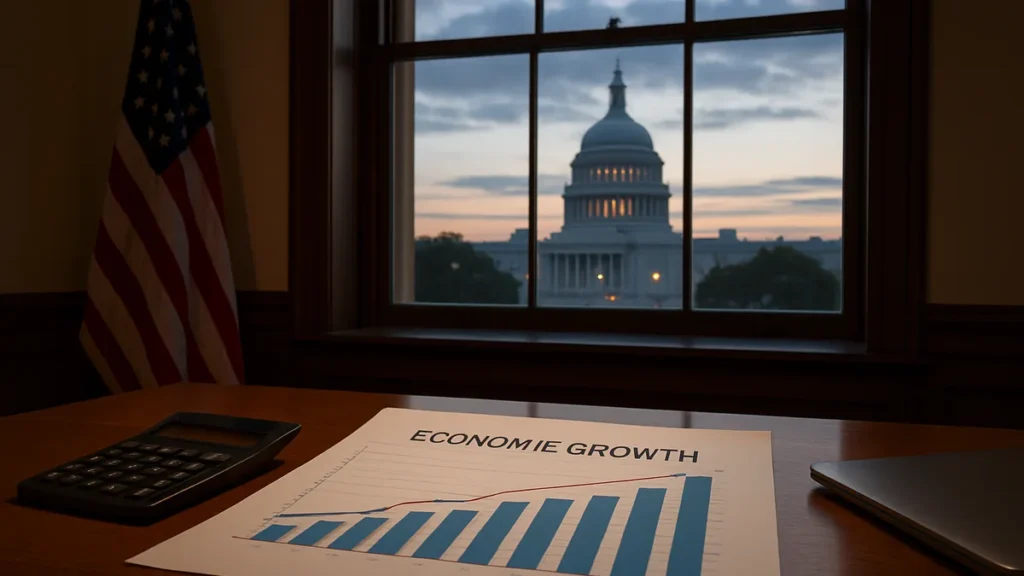
US President Donald Trump has accused his Commerce Department of deliberately publishing inaccurate economic growth figures ahead of the midterm elections, and says he wants an investigation launched. He made the remarks on Thursday, a day when offices and stock markets were shut for the Thanksgiving holiday.
The Bureau of Economic Analysis, part of the Commerce Department, On Wednesday raised its estimate of third-quarter annualised growth to 4.3 percent, up from the 3.4 percent advance figure it released on October 29. Trump’s Republican Party had suffered heavy losses in the November 3 elections.
Trump’s claims about pre-election economic figures
In a Truth Social post, Trump called the earlier numbers fake and offered no evidence to back the claim. He asked why the correct figure had not been released before the vote, describing the discrepancy as a massive and purposeful error rather than a minor mistake.
Trump has repeatedly tried to cast doubt on economic data that do not match his assertions of a historic boom. The pattern threatens confidence in figures that businesses, financial markets and consumers rely on when making investment decisions.
How the Bureau of Economic Analysis revises its data
The BEA routinely updates its figures to improve accuracy, and GDP numbers, monthly jobs reports and other data are regularly revised. These updates follow a prescheduled timetable and do not take the political calendar into account.
The agency did not immediately respond to a request for comment. It has previously said GDP estimates can differ from final numbers because advance estimates lack complete source data on inventories, trade and consumer spending on services.
A May article co-authored by BEA Director Vipin Arora found that estimates released 90 days after initial figures typically differed by 0.52 percentage points throughout this century. Arora and co-author Rebecca Pocase wrote that “over these 25 years, more complete source data expanded or contracted BEA’s estimates of real GDP growth on average by about half a percentage point per quarter.”
Earlier dispute over Labor Department data
Last year, Trump fired a senior Department of Labor official after a weak jobs report, accusing her without evidence of manipulating the figures. That move added to growing concerns about the quality of data published by the federal government.