Ousted former prime minister Sheikh Hasina has named 16 December as the day she intends to return to Bangladesh, and she has described how she plans to make the trip, her spokesperson said. The government in Dhaka had earlier dismissed the idea of her coming back. It is now treating the latest declaration more seriously.
Hasina, 79, fled to Delhi in August 2024 after a student-led uprising brought an end to her 15 years in power. She intends to travel back on Victory Day, which marks Bangladesh’s win over Pakistan in the 1971 liberation war. She was sentenced to death in absentia after being convicted of crimes against humanity over her role in a crackdown, in a trial that raised questions about due process.
Hasina’s proposed route back into Bangladesh
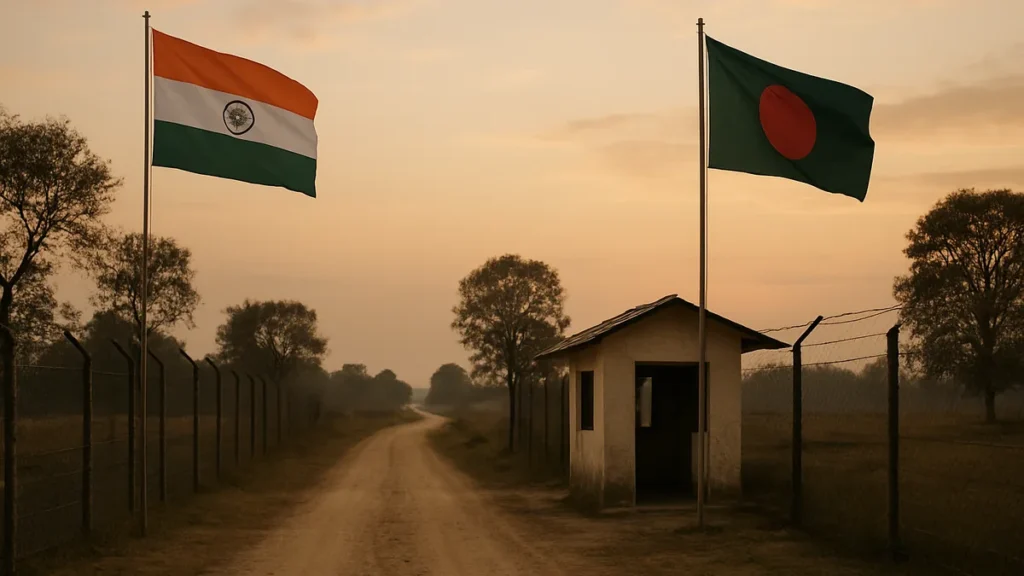
According to Hasina’s camp, she first wants the Bangladesh government to arrange a flight from Delhi. If that does not happen, she could take a commercial flight or cross the land border instead. Abu Obaidha Arin, a key aide, told the that she was “even prepared to walk into Bangladesh.”
Also read: Bangladesh says Hasina will be arrested if she returns · Arson and protests in Bangladesh ahead of Hasina's return
India and Bangladesh share a 4,096km (2,545 mile) border that runs through five Indian states: West Bengal, Assam, Meghalaya, Tripura and Mizoram. Arin said Hasina’s supporters had identified nine possible crossing points. He described the plan as carefully prepared and serious.
Dhaka has pushed back firmly and wants Hasina extradited. Humaiun Kobir, Bangladesh’s state minister for foreign affairs, told reporters in Dhaka that intentions and realities were different. “She can only be brought back in handcuffs,” he said. India’s foreign ministry said on Wednesday that the extradition request was being examined through the established process, and that a voluntary return would be handled as a separate matter.

Why the Victory Day date carries weight
Many in Dhaka see the announcement as more than a promise to come home. They believe it is a way to test the government’s authority, to push back into political debate and to exploit splits among the parties that joined forces to remove her. The government says she would be arrested immediately on arrival and has promised to carry out the death sentence.
Aides say Hasina has spent months trying to keep the Awami League alive from abroad. Arin said she has held more than 300 interactive audio meetings on Telegram over the past 18 months. He said these sessions reached supporters across all 64 districts and the country’s 300 constituencies, and were organised through the party’s 78 units. He also claimed the party could mobilise five million people to line the route from the border to Dhaka. Those figures come from Arin and have not been independently confirmed.
The Awami League is banned, and much of its leadership is abroad, in jail or underground. Police have arrested supporters and filed thousands of cases against party workers. The United Nations says as many as 1,400 people were killed by security forces during the uprising.
Street violence and the Awami League’s return to debate
Supporters have staged flash protests that have become more frequent and more confrontational in recent months. Several districts have reported bomb attacks, arson and vandalism, although responsibility for some incidents is disputed. Gopalganj, Hasina’s ancestral district, has been especially hard for the authorities to control.
Reports say supporters have attacked police stations, torched vehicles and targeted homes and offices of leaders from the ruling Bangladesh Nationalist Party (BNP). Highways have been blocked with felled trees and burning tyres, and in some areas police have withdrawn amid fears of further attacks. Conflict monitoring group Acled counted 40 demonstrations and more than 140 riots up to 23 November. It said at least 11 people, including two civilians, had been killed in political violence that month, six of them directly linked to the unrest.
Shafiqul Alam, editor of the English-language daily Daily Waadaa and a former press secretary to the Muhammad Yunus-led interim government, believes the party is exploiting cracks in the unity built during the uprising. He said disagreements over the July Charter, proposed constitutional changes and a referendum had widened divisions between the elected BNP government and its rivals, Jamaat-e-Islami and the youth-led National Citizen Party (NCP). Analysts note that the government describes the recent violence as terrorism, while supporters call their demonstrations peaceful and accuse the authorities of repression.
India caught between Dhaka’s demands and its ally
Delhi continues to shelter Hasina, and her public remarks have angered Dhaka. India has tried to repair ties through diplomatic outreach and talks on trade, border security and other issues, but relations remain strained. Prime Minister Tarique Rahman, in office since February, has yet to visit India, nearly 10 months into his term. A trip was reportedly being considered in August, but Hasina’s press conference in Delhi set back efforts to reset ties.
Avinash Paliwal, who teaches politics and international studies at SOAS University of London, argues that the announcement has shifted the burden of choice onto Dhaka. He says Delhi feels it has done its best to work with Rahman’s government, including by appointing a senior political figure as high commissioner and offering fresh talks. Alam, however, lists several grievances Bangladesh holds against India:
- Hasina’s extradition remains unresolved.
- Transit facilities that could help Bangladeshi garment exporters have not been renewed.
- The Ganges water treaty is nearing expiry with little progress.
- Only tourist and medical visas have resumed.
For now, 16 December is not a confirmed journey. Still, Hasina has made her return a question that neither Dhaka nor Delhi can ignore. A Dhaka-based foreign-policy expert, who asked not to be named, warned that December could be chaotic. Pearl Pandya, Acled’s South Asia analyst, said Hasina was unlikely to return because she would face a death sentence, but that her comments had clearly galvanised her supporters.