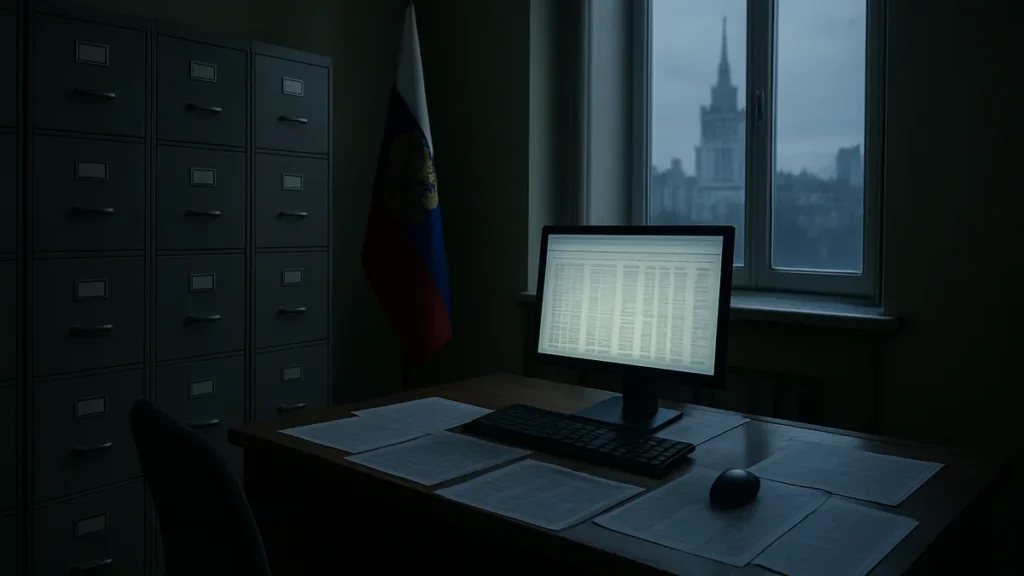
At least 490,334 Russian soldiers have died since the start of the war in Ukraine in 2022, according to Russian government statistics analysed by a Russian-language investigative team. The figures come from leaked data from Rosstat, Russia’s statistics agency, and point to a far higher military death toll than Moscow has publicly acknowledged.
The leaked records show how the full-scale invasion has fundamentally changed mortality patterns in Russia. The war, which Vladimir Putin had expected would last only days, is now almost five years old, and the data underline the heavy human cost paid by Russia.
Leaked Rosstat records expose wartime death patterns
The investigative team said it had access to more than 11 million death records covering 2021 to September 2026. The data was obtained after a hack carried out by the Belarusian group Cyber Partisans BY and Ukraine’s Silent Crow.
Also read: Russian strikes on Kyiv region kill at least 15 in Ukraine · European leaders say ready for talks with Russia on Ukraine
Rosstat admitted that it had suffered a cyber-attack but denied that any protected information had been leaked. The team worked with the independent Russian outlet Mediazona, comparing the statistics with its own list of confirmed military deaths, which was compiled from open sources since the invasion began. The two sets of records matched in 90% of cases.
Russia does not publish official figures for losses suffered since the war began in February 2022. Rosstat also stopped publishing data on deaths from external causes two years ago, a dataset that had been used to gauge the scale of military losses. The leaked files therefore fill a major gap in the official picture.
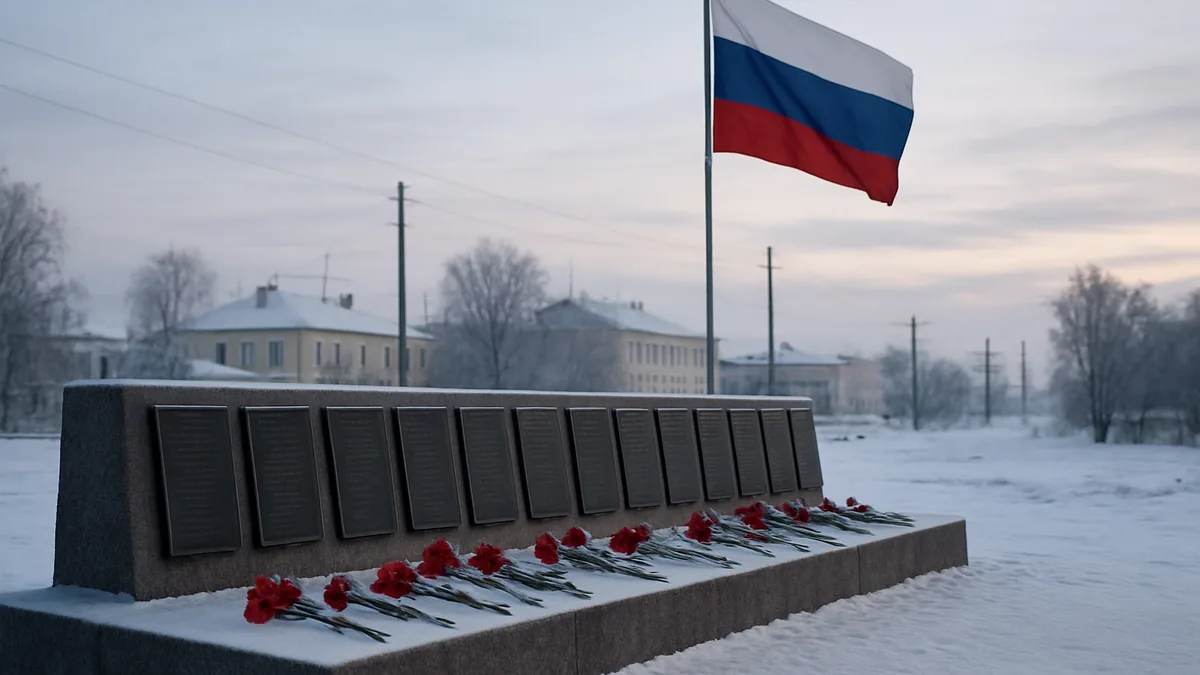
Young men and eastern regions bear heavy losses
The records suggest that war has become a leading cause of death for young Russian men. According to the analysis, 65% of 18 to 24-year-olds who died in 2025 were killed in the war. For those aged 25 to 34, the figure was 59%.
Only among those aged 45 to 54 does cardiovascular disease claim more Russian lives than the conflict, the analysis found.
The data also show the scale of losses in specific Ukrainian areas. The investigators said that some 20,000 Russian soldiers died fighting for control of 10 Ukrainian villages whose combined pre-war population was 12,000. In the fight for one small village, Andriivka, south of the town of Bakhmut in Donetsk region, 1,122 Russians died. Only 74 people lived there before the war.
The average age of those killed also rose over the course of the conflict. In the first year of the war it was 34, but by 2025, as prisoners and contract soldiers entered the ranks, it had climbed to 40. The team’s own list put the figure at 38.
Some of Russia’s poorest regions account for a disproportionately large share of the dead. Men from Tyva, Buryatia and Zabaykalsky Krai, in Eastern Siberia, are 20 to 25 times more likely to die in the war than residents of Moscow and St Petersburg, according to the analysis.
How analysts filtered the records and estimated the toll
The team did not rely on names, as the dataset contains none. It did, however, include ages, places of residence, places of death and circumstances of death. The analysts first filtered the records by location, keeping only Ukraine and Russian border regions that saw incursions by the Ukrainian army.
They then identified 425,174 entries that explicitly listed a military-related cause of death, such as explosions or shrapnel during combat operations. Because this group could include civilians, the team removed women and men outside the 18 to 65 age range. People who lived and died in the four Ukrainian regions occupied by Russia were also excluded as possible civilians, unless their records carried military service details.
A further 14,093 entries were identified through employment information, and 51,067 were recorded as deceased on the basis of a court ruling. Such rulings often apply when a soldier has been missing in a combat zone for more than six months and the body has not been recovered. Civilians were again excluded by counting only deaths in the war zones.
The team’s own detailed count of Russian losses stands at 290,012. It was verified together with Mediazona using official reports, social media, new memorials and graves. The analysts stressed that the true figure is likely to be higher, since not all deaths are reported publicly.
Military experts estimate that this open-source figure may account for 45 to 55% of the true death toll, which would put the total between 527,295 and 644,471. The analysts said the leaked statistics may be incomplete, but that together with their own work they are significant.
Foreign fighters and comparisons with other conflicts
At least 5,017 foreigners are among those who died fighting for Russia, according to the analysis of the Rosstat files. The count includes 1,031 Uzbeks and 720 Tajiks. Ukrainians were left out to avoid including civilians.
The team described this as a conservative estimate. Dual nationals are listed as Russians in the database, and the records make no reference to North Korean soldiers who died repelling the Ukrainian incursion into Russia in 2024. The investigators identified 2,304 North Korean soldiers who died there by analysing satellite imagery and official photographs of a newly built memorial in Pyongyang.
In the context of a war that has lasted four years and 10 months, the team described the Russian numbers as high when compared with the Soviet war in Afghanistan, which ended in 1989.
On the Ukrainian side, President Volodymyr Zelensky put losses at about 50,000 in July 2026. A separate list based on open sources, compiled by the anonymous UA Losses website, puts the figure at 115,952.