A US jury has found Huawei Technologies guilty of conspiring to steal trade secrets and committing bank fraud, even as the Chinese firm grew into one of the largest suppliers of wireless telecoms equipment in the world.
On Tuesday, the same jurors cleared the company of its most serious count, criminal racketeering conspiracy. That charge is normally brought in organised crime and drug cases, but prosecutors used it to argue that Huawei had operated illicitly to take intellectual property from American companies.
How the jury ruled on Huawei’s 12 charges
Huawei and three affiliates faced 12 charges in total. These included racketeering conspiracy, bank fraud, wire fraud, sanctions violations, and conspiring to steal trade secrets and obstruct justice.
The trial ran for more than two months. Prosecutors called more than 60 witnesses, while the defence called 15.
Prosecutors’ allegations and the evidence shown in court
US prosecutors argued that Huawei had repeatedly taken technological secrets from rivals and business partners, both in the United States and elsewhere. They also alleged that the company traded with countries under US sanctions, including Iran and North Korea.
Prosecutors further accused Huawei of lying to US government officials and banks in an effort to conceal its conduct. US authorities had pursued the company for years, arguing that it posed national security risks.
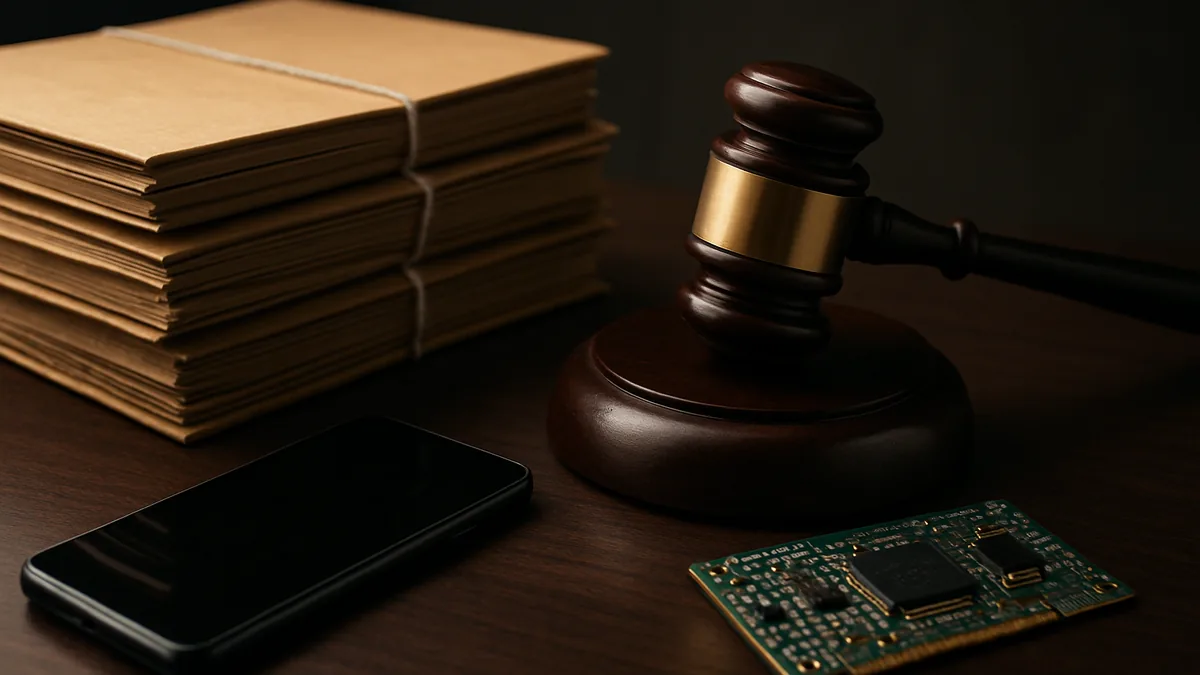
During the trial, prosecutors tried to show that Huawei took source code from Cisco Systems for its routers. They also said the company stole antenna technology from the wireless firm Quintel, and hired a professor to gain access to a circuit board developed by the chipmaker CNEX.
Jurors watched a video which, according to prosecutors, showed a Huawei employee putting a piece of a T-Mobile testing robot into his backpack. They also heard about a Huawei engineer who allegedly sneaked into a Fujitsu booth at a trade show to photograph a device.
Huawei’s defence and the arguments over banks
Huawei’s lawyers said US investigators had built a false story of a grand conspiracy out of isolated wrongdoing by a few of the company’s more than 200,000 employees. Huawei lawyer Brian Heberlig said the company would appeal the convictions, but he described the racketeering acquittal as vindication.
Speaking outside court, Heberlig said the jury had rejected the only count that tied all the allegations together. He added that the verdict “repudiated the central government narrative in the case”.
In his closing argument, Heberlig accused prosecutors of having “cherry-picked” a handful of disparate incidents to support their claim of a 20-year conspiracy. He said Huawei had succeeded through “hard work, innovation, and investment in research and development”.
The defence also argued that HSBC and other banks knew about Huawei’s business in Iran and were competing for its custom. Prosecutors gave jurors a statement attached to the deferred prosecution agreement of Meng Wanzhou, in which she acknowledged that the company had illegally conducted business in Iran. She did not testify at the trial.
Business impact and the Meng Wanzhou case
It remains unclear what effect the verdict will have on Huawei’s global fortunes. Experts have said the case has not undermined the company’s business, which diversified and became a key player in China’s push for artificial intelligence.
Huawei has not been allowed to sell equipment to US carriers for years over security concerns. Other Western allies, including Canada and the United Kingdom, have also placed it on their blacklists.
The case traces back to December 2018, when Meng Wanzhou, Huawei’s chief financial officer and the daughter of the company’s founder, was detained in Canada on a US warrant. Her arrest set off a diplomatic crisis involving the US, China and Canada.
Meng had been secretly indicted for allegedly misleading an HSBC banker about Huawei’s Iran business, which prosecutors said allowed the company to move dollars in and out of Iran in breach of US sanctions. She fought extradition to the US for nearly three years before entering a deferred prosecution agreement and returning to China to a hero’s welcome. The charges against her were dropped.
The 2018 indictment also alleged that Huawei misled HSBC, Standard Chartered and BNP Paribas about its dealings in Iran. Prosecutors added new charges in 2020, including that Huawei had conspired to steal trade secrets from US technology companies over two decades.