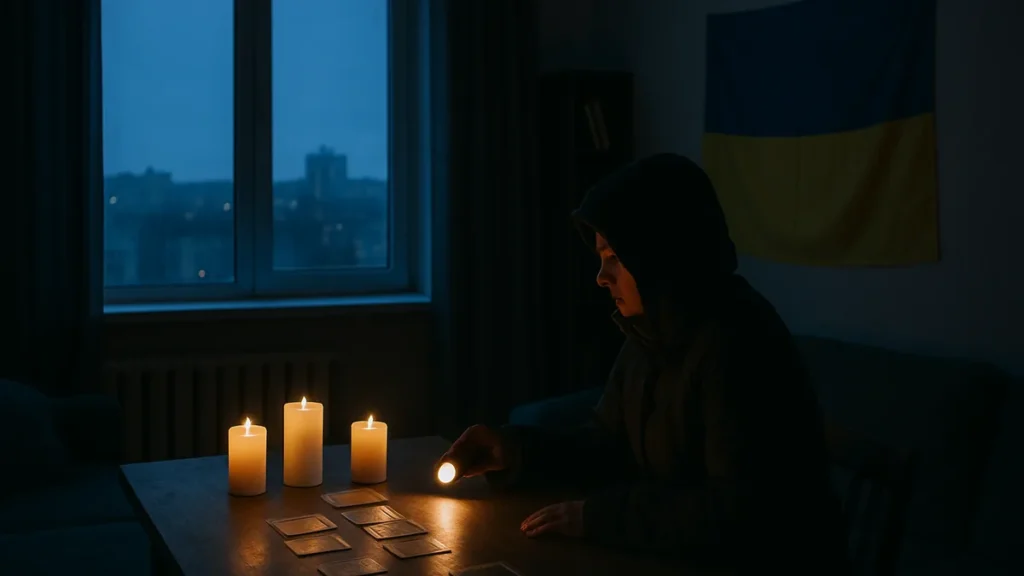
Daryna Kulchytska, a single mother living on the seventh floor of a flat in Kyiv, is trying to feed her two children and make sure they finish their homework, while also working from home. Her day is shaped by a power schedule she cannot predict with certainty. When the lights go out, the sockets lose power, the Wi-Fi drops and the taps stop running.
Rolling planned power cuts have been in place since October, as Russia has intensified attacks on Ukraine’s energy grid. Ukraine has responded by striking Russian oil refineries. Officials are worried that daily life will quickly become unsustainable for millions of Ukrainians if power cannot be kept on for at least four hours a day. Some officials privately warn that this threshold is already close to being breached.
Families in Kyiv living with long, unpredictable outages
Kulchytska said that in recent days she had only four or five hours of power, and that the timing kept changing. “For two hours we have electricity, then for eight hours we don’t,” she said. Some families in Kyiv are reportedly living with outages of up to 20 hours.
Also read: Russian missile attack on Kyiv injures two people, mayor says
The cuts began earlier this year than they did last winter and are lasting longer, leaving homes darker and colder. In Kulchytska’s flat, the lift does not work, and water stops because electricity is needed to pump it up to the apartment. The family relies on torches and LED candles, and in the evenings they play cards before going to bed early.
Her son Kyryll, who is twelve and speaks English learned during two years in the United States, described the impact bluntly. “There’s no light, no water, no heat, no electricity. And no fun,” he said. Kulchytska said that when she looks out of the window at night, she often sees nothing across a large city because there is no light.
Kyiv has been hit hardest, with metro trains and trolleybuses at times brought to a halt. Across the country, hundreds of thousands of people have been without power in recent weeks.
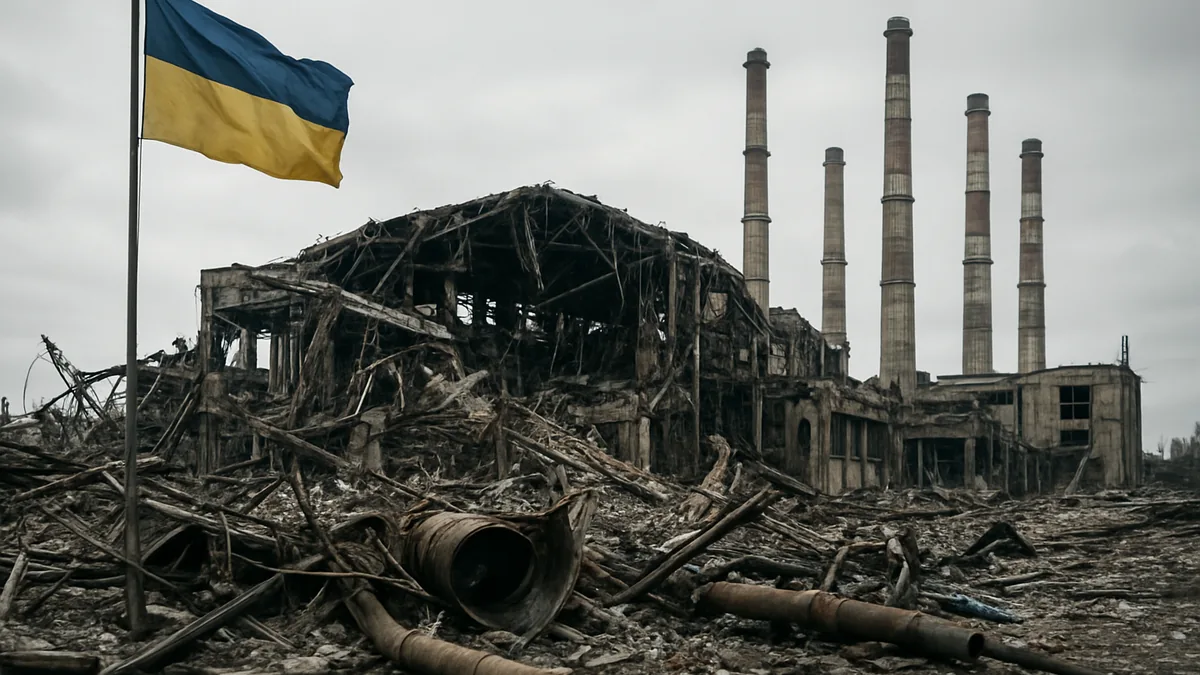
Inside a major power station damaged by missile strikes
A visit to one of Ukraine’s largest power stations showed the scale of the damage. The plant, which the reporters agreed not to name for security reasons, was struck by a ballistic missile. Its turbines are buried in rubble, and the site has been taken completely off line. The strike was described as the most powerful and devastating attack in Russia’s campaign against Ukrainian energy targets.
Volodymyr Kovalenko, who has worked at the site for 25 years, was on duty in the control room when the missiles hit at 3am. “It was a very powerful attack. We’d never experienced anything like it,” he said. He described the damage as heartbreaking but said he was confident the plant could be repaired.
Repair work is repeatedly interrupted by air raids, which came every 15 to 30 minutes and seven times during the four-hour visit. Each warning forces teams to stop work and take cover. If there is not enough time to reach the main shelter, workers hide in the foundations of the chimneys. During the visit, all drones and missiles were either shot down or flew on towards other targets.
Vadym Bobyr, 39, who has worked at the plant for half his life and is leading the recovery effort, said the interruptions were hard to manage. “You’ve mentally prepared yourself to do a particular job, and then… the air raid siren goes off, and you have to get out as quickly as possible,” he said. During the reporters’ visit, an incoming Banderol cruise missile triggered another alert. It was intercepted about 5km (3 miles) away.
Repair timelines and a grid under growing pressure
Energy workers face serious risk. Since August, there have been almost daily attacks on power facilities, claiming several lives each week. Teams are also reinstating power lines that feed the national grid, but the shattered plant will not be sending electricity out before the end of this winter, at least.
President Volodymyr Zelensky has said Ukraine still has enough generating capacity to meet demand. The main problem, he said, is getting that power to homes and businesses after so many power lines and substations have been hit. Russia is also reportedly using drones that cling to pylons and cables and remain undetected until they are detonated.
Maxim Timchenko, chief executive of DTEK, Ukraine’s largest private energy company, said Russia was putting the degraded grid under even greater pressure than last year. He added that overstretched air defences cannot protect all critical infrastructure. He said the attacks had changed in scale and in the types of weapons used. “They’ve doubled in power and in scale,” he said.
Timchenko said rebuilding the damaged plant would take at least until next summer, because workers under constant attack can only manage one or two productive hours a day. “We are fighting for survival of not only the whole country but ordinary people, especially during winter,” he said.
For Kulchytska, the strain is affecting her mental health, and she worries about the effect on her children, including her daughter Olena, who has nightmares. Many people are choosing to leave the capital or the country to avoid months of bitter cold, and she has considered moving somewhere safer or warmer. Still, she said she was determined to stay close to friends and relatives. “I don’t want to live without light. But actually people in Ukraine say, OK, without light, but without Russians,” she said.