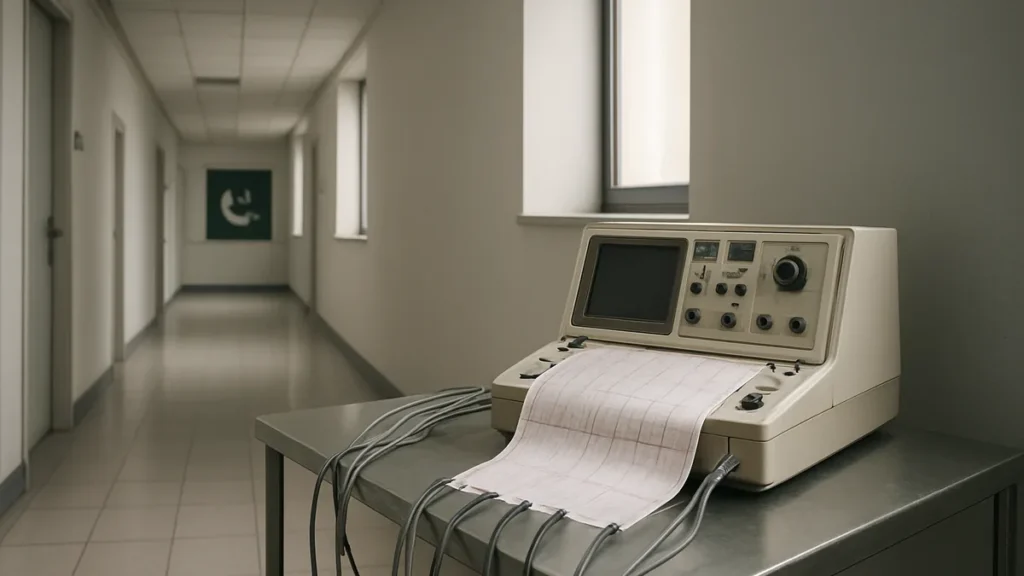
Investigators have taken Ahsan Tahir, the husband of slain television anchorperson Rabia Ahsan, to a forensic facility in Lahore for a polygraph test. Police brought him to the Punjab Forensic Science Laboratory on Wednesday as they work to establish how she was killed in Rawalpindi.
According to police sources, the test follows contradictory statements the suspect allegedly made during interrogation. Officials hope the examination will clarify the sequence of events that led to the shooting and show whether his account holds together.
Polygraph test to monitor responses during questioning
Forensic experts will question Ahsan about the day Rabia died while tracking his physiological responses, including his heart rate and psychological state, police sources said. Before the test, experts are assessing his physical and mental condition to decide whether he is fit to undergo it.
Also read: Rawalpindi news anchor Rabia Ahsan found shot dead at home
Police said the findings would help establish further facts and shape the direction of the probe.
Court grants four days of physical remand
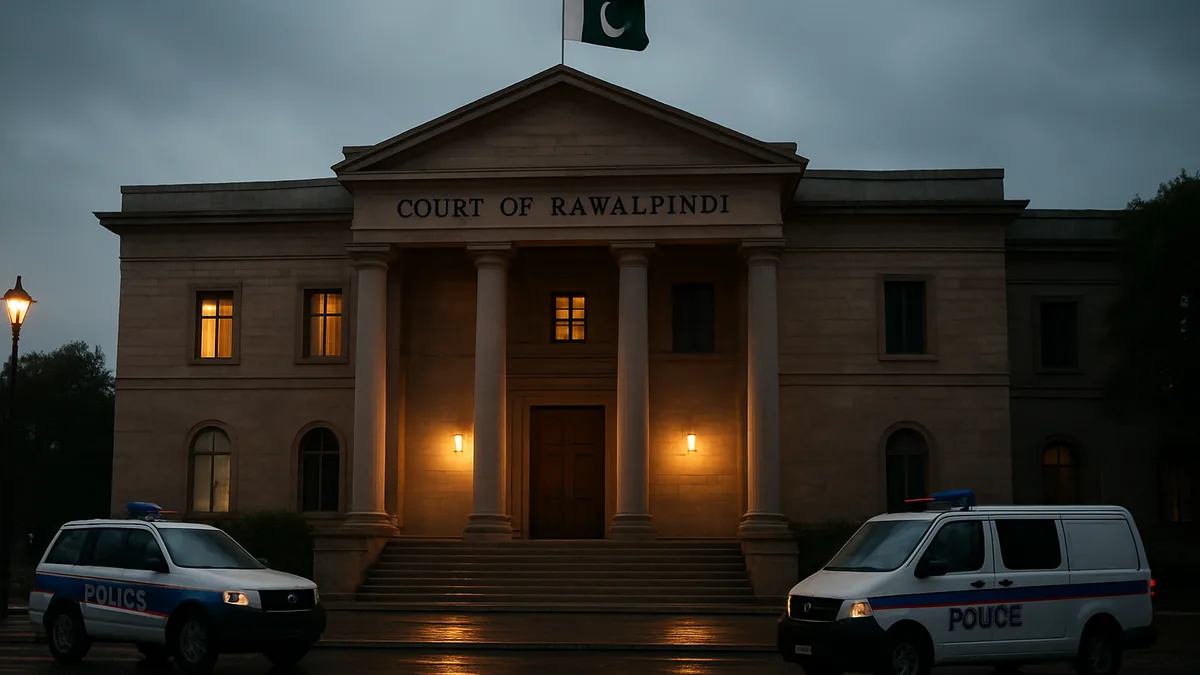
The test came a day after a Rawalpindi court granted police four days of physical remand for Ahsan. He had been produced before a senior civil judge after completing an earlier one-day remand.
The investigating officer had requested 10 days, but the court approved four and ordered police to bring him back on November 13. The judge also asked for a comprehensive investigation report and the post-mortem report at the next hearing. Police returned Ahsan to custody after the hearing, and no lawyer appeared on his behalf.
Police account of the shooting at Gulshanabad home
Rabia, a television anchor and programme host associated with , was found shot dead in her bedroom at her Gulshanabad home, off Adiala Road in Rawalpindi, on Sunday. Her husband was detained and later booked in a murder case registered at Saddar Bairooni police station.
Police sources said Ahsan told investigators he had aimed a locally made pistol at Rabia as a joke after loading its chamber, and a bullet went off and struck her in the neck. A domestic servant was in the room at the time, and the sources said the couple had not argued before the shooting. Investigators are still examining how the weapon came to be discharged.
FIR names brother as complainant in killing
The case, registered as FIR No 1231/26, was lodged under Section 302 of the Pakistan Penal Code and Section 13-2(a) of the Punjab Arms (Amendment) Ordinance 2015, the latter covering possession of an unlicensed weapon. Rabia’s brother, Khurram Ahmad, is the complainant.
According to the FIR, Khurram, a Capital Development Authority employee living in Islamabad, was travelling to see his sister when his other sister, Alveena, called him. Alveena, who lives with their mother near Rabia’s house, said she and their mother were sitting on the lawn at around 2:30pm while Rabia and her husband were in the bedroom. They heard a gunshot, ran inside and found Rabia in a pool of blood beside the bed, with a pistol in Ahsan’s hand.
“Ahsan has killed my sister by shooting her,” Khurram alleged in the complaint, asking police to take legal action.
The FIR records two blood-stained wounds, one at the front below the throat and another on the right side of her back. A Punjab Forensic Science Agency crime scene unit collected evidence, while the body was moved to Benazir Bhutto Hospital for a post-mortem examination. Police also recovered a 30-bore pistol from Ahsan, who allegedly failed to produce a licence or permit for it, according to the FIR.
Family seeks withdrawal as police push back
Alveena told a digital news outlet on Monday that the family was in the process of withdrawing the case, describing the shooting as “110 per cent accidental”.
Police, however, maintain that a registered murder case cannot simply be withdrawn and that any request for forgiveness or compromise must be dealt with by the court under the law. Murder under Section 302 can be compounded in certain circumstances, subject to the court’s permission and legal requirements governing forgiveness by the victim’s legal heirs.
The weapon charge is being pursued by police as a state case, so the family’s decision on the murder charge would not automatically end it. Police said they will submit the challan to the court and continue proceedings over the alleged illegal possession of the weapon.
The polygraph result will be weighed alongside forensic evidence, witness accounts and other material gathered during the investigation.