A Chinese university with ties to the army bought two of Nvidia’s powerful H200 artificial intelligence chips last month, even though it is on a US export blacklist, according to procurement records.
Northwestern Polytechnical University paid 874,700 yuan, or $123,000, for the pair. The purchase appears in an October 21 procurement record posted on the university’s website, according to an investigation into the sale.
How the university obtained the H200 chips
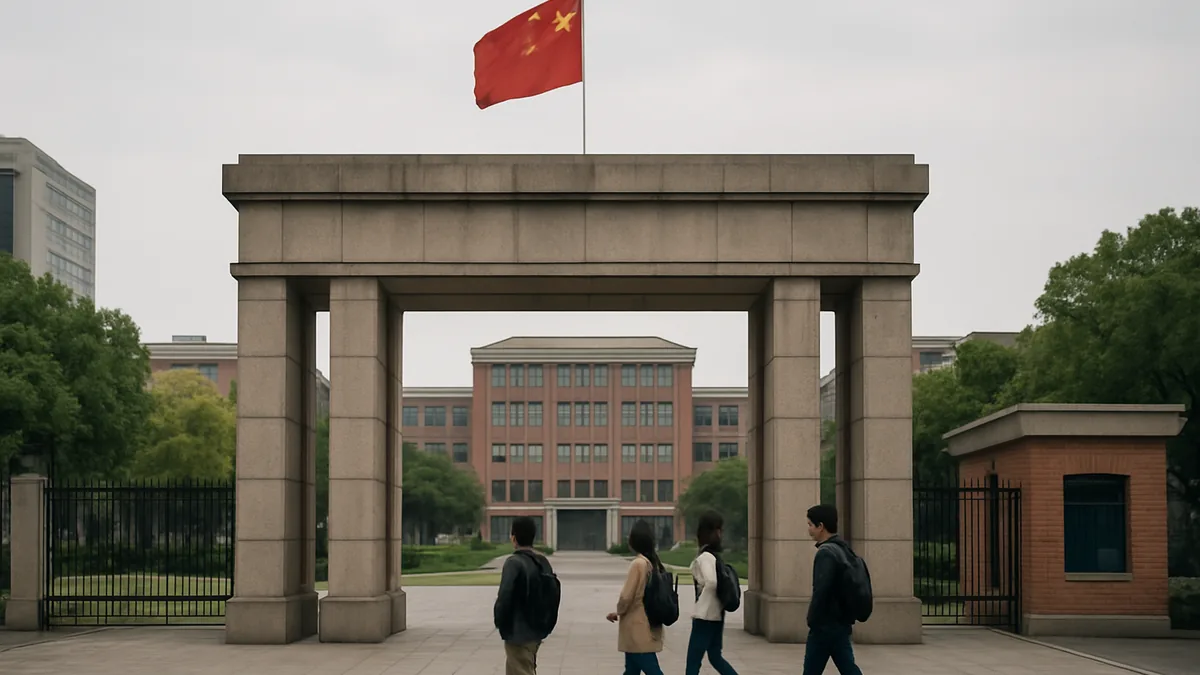
Northwestern Polytechnical belongs to the group of elite, defence-focused universities known as China’s “Seven Sons of National Defense.” The chips were bought for its management school, but not directly from Nvidia. Instead, the record shows they came from Shaanxi Bosuan Network Technology.
The H200 is one of Nvidia’s most capable chips for training and running advanced AI systems. Its export requires US licence approval, which is normally refused for blacklisted institutions such as Northwestern Polytechnical.
The university also secured access this year to H200 chips and other powerful Nvidia processors through five contracts for rented computing capacity from Chinese companies, procurement records show.
US restrictions and the wider pattern of purchases
Based in the northwestern city of Xi’an, the university carries out research linked to military aircraft, missiles and satellites. The US Department of Commerce placed it on the Entity List, its trade blacklist, in 2001. Officials cited alleged involvement in missile-proliferation activities and the institution’s military research.
Washington later tightened the rules in 2019, making licences for exporting controlled US technology to the university subject to a policy of denial in most circumstances. The Trump administration began allowing some H200 exports to China case by case in January, but that policy did not lift the separate restrictions on Entity List organisations.
The investigation reviewed 26 Chinese procurement and corporate records from this year. It found universities and research institutions buying restricted Nvidia chips, or renting access to Nvidia-powered computing services through domestic suppliers. Several of them had close links to China’s defence industry or military research.
Purchases of this kind show how Chinese institutions with military ties continue to obtain US AI computing power through domestic suppliers, either by buying chips outright or by renting servers that contain them. Lawmakers from both major US parties have called for stronger controls, including chip-tracking requirements and greater congressional oversight of exports.
Growing scrutiny of Nvidia chief Jensen Huang
The purchases come as Nvidia and its chief executive, Jensen Huang, face mounting scrutiny in Washington. Huang has lobbied for looser restrictions on AI chip sales to China, and reports have alleged he was targeted by a Chinese spying operation.
Huang has argued that continued US sales to China would preserve American technological leadership and keep Chinese customers reliant on Nvidia’s technology. Some US lawmakers, however, say access to the company’s most powerful chips can speed China’s development of AI for weapons design, intelligence analysis and military modernisation.
Republican Senator Kevin Cramer of the Senate Banking Committee has called on Huang to step down. Cramer told Politico late on Tuesday: “The potential for extortion is so tremendous that something as sensitive as Nvidia chips, I just think he’s got to go.”
Three Republican congressional committee chairmen have requested a briefing with Huang on November 18 about his reported contacts with an alleged Chinese intelligence operative. Alice Huang, a former executive at a Singapore-based data centre company, has been accused of working for Chinese intelligence. Media reports linked Jensen Huang to her, and he admitted on Sunday to being unfaithful to his wife.
Nvidia, which Huang co-founded more than three decades ago and which is the world’s second-most valuable company after Apple, said it has no reason to believe US national security or confidential information has been compromised. Its board announced an independent investigation on Sunday into whether the 63-year-old Taiwan-US dual national had been targeted by a foreign intelligence operation.