Iran says it has not suspended its commitments under the Treaty on the Non-Proliferation of Nuclear Weapons (NPT). Even so, broad international inspections of Iranian nuclear sites remain a distant prospect while mediated talks to end the war with the United States continue.
Iranian authorities have increasingly discussed leaving the treaty and building a nuclear bomb. That debate followed US and Israeli attacks on Iran’s main nuclear facilities and the killing of senior leaders. Threats from US President Donald Trump to strike the underground Pickaxe Mountain complex near the Natanz nuclear facility, along with other sensitive sites, have strengthened hardliners in Tehran who want the country’s nuclear doctrine changed.
Foreign ministry defends NPT stance amid IAEA restrictions
Foreign Ministry spokesman Esmaeil Baghaei told reporters at a news conference in Tehran on Monday that the Islamic Republic remains committed to the NPT. He acknowledged that Iran is restricting cooperation with the International Atomic Energy Agency (IAEA), the United Nations’ nuclear watchdog.
Also read: Iran sends nuclear proposal to US via Qatar, official says · Trump to meet Qatari premier as Iran mediation hits snags
Baghaei said other parties had set conditions by attacking Iran’s nuclear facilities. “Other parties have imposed conditions, namely the attacks by the US and Zionist regime against our nuclear facilities which have caused issues concerning implementation of safeguards commitments,” he said, referring to Israel.
He added that cooperation with the agency could not return to normal while those circumstances persisted. “As long as this situation continues, we cannot act like normal circumstances in our cooperation with the agency,” Baghaei said. He also renewed Tehran’s criticism of the agency’s director, Rafael Grossi.
Baghaei confirmed, however, that the IAEA had carried out new inspections at the Bushehr nuclear power plant days earlier. IAEA chief Grossi had told the UN Security Council in late October that the agency could not verify Iran’s nuclear material, because Tehran had not provided the requested information and access.
Experts weigh Bushehr access and the limits of inspections
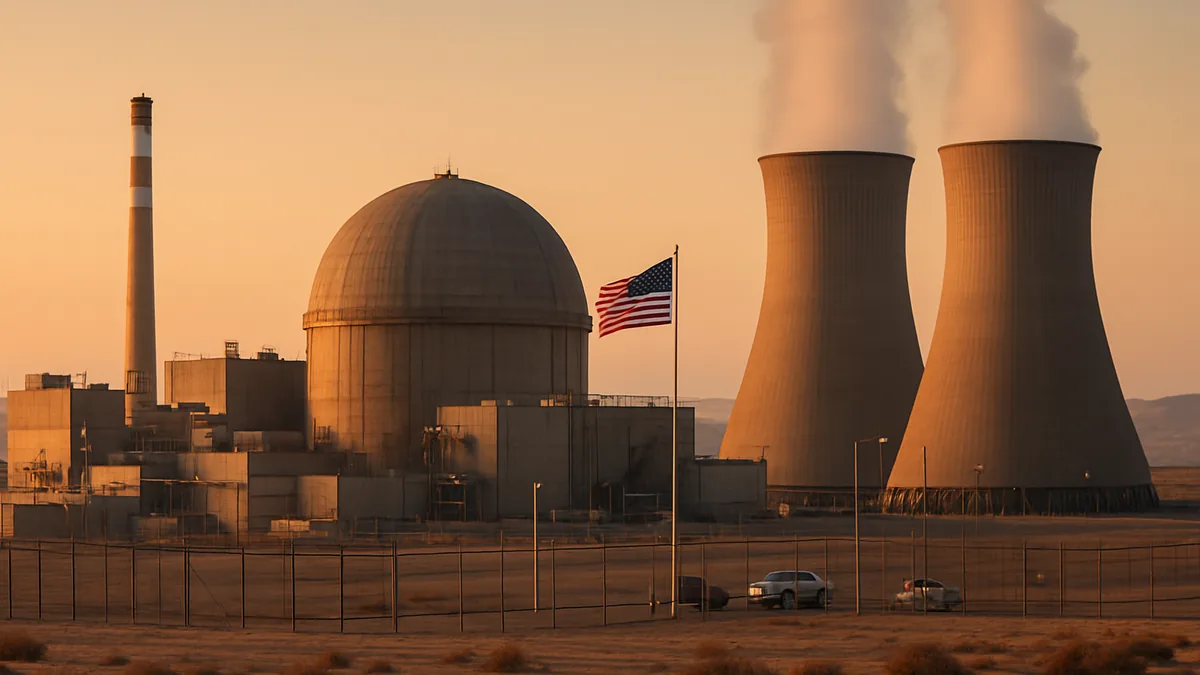
Bushehr, a power plant built with Russian cooperation and still being developed in new phases, is the only facility still open to the agency. It was not directly bombed during the war. US warplanes did strike the plant’s perimeter several times, however, causing damage. That prompted a partial evacuation of Russian personnel, who have not yet fully returned.
Ali Vaez, deputy director of the Middle East and North Africa programme at the International Crisis Group, described Iran’s approach as keeping one foot inside the NPT and the other near the exit. He said allowing inspections at Bushehr was a cheap gesture meant to keep diplomacy alive and hardliners contained. In his view, it also preserves Tehran’s leverage over the underground sites that matter most.
Those sensitive sites include the Natanz, Fordow and Isfahan facilities, among others. Seyed Hossein Mousavian, a visiting researcher at Princeton University and a former Iranian nuclear negotiator, said Iran’s stance reflects a distinction between honouring its NPT duties and allowing inspections of facilities that have been bombed.
Mousavian said the IAEA has no established inspection protocol for nuclear facilities damaged by military strikes. He also said Iranian officials fear that giving the agency access to sensitive sites could lead to information being passed to the US and Israel, and later used in future attacks. “Tehran views restrictions on broader inspections as a security concern rather than necessarily a rejection of its NPT obligations,” he said.
Treaty rules, hardliner pressure and stalled diplomacy
Iran’s nuclear programme has been among the most closely scrutinised in history, and its international obligations rest on several treaties and UN resolutions. The NPT sets out the basic rules against proliferation while recognising the right to peaceful nuclear energy. A separate safeguards agreement with the IAEA defines how the agency monitors Iranian activity to confirm that the country is not moving toward weapons. Subsidiary arrangements, Security Council resolutions and nuclear agreements add further requirements.
Under the treaty, a party may withdraw after giving notice, once it has decided that “extraordinary events” have “jeopardised the supreme interests” of the country. The treaty, however, offers no protection against conventional military attack. According to the reporting, that gap between promised peaceful benefits and real vulnerability has been central to the case made by domestic hardliners for leaving the NPT.
Such views are not confined to a few hawkish voices. Iran’s security chief, Mohsen Rezaei, has publicly weighed abandoning the treaty on several occasions. Hossein Mohebbi, spokesman for the Islamic Revolutionary Guard Corps (IRGC), said earlier this week that the organisation “will create the necessary preparations” if the Islamic Republic goes ahead with changing its nuclear doctrine.
Regional mediators, including Qatar and Pakistan, continue to pass messages between Tehran and Washington in an effort to prevent another all-out war. Analysts have nonetheless warned that escalation is likely in the coming months. Tehran has said it will not allow its highly enriched uranium to be removed from the country, though it is open to downblending it under international supervision inside Iran. It has also said it will not give up enrichment entirely, and could accept limits on it, as it did under the 2015 nuclear deal that Trump abandoned unilaterally in 2018 during his first term.
Any deal that fully resolves Iran’s nuclear programme would also require an end to hostilities in the Strait of Hormuz and beyond. That outcome appears unlikely in the foreseeable future. Vaez said: “Tehran might be willing to open the door a crack in exchange for tangible American concessions, but it is unlikely to surrender its most valuable nuclear bargaining chips upfront.” He added that a preliminary deal could unlock limited, phased inspections based on the 2025 Cairo agreement between Iran and the IAEA.
That agreement came months after the US and Israel bombed Iran’s nuclear facilities during the 12-day war of June 2025. It envisaged restored access for agency inspectors to all Iranian facilities, subject to case-by-case permission from the Supreme National Security Council. It was never enforced, and tensions that followed led to the US and Israel attacking Iran again on February 28. Vaez said restoring meaningful transparency would require “a larger bargain on enrichment, stockpiles and sanctions relief.” Mousavian said Tehran would want more than a preliminary arrangement like the Cairo deal, saying that cooperation “would require a comprehensive agreement that addresses the overall security and nuclear issues; without it, inspections of the bombed sites are unlikely.”