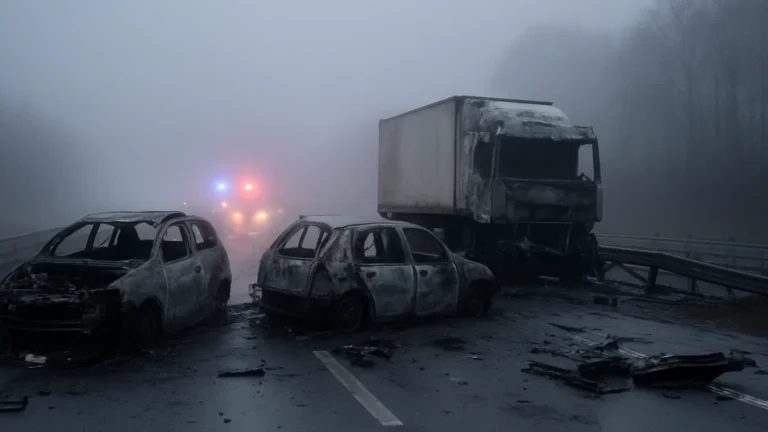
A train collision on the outskirts of the Egyptian capital, Cairo, has killed at least seven people and injured more than 125 others, according to the country’s Ministry of Health and Population. The crash has set off a wave of demands in parliament and among opposition figures for officials to answer for what happened.
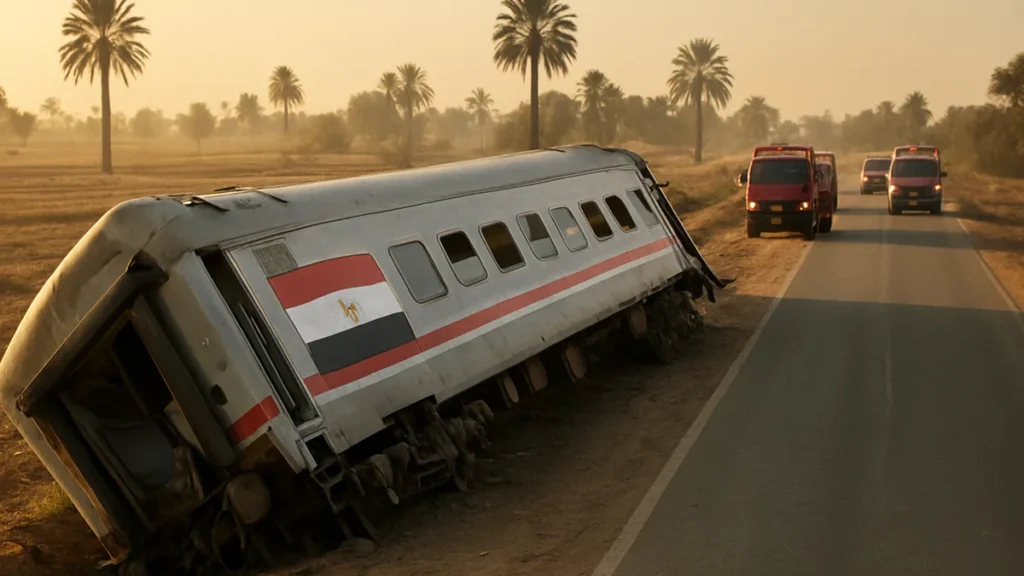
The collision occurred on Sunday, when a train travelling between Giza and Fayoum struck the rear of another train on the Cairo-to-Aswan route. The struck train was forced off the tracks and onto a countryside road in the al-Ayyat district. President Abdel Fattah el-Sisi ordered an urgent investigation and said anyone found to have been negligent would be held to account.
Parliament summons transport minister after al-Ayyat crash
Egypt’s parliamentary Transport and Communications Committee called Transport Minister Kamel el-Wazir to an emergency session on Tuesday. Opposition voices have pushed further, with some criticising the minister and others calling for the dismissal of the entire government.
Also read: Spain's transport minister resigns after deadly train crash
Al-Ayyat is a major corridor for trains running between Cairo and southern Egypt, and the area carries heavy rail traffic and has several railway switches. Abdel Moneim Imam, a member of parliament and head of the Justice Party, said the situation demands decisive action. He pointed to several earlier disasters in the district, including:
- A 2002 fire that killed more than 370 people
- A 2009 train collision that killed 15 people
- Three separate collisions in 2016 that killed 14 people in total
Imam said the repeated accidents, despite ministry announcements about developing the railway system, showed there had been no genuine accountability for officials responsible for earlier incidents. He argued that the minister enjoys the backing of the parliamentary majority, which he said prevents parliamentary accountability from taking effect. Imam, who describes himself as a reformist politician, wants ministers questioned in parliament over the latest accident.
Committee rejects hasty dismissals as government faces criticism
The committee met on Tuesday with el-Wazir present to discuss the circumstances of Sunday’s collision and steps to prevent similar accidents. Before the meeting, the committee’s secretary, Ahmed el-Derby, told the press that its purpose was not to interrogate the minister or confront him with premeditated accusations.
Asked whether the government bore political responsibility, el-Derby said ultimate responsibility rested with those overseeing the railway system. Officials, he said, answer for mistakes made during their tenure even if they did not personally commit them. He added that an investigation was needed to establish who was responsible, and that the committee does not back rushed calls for dismissals, which alone would not solve the crisis.
Atef el-Maghawry, head of the Tagammu Party’s parliamentary bloc, said the repeated accidents in al-Ayyat pointed to wider government failures rather than problems confined to the Transport Ministry. He argued that replacing the minister would not be enough and called for the dismissal of the entire government over its failure to address a range of social issues. “What is required is a change in policies, not simply a change of personnel,” he said.
El-Maghawry also acknowledged achievements in the railway and other sectors, but questioned their cost and the results they had produced.
Lawmakers demand breakdown of railway loan spending
Parliamentarians are also demanding answers on railway funding. Irene Saeed, head of the Reform and Development Party’s parliamentary bloc, has called for a detailed breakdown of how the Transport Ministry spent loans obtained in 2026. She wants to know what share of the loans taken out during el-Wazir’s tenure went to safety, signalling and maintenance.
Saeed also asked how many accidents in 2025 and 2026 were found to be the responsibility of the railway authority. The Transport Ministry says approximately $37bn was allocated to transport investments between 2014 and 2024.
Experts urge caution while investigation continues
Hassan Mahdy, a highway engineering professor at Ain Shams University, warned against drawing conclusions before the investigation is complete. He pointed to upgrades across Egypt’s railway network, including a shift to electronic systems designed to manage train movements and reduce reliance on human intervention.
Mahdy said investigators must establish why one of the trains stopped on the main track. That could point to a sudden technical failure or to someone activating the emergency brake. Investigators would also need to verify whether the second train’s signalling system warned its driver about a stationary train on the line before the impact.
El-Derby said the signals had issued a stop instruction, citing information from the signalling director, but it remained unclear whether the driver received the warning early enough to stop. He also cautioned against directly comparing the collision with earlier deadly incidents in al-Ayyat, noting that railway operations and signalling have since been upgraded. Mahdy said the investigation results would reveal whether the cause was human error or a technical flaw in the system.