Pope Leo XIV is beginning a lengthy tour of Latin America just three weeks after surgery for lung cancer. The trip takes him to Uruguay, Argentina and Peru, and includes a much-anticipated “homecoming” to Peru, where he spent many years as a priest.
The Vatican says no extraordinary measures are being taken in relation to the Pope’s health. It describes him as a “71-year-old who has undergone an operation” rather than someone with a “permanent medical condition”. Leo himself revealed last month that doctors had found a tumour during a routine scan. The growth was removed along with the lower lobe of his right lung, and his medical team then confirmed the cancer had not spread.
Vatican stresses the Pope’s stamina before the trip
At a briefing in Rome ahead of the journey, a Vatican spokeswoman stressed that Pope Leo had “fantastic stamina”. She said he was “extremely enthusiastic” about the schedule, which he had “personally confirmed… with no changes”.
Professor Massimo Faggioli of Villanova University said the trip sends a clear message. “The Vatican’s message with this trip is, ‘that was a short episode and now we’re back on track’,” he said, pointing to the Pope’s busy return to work since his surgery.
Faggioli added that the Pope had been seen in recent days giving speeches and holding audiences. “He seems in great shape. That was important,” he said. On Friday, the Pope had presided over the annual memorial Mass for cardinals and bishops who had died.
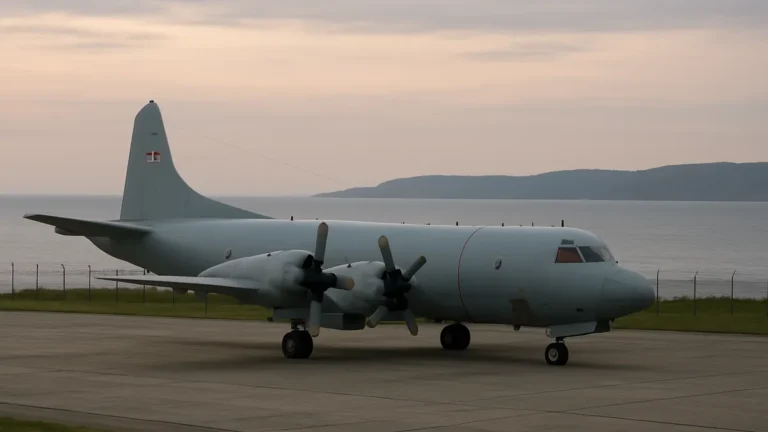
Even so, the schedule will be demanding for anyone. The 12-day tour includes multiple long-haul and local flights and covers thousands of miles, from the Amazon to the Andes.
Uruguay and Argentina stops carry religious and political weight
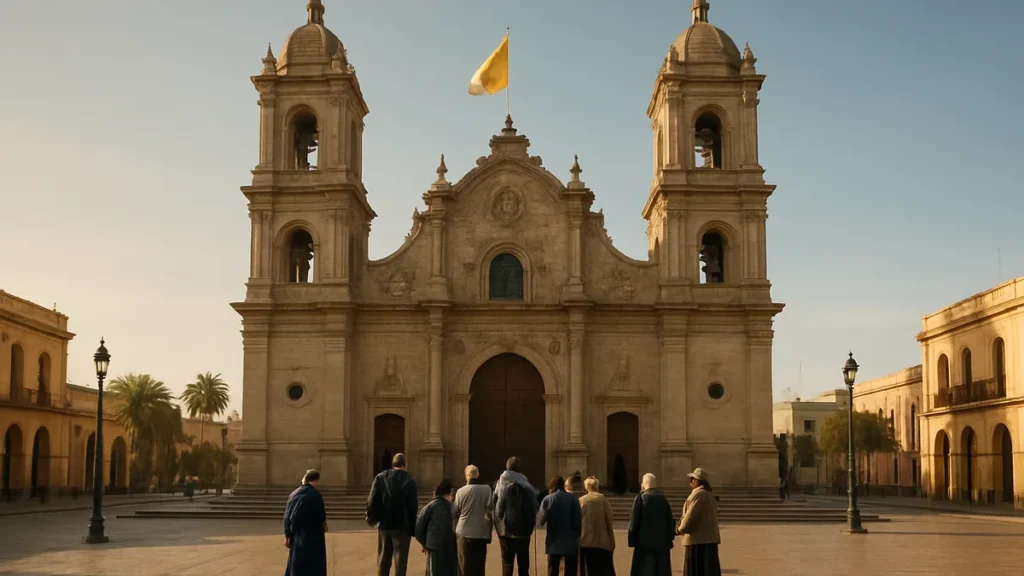
The tour begins in Uruguay, where the number of Catholics has fallen steeply in recent years. The visit is the first papal trip to the country in four decades.
Pope Leo then travels to Argentina, the homeland of his predecessor, Pope Francis. Father Fernando Laguna, rector of Santa Maria Addolorata, Argentina’s national church in Rome, said the visit was a tribute to Francis, who never made it to Argentina as pope. “This visit is also a homage to Francis, who didn’t make it to Argentina [as pope],” he said.
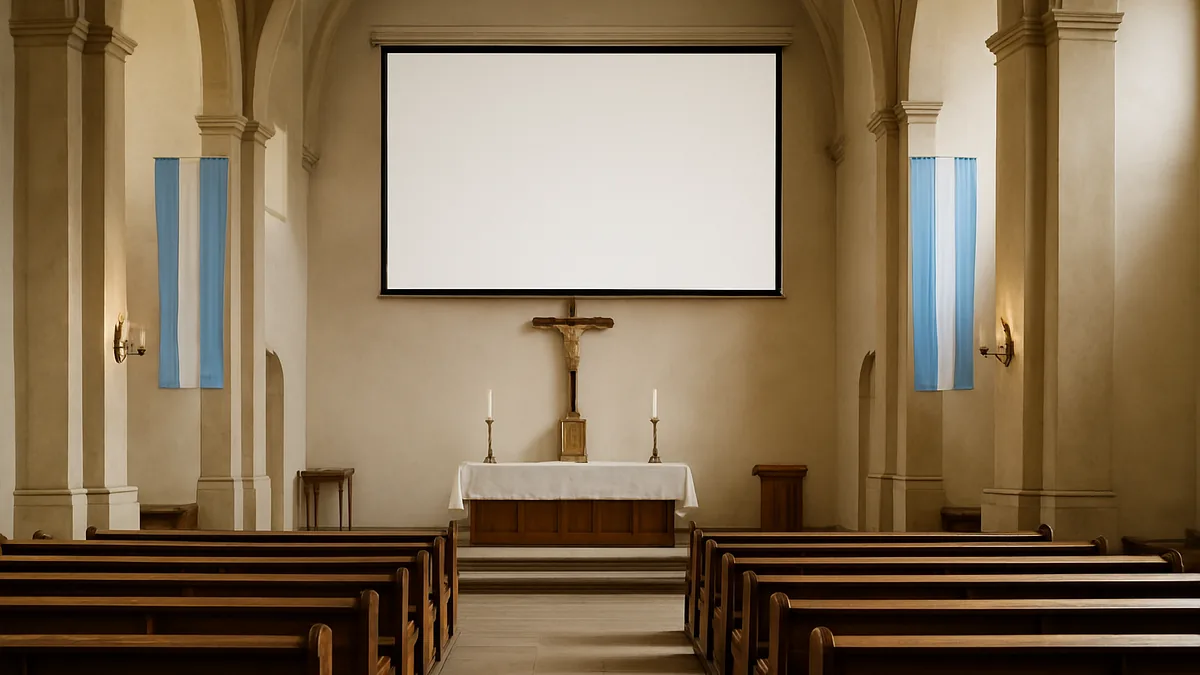
Laguna said the announcement had filled people with joy. “I always thought he would go, despite his illness. I don’t think he ever thought of calling it off!” he told the news outlet. He is installing a large screen inside the Rome church so parishioners can follow key moments of the trip. The building is already decorated with posters declaring that the Pope is welcome in Argentina.
This leg of the journey, which includes meetings with heads of state as well as religious events, may prove the most politically sensitive. President Javier Milei once called Pope Francis “evil on earth” and a “communist” for promoting a doctrine of social justice to help the poor. Argentina’s bishops have in turn criticised Milei’s harsh austerity measures, which involved sweeping cuts to social spending.
Milei has nonetheless welcomed Pope Leo. In a post on X, he wrote that Argentina awaits the Pope “with immense joy”. Millions of people are expected to turn out to greet him.
Peru visit framed as a return to the Pope’s roots
The Vatican describes the final stage, in Peru, as a return to the Pope’s roots and the highlight of the trip. “He knows these streets,” a spokeswoman said.
Born in the United States as Robert Prevost, the Pope spent almost 20 years in Peru, on and off, and holds Peruvian citizenship. Commentators see that period as fundamental to shaping his papacy. His schedule includes a return to the diocese of Chiclayo, where he was ordained bishop in 2014 and remained until Francis moved him to the Vatican almost a decade later.
The Pope will also travel to Cusco, the former capital of the Inca Empire, to celebrate Mass more than 3,000 metres above sea level. He will then head to Pucallpa in the Amazon.
In all three countries, the Vatican says the Pope will meet survivors of clerical sexual abuse. The issue overshadowed a 2018 visit to Chile and Peru by his predecessor.
Analyst sees trip as reconnecting the papacy with the region
Faggioli said the journey marks a reconnection with Latin America after Francis. “This is how the papacy reconnects with Latin America after Francis, whose visits to the region were not always seamless,” he said.
He believes Pope Leo has a strong sense of the Americas as one continent. “Democracies are in trouble there, so there are so many things he can address,” Faggioli suggested.
Faggioli also raised the question of a future trip to the United States. “The big question then is the United States. There’s no question he wants to go. So will he travel when President Donald Trump is still in office? I’m sure they’re thinking about this,” he said.