
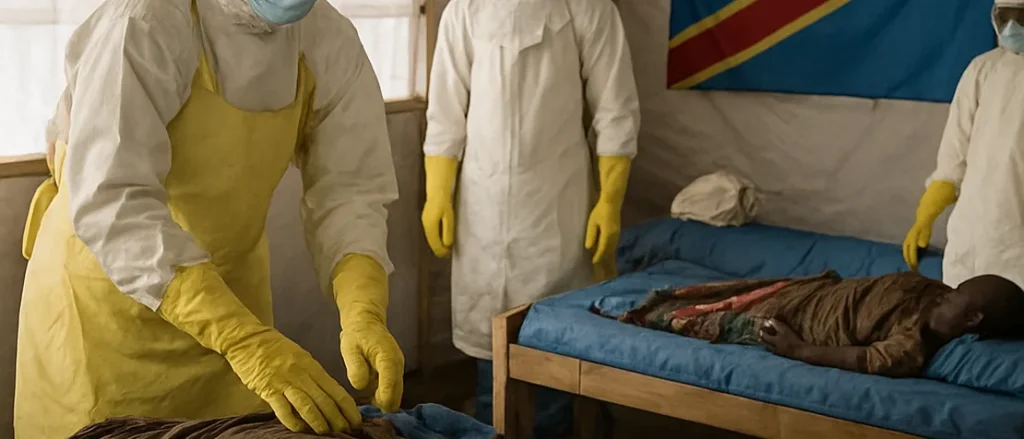

The Ebola epidemic in the Democratic Republic of Congo (DRC) has extended into a new health zone in the east, with Kenya reporting its first imported case of the Bundibugyo virus, raising concerns about the virus crossing borders.
According to the World Health Organization (WHO), the Alimbongo health zone in North Kivu province recorded its initial cases by October 6, including four confirmed infections and two deaths. This development marks the virus’s spread to an additional area within the eastern DRC.
Ebola outbreak status and case figures in the DRC
The outbreak, caused by the Bundibugyo species of Ebola virus, has affected 64 health zones across seven provinces in the DRC. Ituri province remains the most affected in terms of total cases, while North Kivu is seeing an increasing number of new infections.
As of October 6, the WHO documented 8,728 confirmed Ebola cases and 4,205 confirmed deaths in the country. Additionally, 2,269 individuals have recovered. The overall case fatality rate stands at 48.2 percent.
Kenya confirms first imported Ebola case and response measures
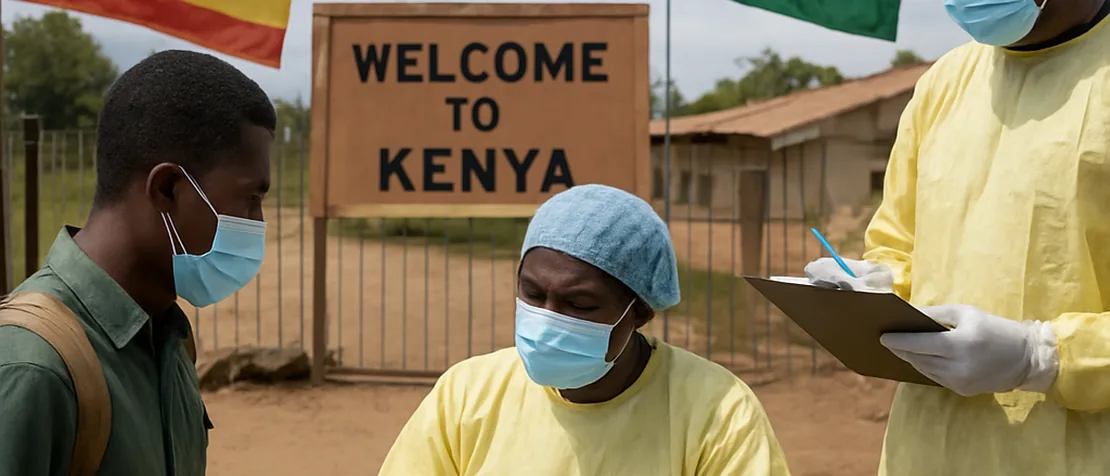
Kenya reported its first imported Bundibugyo virus case on October 6. The patient, a Kenyan national residing in the DRC, became ill there and sought treatment at multiple health facilities before traveling to Kenya via Uganda.
The patient traveled by road to Kampala, Uganda, then took a flight to Nairobi, arriving on October 3. Upon arrival, the individual was isolated in a hospital and tested positive for the virus. Despite receiving supportive care, the patient died on October 5.
Kenyan authorities have identified 28 contacts, including family members and healthcare workers, and are conducting contact tracing. Efforts are also underway to trace passengers and crew from the flight to Nairobi. Public health responses in Kenya and Uganda include enhanced surveillance and contact tracing.
Preliminary laboratory testing of a suspected Ebola case in Kenya’s Wajir County returned negative on October 8, easing concerns about a potential second case, although monitoring continues.
Challenges in outbreak containment and community cooperation in DRC
The response to the outbreak in the DRC faces significant obstacles, including limited treatment capacity, insecurity, and difficulties in gaining cooperation from some communities. Daniel Makasi Levergénois, founder of Watoto Radio, highlighted that misinformation and insecurity in North Kivu’s Beni and Butembo have led to reluctance among residents to engage with response teams.
Medical charity Doctors Without Borders (MSF) reported that North Kivu accounted for nearly 40 percent of newly confirmed cases nationwide as of early October, up from 24 percent at the end of August. MSF also noted that 34 percent of confirmed patients were treated in non-specialized health facilities as of late September, due to insufficient beds in dedicated Ebola treatment centres and delays in diagnosis.
Many of these peripheral facilities lack the necessary resources and expertise to manage Ebola, increasing the risk of transmission among patients and healthcare workers. Stephanie Hoffmann, MSF’s Ebola treatment centre coordinator in Butembo, said treatment capacity has been stretched to its limit, sometimes forcing referrals of confirmed patients to other locations despite the risks.
Community leader Alberto Lusenge in Beni expressed concern that ongoing transmission in Ituri province, combined with attacks on response workers in Beni and Butembo, has heightened public anxiety. He warned that mistrust could discourage symptom reporting and cooperation, potentially making North Kivu a new outbreak hotspot if community engagement does not improve.
Contact tracing and surveillance efforts amid outbreak pressures
The WHO reported that as of October 4, response teams were following up on 23,741 of 29,535 identified contacts, representing 80.4 percent, which falls short of the target of at least 85 percent. Effective contact tracing is critical for early detection and interrupting transmission chains, but gaps in follow-up hinder these efforts.
The Africa Centres for Disease Control and Prevention (Africa CDC) has emphasized a community-centred approach, including active case finding, systematic contact tracing, daily monitoring of exposed individuals, and sustained community engagement.
Jean Kaseya, Africa CDC’s director-general, stressed the necessity of quickly identifying and monitoring all contacts to prevent further spread, stating that controlling the outbreak depends on breaking every transmission chain.
Distinct challenges of the current Bundibugyo virus outbreak
The ongoing outbreak differs from the DRC’s 2018–2020 Ebola epidemic, which was caused by a different virus species and resulted in nearly 2,300 deaths. The WHO notes that there are no approved vaccines or specific treatments for Bundibugyo virus disease, making early detection, supportive care, and infection prevention essential components of the response.
As the virus spreads to more health zones and treatment facilities struggle to accommodate patients, health authorities must balance containing transmission with maintaining public trust to effectively manage the outbreak.