

Police in New Delhi have detained more than 1,000 people, including protesters, opposition politicians, journalists, student union leaders, lawyers and the founders of the “Cockroach” youth movement. The move was aimed at stopping a demonstration that demanded the resignation of India’s chief election commissioner, Gyanesh Kumar.
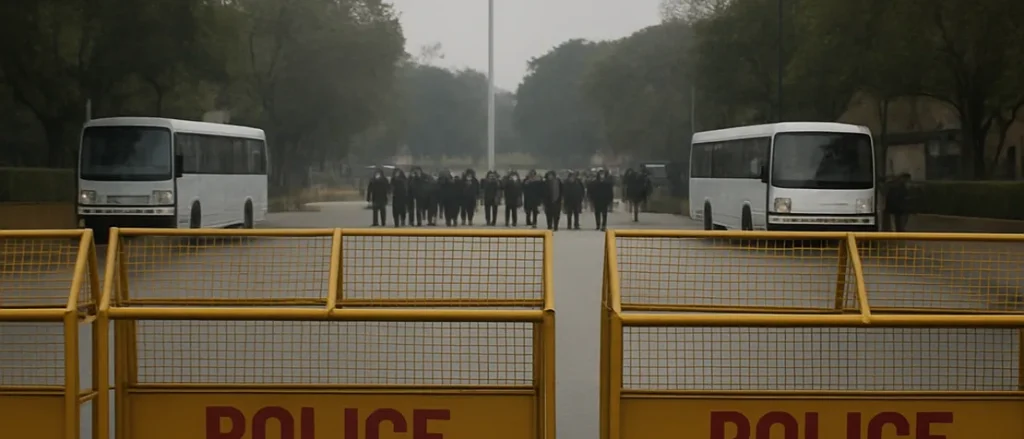
The satirical Cockroach Janta Party (CJP) and other youth groups had called the protest for Saturday in the capital. Their target was Kumar, over a revision of voter rolls known as the Special Intensive Revision (SIR). On the day, security forces sealed off Jantar Mantar, a designated protest site in central Delhi, before the demonstration could start.
Founders detained on a flight into Delhi
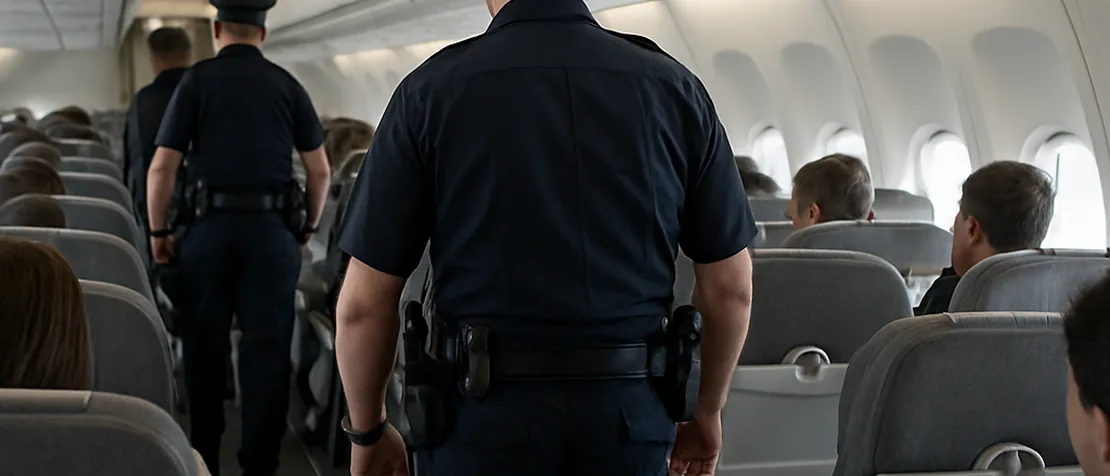
Police detained CJP founder Abhijeet Dipke and his associates Saurav Das and Ashutosh Ranka on an aeroplane after it landed in New Delhi from Mumbai. Dipke posted a video on his Instagram channel showing officers boarding the Air India plane. As they approached, he said: “I have come to get arrested. I am not afraid of you guys.”
In a second video, shared by Ranka, Dipke addressed the other passengers. He told them it had been nice to know them and said that the nation’s direction was becoming clear. He described the police action as dictatorship.
Delhi police also detained other CJP members, the YouTuber and Modi critic Dhruv Rathee, Neha Bora, the national president of the All India Students’ Association (AISA), and Dipankar Bhattacharya, the general secretary of the leftist group’s parent party, the Communist Party of India (Marxist-Leninist). Prashant Bhushan, a senior Supreme Court lawyer, and politicians Yogendra Yadav and Mamata Banerjee were among those held, according to the reports.
Allegations over voter roll revisions and the government response
The protesters accuse the governing Bharatiya Janata Party (BJP) of using the SIR to sway election results, in collusion with its appointees on the election commission, including Kumar. Opposition parties say the voter deletions also affected the outcome of some recent state elections won by the BJP, casting a shadow over elections in the world’s largest democracy.
BJP spokesman Sambit Patra dismissed the demonstrators as “anarchic elements”. He said their protest had collapsed. “Their flop show has been completely demolished,” Patra said. “India is calm and going ahead under good governance,” he told reporters.
Despite the detentions, small protests still broke out elsewhere in the city, including at the crafts market Dilli Haat. Journalists trying to cover them, and people who tried to protest anywhere in the capital, were also detained and taken away in police buses.
Opposition and rights groups criticise the crackdown
Shranaya, a state committee member of the left-wing Students’ Federation of India (SFI), said her office in New Delhi had been under surveillance for hours, though members inside managed to escape and protest. “This is dictatorship live and in front of us,” she said, accusing the government of protecting a bureaucrat who steals elections for the BJP. She was later dragged away by police after climbing a barricade.
Congress party president Mallikarjun Kharge criticised Prime Minister Narendra Modi’s government after the detentions. He wrote on X that the government had turned the “Mother of Democracy” into a “Muzzled Democracy”, and said detentions and arrests could not deter the people of India.
Amnesty International warned that the detentions signal the Indian government’s desperate attempts to “supress critical voices”. Aakar Patel, chair of the board of Amnesty International India, said the authorities must release everyone held solely for exercising their rights to freedom of expression and peaceful assembly. The Committee to Protect Journalists urged Delhi police to release all detained journalists and media workers, and to let the press cover the protests without interference. Kunal Majumder, the group’s Asia Pacific programme coordinator, made the call.
Sanjay Kapoor, editor of Hard News Magazine and a political analyst, said it was “very strange” to see the government “so panic-driven and fearful of what the protesters might do”. He said most people coming to the protests did not want the BJP to keep governing, and argued that the government had begun to lose credibility. The demonstrations come at a time when the BJP faces some of its most serious tests yet, ahead of a series of important state elections beginning in early 2027.