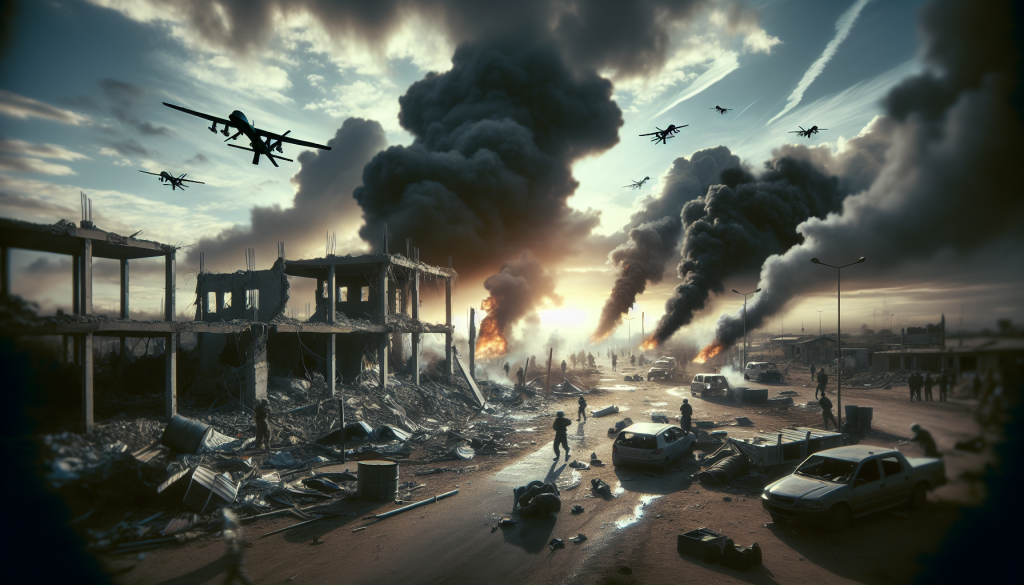

In a troubling escalation of the ongoing conflict, drone strikes have caused civilian casualties on both sides, with three people killed in Russia and another three in Ukraine. These attacks come just one day after Ukrainian President Volodymyr Zelenskyy reiterated his call for a ceasefire during the Easter period, aiming to reduce hostilities and protect non-combatants. The use of drones in this tit-for-tat manner highlights the increasing role of unmanned aerial vehicles in modern warfare, complicating efforts to achieve peace.
Notably, the drone strikes underscore the fragile nature of ceasefire agreements in the region, where intermittent violence continues despite diplomatic overtures. The civilian deaths emphasize the human cost of the conflict, raising concerns among international observers and humanitarian organizations about the protection of innocent lives. This cycle of retaliation threatens to undermine any progress toward a lasting resolution, as both sides remain entrenched in their positions.
Meanwhile, the renewed ceasefire proposal by Zelenskyy was intended to foster a temporary halt in fighting to allow for humanitarian aid and dialogue. However, the immediate resumption of attacks demonstrates the challenges in enforcing such agreements amid deep mistrust. The ongoing violence not only affects the immediate security situation but also hampers broader peace efforts, prolonging instability in the region and impacting global geopolitical dynamics.