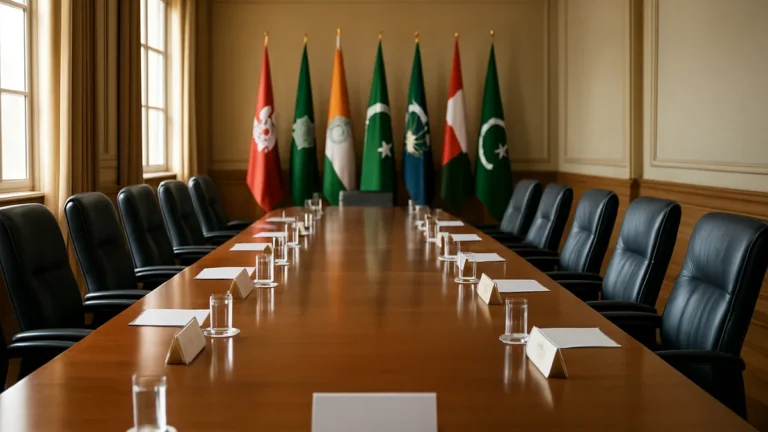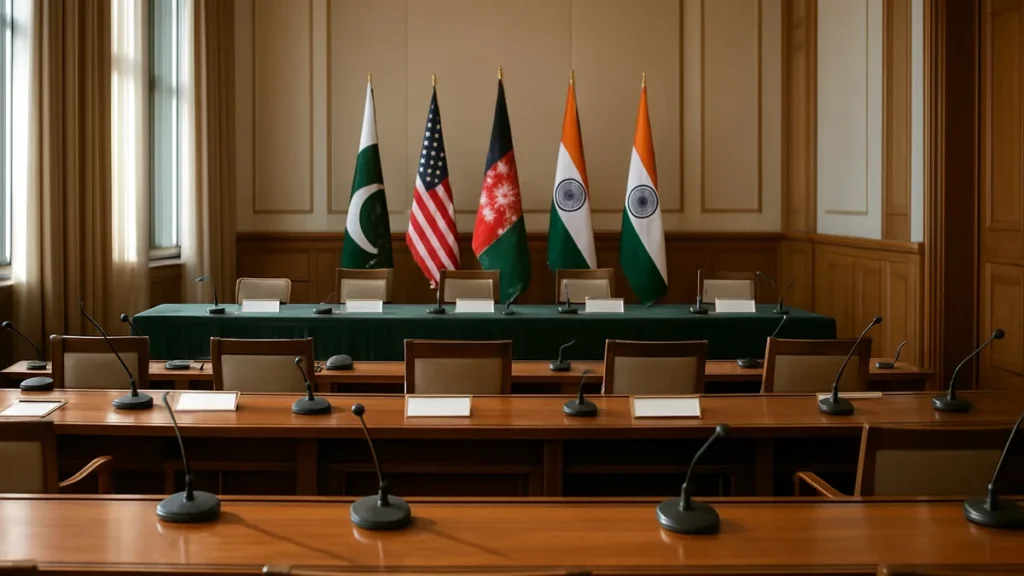
Deputy Prime Minister and Foreign Minister Ishaq Dar on Monday called on Afghan authorities to confront terrorism and to take seriously the security concerns of neighbouring countries. Speaking on the second day of the 30th Economic Cooperation Organisation (ECO) Council of Ministers in Islamabad, he said lasting economic cooperation in the region depends on peace and stability.
Dar said Pakistan wants a peaceful and prosperous Afghanistan that can take a full part in regional trade and connectivity initiatives. He warned, however, that progress would be held back unless security threats that could undermine economic partnerships are addressed. The meeting he chairs brings together delegations from ECO member countries, including Iran, Turkiye, Azerbaijan and Kazakhstan, along with representatives of the Organisation of Islamic Cooperation (OIC) and the Shanghai Cooperation Organisation (SCO).
Security concerns central to regional integration
Dar said Pakistan hopes to see a stable Afghanistan fully woven into the ECO framework. He argued that such an outcome would benefit Afghans and the wider region by opening doors to trade, transit and economic cooperation. He told delegates that meaningful progress requires Afghan authorities to address the legitimate security concerns of their neighbours, particularly the threat of terrorism.
Also read: ECO Council of Ministers to meet in Islamabad on November 15-16 · Iran's Araghchi joins ECO ministerial meeting in Islamabad
He added that regional economic integration cannot work without a secure environment. Conflicts and instability, he said, disrupt trade routes, energy supplies, investment and development projects. “Peace and development reinforce each other,” Dar said, adding that insecurity can undermine even the most promising development initiatives.
Dar also voiced concern over continuing conflicts across the region, saying their effects spill beyond national borders and hurt economic development. He repeated Pakistan’s position that disputes should be settled through dialogue and diplomacy, in line with international law and the United Nations Charter. He said Prime Minister Muhammad Shehbaz Sharif, Chief of Army Staff and Chief of Defence Forces Field Marshal Syed Asim Munir, and the Foreign Office had stayed in contact with regional countries and international partners to help bring about peaceful outcomes. “Pakistan will continue these diplomatic efforts in support of dialogue, de-escalation, and lasting regional stability,” he said.

Five priorities for Pakistan’s ECO chairmanship
Turning to the economic agenda, Dar outlined five priorities for Pakistan’s ECO chairmanship covering the 2026–2027 period. He said the region has substantial natural resources, energy reserves, agricultural capacity and geographic advantages, but needs stronger economic links to turn that potential into prosperity. The priorities he listed were:
- trade and investment
- regional connectivity
- modernisation of trade arrangements
- climate resilience
- human development
On trade and investment, Dar said Pakistan would seek wider market access, stronger regional value chains and greater participation by the private sector, especially small and medium-sized enterprises. He said closer cooperation among businesses could cut trading costs, attract investment and create jobs across member countries. On transport, he said Pakistan wants to strengthen links between Central Asia, South Asia and its ports on the Arabian Sea. “Harmonised customs procedures, efficient border management and predictable transit arrangements are essential for making these routes commercially viable,” he said.
Trade agreement overhaul, climate and youth agenda
Dar said Pakistan would also work to modernise the ECO Trade Agreement, building on the negotiating strategy and roadmap that member countries’ trade ministers approved in November 2025. He described the framework as a basis for more effective trade rules and wider economic cooperation. He also pointed to progress toward finalising the Strategic Goals of Economic Cooperation 2026–2035, which he said would guide the organisation’s priorities over the coming decade.
Dar identified climate change, natural disasters and growing pressure on water and energy resources as major challenges facing ECO economies. He said closer cooperation on disaster preparedness, early warning systems, sustainable water management and climate-resilient infrastructure could help members respond to shared risks. He also called for more investment in education, research, innovation and vocational training so young people gain skills suited to changing economies. Dar said the five priorities were interconnected, and that their success would depend on pursuing all of them together.
Iranian foreign minister arrives for ECO talks
Iranian Foreign Minister Seyed Abbas Araghchi arrived in Islamabad to attend the meeting, as more dignitaries continued to reach the capital. According to a Foreign Office statement posted on X, Araghchi, who is leading a political and economic delegation, was received by Additional Foreign Secretary Muhammad Tariq Wazir. He is expected to address the gathering and hold bilateral meetings with Pakistani officials and representatives of other member states.
Concluding his remarks, Dar urged member countries to turn their commitments into measurable economic progress. He called on them to move beyond discussion toward better trade arrangements, transport links and regional economic opportunities. “We must translate geographic proximity into connectivity, connectivity into commerce, and commerce into lasting prosperity for our people,” Dar said. He added that the organisation’s achievements should ultimately be judged by how they improve the lives of ordinary people in the region.