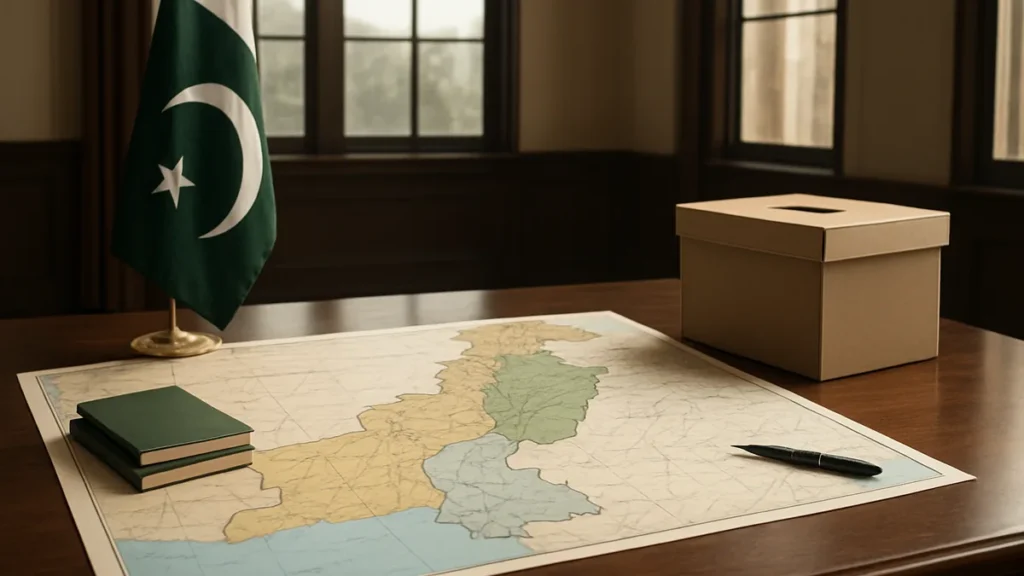
A proposal to redraw Pakistan’s administrative map into 12 provinces is being considered, and a nationwide referendum is envisaged before any possible 28th Constitutional Amendment, according to sources familiar with the plan. The proposal is presented as a way to improve governance, raise administrative efficiency and spread development more fairly across the country.
The sources said the constitutional amendment could be taken up in the first half of 2027, with preparatory steps possibly starting in the first quarter. The plan remains at the consideration stage, and no final decision has been taken on boundaries, administrative structures or the constitutional process needed for such a major change.
How the proposed 12 provinces would be formed
Under the arrangement under discussion, the country’s existing units would be split up to reach the total of 12. The breakdown reported by sources is as follows:
Also read: 28th Constitutional Amendment Expected Before New Year
- Punjab could be divided into four provinces.
- Khyber Pakhtunkhwa and Balochistan could each be divided into three.
- Sindh could be divided into two.
A central element of the approach is a referendum held before the amendment process begins. Its purpose would be to measure public opinion on creating new provinces, giving restructuring a popular mandate rather than leaving the matter to political bargaining and partisan interests.
Sources stressed that the exercise is not meant to target any particular province or weaken the political or administrative position of any existing unit. Instead, they argue that Pakistan’s growing population, administrative pressures and uneven development call for a new approach to governance.
The case for smaller administrative units
According to those behind the proposal, the main goal is to bring government closer to ordinary citizens. They say it would improve access to public services, make administration more responsive and ensure that development projects and resources reach every region.
Supporters believe smaller units would make it easier for governments to identify local priorities and monitor public-sector performance. They also argue it would help close gaps in service delivery and respond more quickly to everyday problems faced by citizens.
Constitutional questions and the road ahead
The referendum is also seen as a possible way to move the debate beyond political rivalries. Creating new provinces has historically triggered strong reactions, with parties and regional stakeholders often judging the issue by electoral interests, provincial identity and the sharing of power.
Advocates argue that public opinion should outweigh political calculation, and that the question should be judged mainly on administrative efficiency and public welfare. A nationwide consultation could also help build consensus on the principle of restructuring.
However, the exact boundaries, resource distribution, constitutional safeguards and transfer of administrative responsibilities would still require extensive political and parliamentary debate. Any restructuring would also raise significant constitutional questions about the existing provincial framework, representation, finance and administration. The initiative would therefore need broader political engagement and constitutional consensus before it could become a reality.