Prime Minister Shehbaz Sharif on Wednesday launched the Mehfooz Dawa app at a ceremony in Islamabad. The tool is meant to help people determine whether a medicine is fake, find its official price and check whether it is sold in the market. The Ministry of National Health Services developed the application.
How the colour system and national data bank work
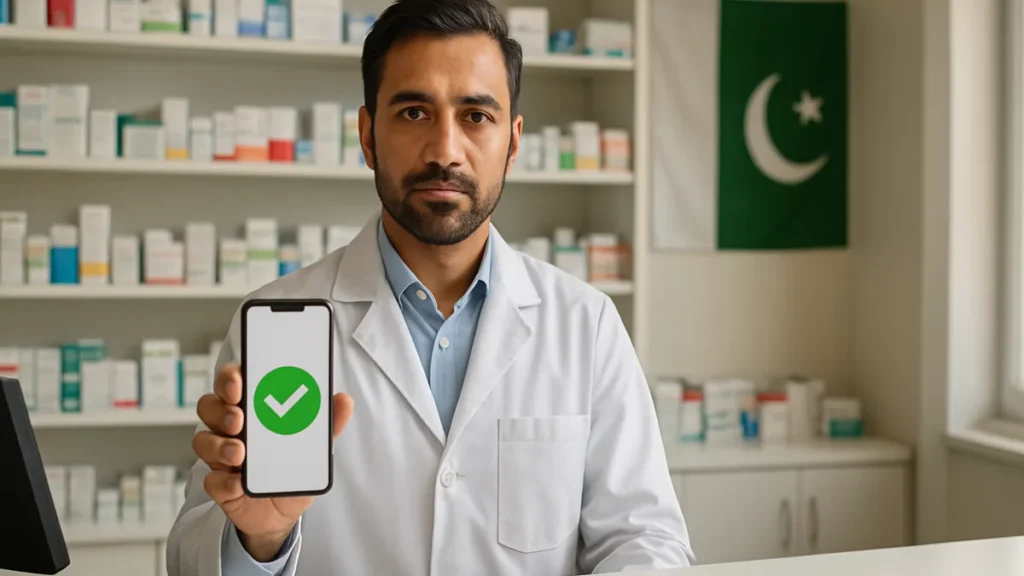
The app uses colours to show the status of a medicine. Users point their phone screens at the product, and a green result means the medicine is authentic while red means it is counterfeit.
Health Minister Mustafa Kamal, speaking at the launch, said the pharmaceutical industry had shared information on around 92,000 medicines made in Pakistan. That information has been kept in a national data bank. According to Kamal, authorities will be able to trace a faulty medicine back to the company, the manufacturing machine and the time its batch was produced.
Also read: Pakistan to launch Mehfooz Dawa app against counterfeit drugs
Kamal said the software took about three months to build. He said the harder task was persuading the pharmaceutical industry to cooperate and getting manufacturers to put money into the system. He thanked the industry for its data and investment, and said the government had introduced legislation setting a deadline for companies to take part.
Easy-to-use design and calls for affordable medicines
Kamal said the app was designed for people who cannot read, since they only need to check the colour on their screen. He added that more features would be introduced in the coming days.
Sharif said the application would give users three key details: whether a medicine is genuine or counterfeit, its official price and whether it is available. He asked the information technology and information ministries to work with the health ministry so the message reaches households across the country.
The prime minister also urged pharmaceutical representatives and experts to work with the government on steps that would make medicines more affordable and easier to obtain. He said access to healthcare and education should be equal, and that the cost of medicines remained a major challenge for millions of people who cannot afford treatment.
Lessons from the 2011 Punjab Institute of Cardiology deaths
During his address, Sharif recalled a medicine-related crisis at the Punjab Institute of Cardiology in Lahore in 2011, when about 100 patients died after receiving medicines during treatment. He said samples had been sent to laboratories in London, Geneva and Paris.
Sharif said the Drug Regulatory Authority of Pakistan (Drap) had declared the medicines to be heart drugs. The European laboratories, however, reported that they were not cardiac medicines but malaria drugs. He said the episode showed the need for reliable systems that ensure medicines are safe and authentic.
Sharif thanked the health ministry, the information technology ministry, government departments and pharmaceutical companies that helped develop the application.