The World Food Programme’s chief has cautioned that disruption along three key trade routes is driving up food and humanitarian expenses, putting assistance for millions of people in jeopardy.
Speaking to the UN Security Council in New York on Monday, Executive Director Luke Lindberg described a “triple chokepoint” affecting the Strait of Hormuz, the Bab al-Mandeb and the Black Sea. He said this had “dramatically tightened the supply of food exports and farming inputs”.
Rising costs threaten aid for 7.3 million people
Lindberg linked the trade strain to conflict and climate shocks such as El Nino, saying the impact on food production and prices has been “very real”.
Also read: Saudi coalition and Houthis trade threats over Red Sea ports
If current conditions continue, the agency expects $727m in additional costs by mid-2027, which could put help for 7.3 million people at risk. Lindberg said the funding gap was pulling money from WFP operations, leaving fewer families with less food.
The warning comes as 266 million people worldwide face acute hunger. Parts of Sudan, South Sudan and Somalia face a risk of famine.
Shipping declines hit fertiliser and grain supplies
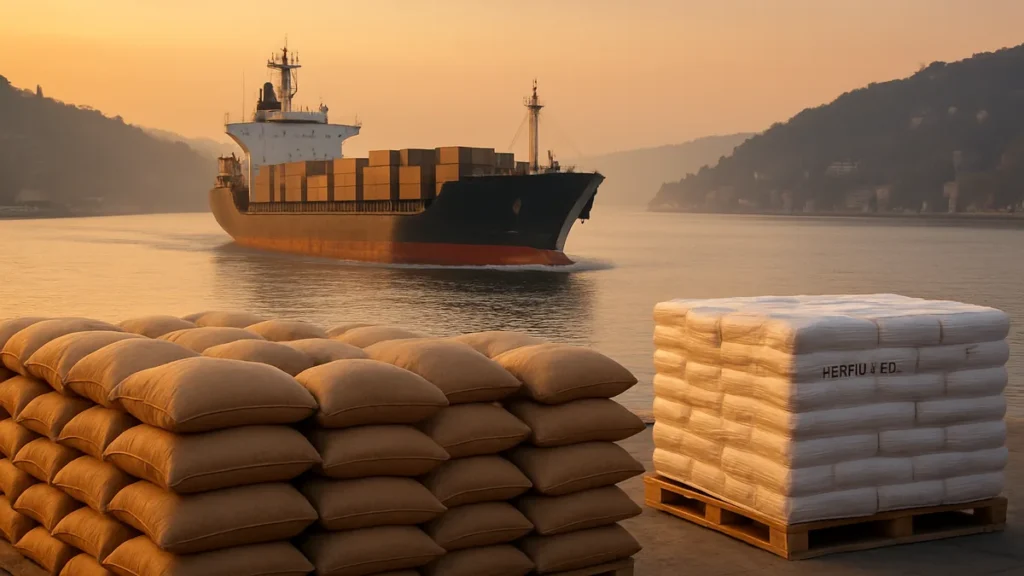
About 30 percent of global fertiliser supplies pass through the Strait of Hormuz. The Black Sea is a major grain source for countries including Somalia and Yemen, and Yemen imports 90 percent of its food.
By mid-October, the WFP said, 63 percent fewer wheat and maize vessels were moving through the Bosphorus than a year earlier. Around 10 million tonnes of Russian and Ukrainian wheat could fail to reach global markets, enough to feed an estimated 44 million people.
Lindberg rejected the idea that supply is the core problem. “This is not a problem of production. It is a political problem,” he said, adding that “Grain is available, but it is not reaching the people who need it.”
Sudan food prices and three red lines
In Sudan, the cost of a basic diet has climbed 130 percent since February.
Lindberg urged member states to commit to three “red lines”: no more famines, no more weaponisation of food and no more attacks on humanitarians.