In New York City, residents are preparing for the possibility of prolonged disruption after a series of technology outages hit services across the United States this month. Kristyn Lavery, a 67-year-old retired fashion designer, is one of many people who have started stockpiling essentials. She has lived in Manhattan’s East Village since 1981.
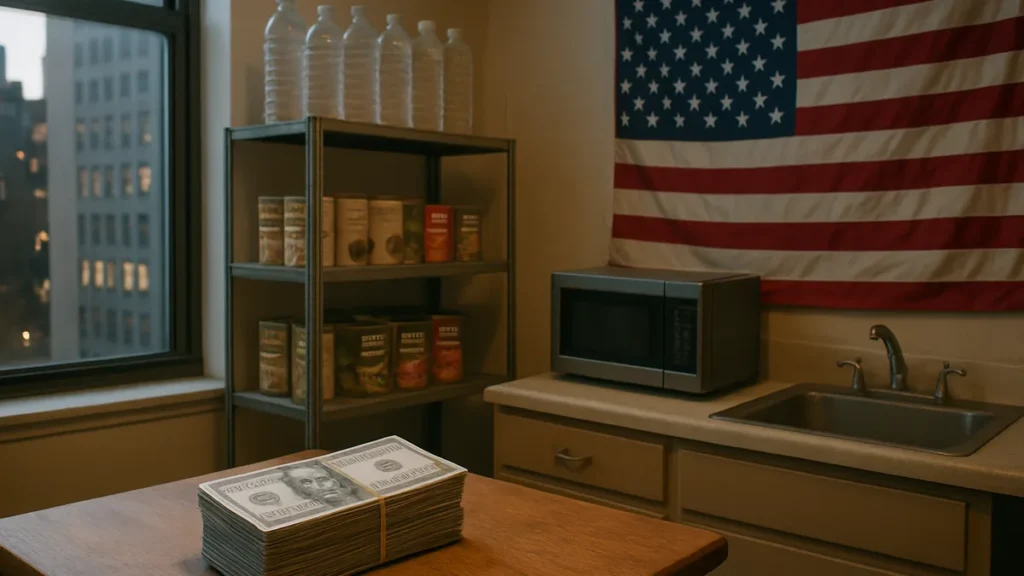
Lavery has begun keeping cash and extra water in her 32.5-square-metre apartment, which she says measures 350 square feet. She has also looked into ways to stay warm, but she told she cannot afford a generator, which can cost hundreds of dollars. Her case reflects a wider pattern of Americans buying supplies out of concern that the outages could signal other weaknesses, or even a collapse of technology systems.
Residents stockpile supplies amid outage fears
Public unease started to build on November 13, when a malfunctioning flight communication system brought air travel to a nationwide halt. Experts later linked the ground stop to a technology update that had gone wrong. Flight delays occurred at roughly the same time that Microsoft reported problems with its services, including the Outlook email platform.
Also read: Marco Rubio says US tech outages are not under systemic attack
In the days that followed, the US National Security Agency, Apple and banks including JPMorgan Chase also reported service disruptions. Last week, authorities said they were investigating a suspected hack of the National Crime Information Center and the US Department of Agriculture. There is no evidence that these episodes are linked, but residents say the incidents have left them uneasy.
For Lavery, the recent events have revived memories of the September 11, 2001 attacks and the COVID-19 pandemic. She also recalls the 2012 flooding caused by Hurricane Sandy, which disrupted transport and power in parts of Manhattan. Her neighbourhood went without heat and hot water for days, and residents had to depend on each other.
“I feel vulnerable. And I don’t want to be a victim. Yet I feel like, if this happens, it will be on me for not preparing,” she told . “I got no help from the government,” Lavery said. “It was neighbours helping neighbours.”
Social media and retailers show rising preparedness
Interest in emergency preparedness has also spread online in recent weeks. On TikTok, a New Yorker identified only as Nat posted a video on Tuesday showing the canned food and water she had bought for her Lower Manhattan apartment. “I’d rather be crazy than sorry,” she said.
Moderators of the r/preppers forum on Reddit, which focuses on emergency preparedness, said on Sunday that the group had gained nearly 12,000 members over the past month. It recorded 4.2 million views in the same period, an increase of 2.4 million on the previous month.
Signs of heightened spending on emergency goods appeared before the outages began. Sales at the wholesale retailer Costco rose 8.1 percent in October, excluding fuel. Analysts at Mizuho Securities, a financial firm, estimated that the company’s growth picked up to about 12 percent in the final week of the month and continued into early November. They linked part of that increase to emergency-preparedness purchases driven by what they called “apocalyptic concerns” on social media.
Separately, Circana data showed that sales of water-purification tablets rose 154 percent and disinfecting wipes rose 72 percent in the four weeks ending November 1, compared with a year earlier.
Joel Smernoff, chief executive of the New York-based emergency-preparedness company Black Umbrella, told that his company’s sales had nearly doubled over the past two weeks, mostly from new customers. He said the outages have made the weak points of everyday infrastructure seem more real to people. “It’s the drumbeat of every day: Another huge brand is going down,” Smernoff said.
Smernoff also pointed to Hurricane Sandy. After the storm, his apartment building near Union Square lost power and running water for six days. Older residents on upper floors who could not manage the stairs relied on the building superintendent to bring them bottled water. “The rapidity and the frequency of it can be surprising,” he said.
Officials downplay coordinated attack fears
Cybersecurity experts have said that artificial intelligence has made it easier to find potential software flaws, pushing companies to actively look for and fix vulnerabilities. Emergency updates, however, can themselves cause disruptions when they are rolled out across complex systems.
US officials have stressed that they have found no evidence the recent incidents are part of a coordinated attack. President Donald Trump has also tried to calm concerns in recent media appearances. “Tell them to relax. Everything is good. These are individual events,” Trump told Fox News on Thursday, when asked whether the public should prepare for emergencies.
Local leaders have pointed to government emergency planning as well. New York Governor Kathy Hochul and New York City Mayor Zohran Mamdani addressed the disruptions on November 17. Hochul said she had received daily briefings from state intelligence and cybersecurity teams since the first Microsoft Outlook problems, and that the state had taken steps to strengthen critical infrastructure. Asked about a wider outage affecting utilities, phones and street lights, Mamdani said the city had assigned specific agencies to prepare for large-scale disruptions.
New York City Emergency Management advises residents to write an emergency plan and assemble a home kit that can last seven days. The agency also encourages people to build a support network and check on neighbours who may be isolated, including older residents and those with medical or access needs.
The string of outages has nonetheless led some New Yorkers to question how far they can rely on technology that can suddenly stop working. “I’m in a quandary,” Lavery said. “I tell myself hopefully this is just a fluke. But I feel like we’re not being told what this really is.”