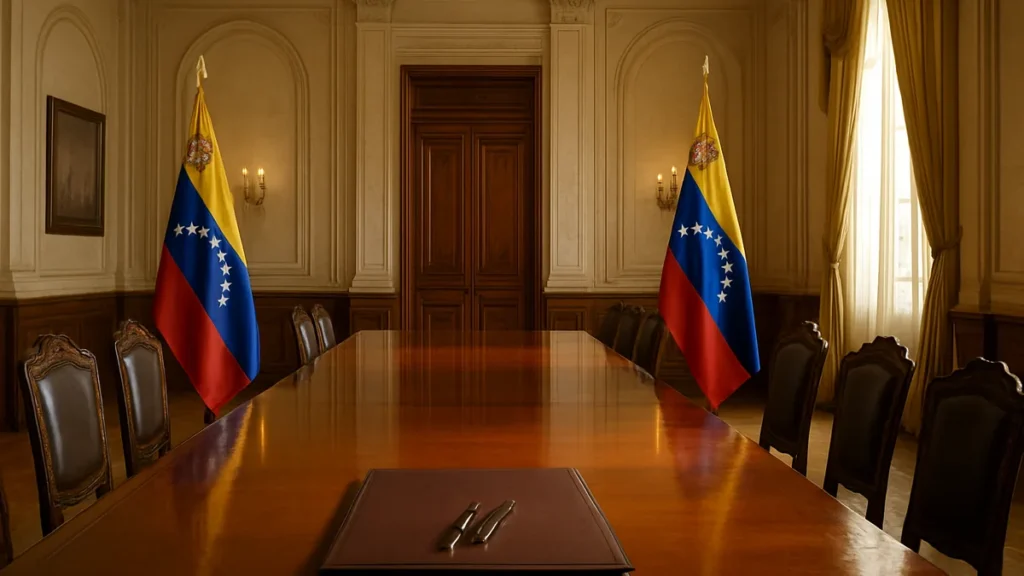
The United States and Venezuela have restored military ties less than a year after US forces seized the former Venezuelan leader, Nicolás Maduro, in a raid on the capital, Caracas. The interim government, now led by Delcy Rodríguez, who previously served as Maduro’s vice-president, signed a military co-operation agreement with US Defence Secretary Pete Hegseth on Wednesday.
Few details of the agreement have been made public so far. Hegseth said Venezuela had shifted from being the most aggressive threat in the region to becoming a compliant security partner within 12 months. Rodríguez said the deal would help the two countries confront what she called “common threats”.
Decades of hostility between Caracas and Washington
Military co-operation between the two countries was brought to an end in 2005 by Hugo Chávez, who was Venezuela’s left-wing president at the time. Chávez claimed that US military personnel sent to train Venezuelan counterparts had made derogatory comments about his government.
He also described the US military office at Fuerte Tiuna, the largest military complex in Venezuela, as an arm of the CIA that was plotting against his administration. Relations worsened further under Maduro, who took over after Chávez died of cancer.
Ties reached their lowest point late last year, when Washington doubled its reward for information leading to Maduro’s capture to $50m (£38m). On 3 January, US forces seized him in a military raid. Maduro and his wife, Cilia Flores, are now in custody in New York, facing charges of drug-trafficking and conspiracy to commit torture. They deny the charges.
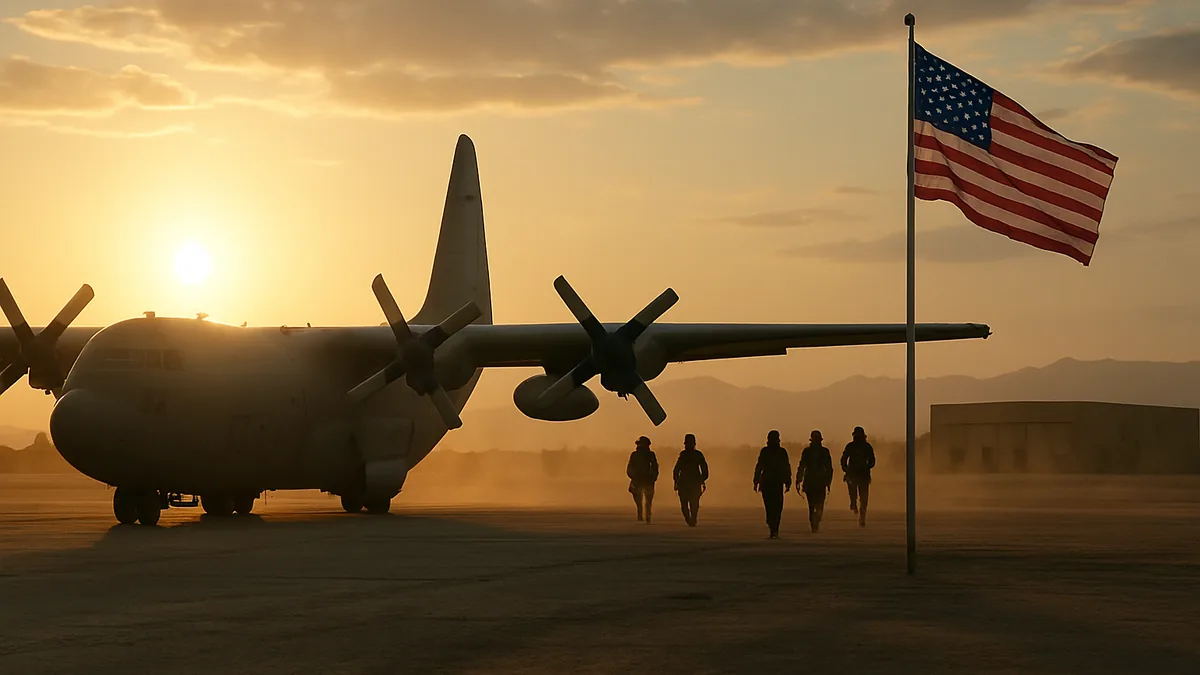
Hegseth draws a contrast with Maduro’s rule
In a speech at the US embassy in Caracas on Wednesday, Hegseth said he was honoured to be the first United States Secretary of War this century to set foot in Venezuela. He acknowledged the weight of the moment and said that a visit like his would have seemed impossible only a year earlier.
Hegseth then recalled a public appearance by Maduro that had angered the Trump administration. He described Maduro as an indicted “narco-terrorist fugitive” who had spent more than a decade handing Venezuela’s borders and territory to terrorists, and said Maduro had mockingly challenged the US to “Come and get me!”. Hegseth said Washington had answered that call.
He also said the outcome of the 3 January raid had matched what Maduro had predicted, quoting the deposed leader’s words: “No war, yes peace.” Hegseth called the agreement he signed with Venezuela’s defence minister a “new chapter” for both countries, for the Venezuelan military and for the Western Hemisphere through the Americas Counter Cartel Coalition.
Rodríguez described the deal as “extraordinarily relevant for our bilateral relations”. Speaking to Hegseth at the presidential palace, she said that in a matter of months the two governments had turned very difficult moments into a basis for co-operation. While no text of the deal has been published, she referred to training for Venezuela’s armed forces, upgrades to its “operational equipment” and access to new technology.
Hegseth was more explicit in his speech about who he regarded as the threat. Speaking to the “narco-terrorists” who use Venezuela as a safe haven, he warned that the US would hunt them down, find them and kill them.
Colombia visit and questions over joint operations
From Venezuela, Hegseth travelled to neighbouring Colombia, whose president, Abelardo de la Espriella, is a close ally of the Trump administration. Colombia is already part of the US-led Americas Counter Cartel Coalition. In August, Hegseth had suggested that joint US-Colombian military operations against armed groups could be possible.
On Wednesday, President de la Espriella posted on X to deny a New York Times report that he had rejected joint operations. He said any decision would respect Colombia’s constitution, its laws and its sovereignty. Hegseth reposted the message and said the US-Colombian partnership was “stronger than ever before”.