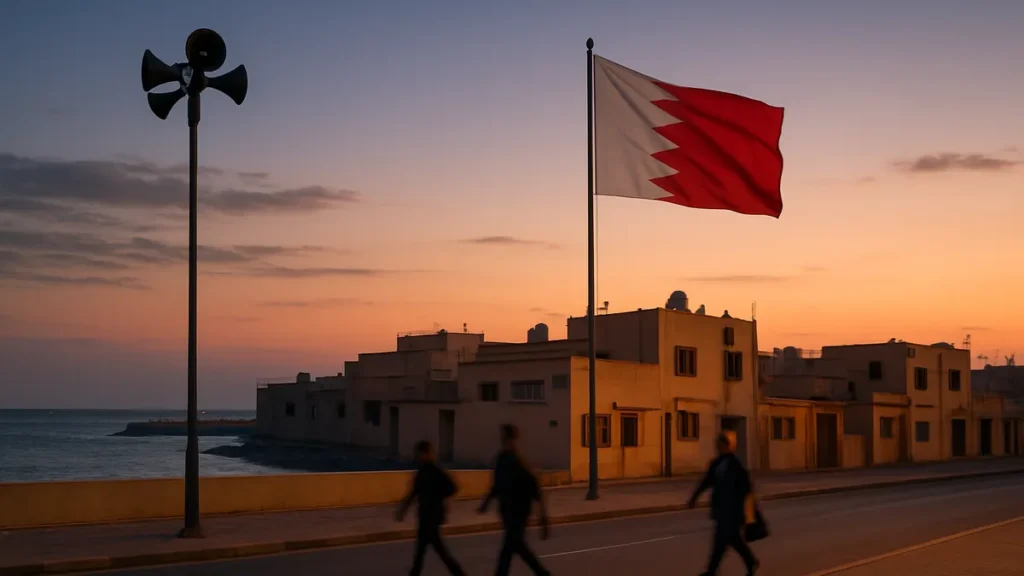
Blasts and sirens were heard across Bahrain on Sunday, and authorities urged residents to take shelter after Iran’s Revolutionary Guards said they had attacked a US military base in the Gulf state.
An AFP journalist heard alarm sirens sounding, while authorities posted several alerts on social media without saying where the threat came from. In a post on X, the interior ministry urged residents to stay calm, move to the nearest safe location and follow official channels.
Explosions reported in the early hours
The AFP journalist said explosions could be heard around 4:00 am (0100 GMT). Residents reported a second series of blasts at about 6:30 am (0330 GMT).
Also read: Rubio defends Iran war as necessary to stop nuclear threat
Guards claim drone attack on Al-Riffa radar
The Revolutionary Guards said their forces carried out a drone attack on a US radar system at a base in Bahrain, according to a statement carried by the Iranian state broadcaster. The Guards said six drones belonging to the IRGC Aerospace Force had targeted the US air defence radar at the Al-Riffa helicopter base.
In the same statement, the Guards said the Strait of Hormuz was closed and warned that any aggression by the United States would meet a harsher response.
Wider war and Gulf shipping impact
Bahrain hosts a major US naval base and is one of several Gulf countries that have borne the brunt of Iran’s strikes during the war, which began when the United States and Israel launched surprise attacks on Iran on February 28. Over eight months, Iran has restricted shipping through the Strait of Hormuz and struck airports, seaports, energy facilities and US assets across the region.
On Friday, the Guards said they had targeted a US early warning radar system in Bahrain. The American military said it shot down two Iranian drones aimed at the island, while US Central Command (CENTCOM) reported no casualties or damage from that attack.
CENTCOM, which oversees American military operations in the region, said last month that it had helped Gulf countries export 1.5 billion barrels of oil since the summer via Hormuz, a key energy trade route.