Five-time Olympic judo champion Teddy Riner has thrown his hat into the ring for next April’s French presidential election, shaking up a race that many observers had considered already set. The 37-year-old world heavyweight champion, born in Guadeloupe, has no experience of public office, no political party behind him and no manifesto so far.
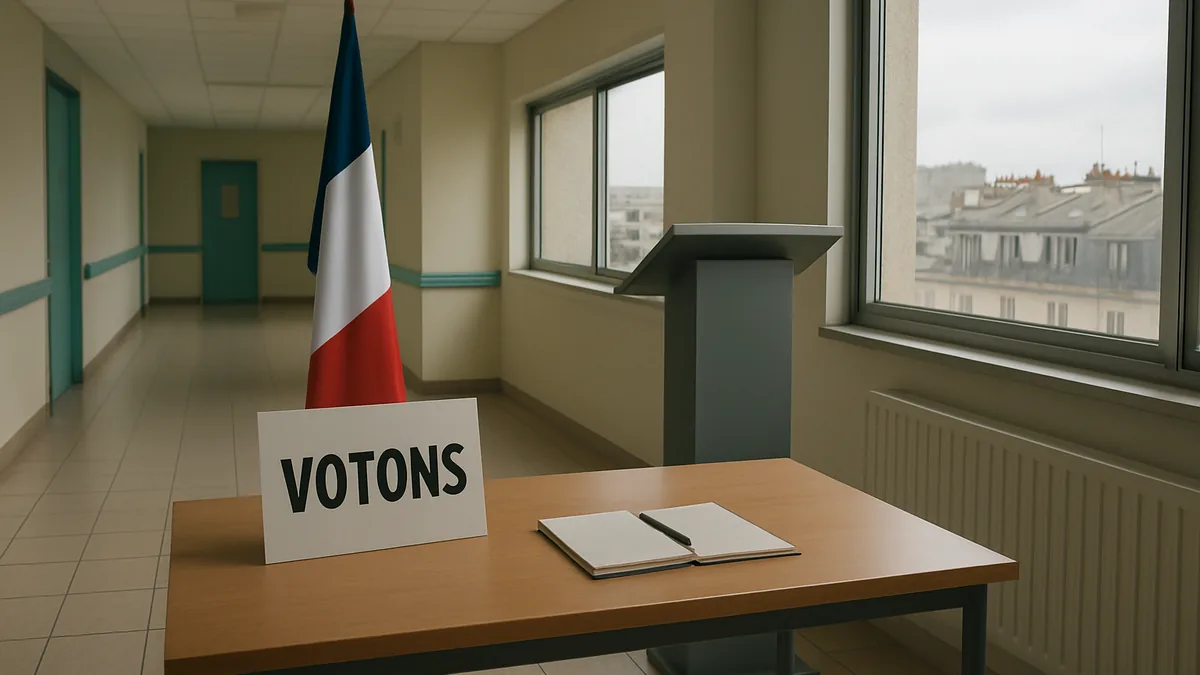
His campaign so far consists of a slogan, “La France qu’on aime” (The France we love), a declaration on social media and a campaign visit to a hospital in the Seine-Saint-Denis suburb of northern Paris. Even so, the commentary suggests that his chances should not be written off.
Riner’s popularity gives him a strong starting point
Riner is one of the most popular figures in modern France and regularly tops polls for embodying the nation’s “values”. He has five Olympic golds and 11 world championships to his name, as well as a successful career in business.
His election broadcast, shared on Instagram and X, was filmed in a formal setting against a backdrop of books and a French flag. More than 28 million people watched it, and 22% of respondents to an Ifop poll taken within 24 hours said they “could” vote for him.
Commentators point out that non-politicians have won top offices elsewhere. Former Liberian leader George Weah, for example, was a professional footballer before entering politics. Political journalist Guillaume Tabard said that being outside the political establishment does not rule Riner out, but added that Riner would be wrong to think that is enough on its own.
A fragmented field leaves room for an outsider
Much of the French political establishment has chosen to treat the candidacy seriously, or at least to appear to. Mocking a figure this popular could easily backfire, and the wider political scene is in disarray beyond the far left and far right.
The centre ground is struggling to produce a candidate with the same sense of purpose as far-right leader Marine Le Pen or the leader of the hard left, Jean-Luc Mélenchon. The two currently look set to meet in the final round in May. Former prime ministers Edouard Philippe and Gabriel Attal have failed to gain traction, and about a dozen candidates are competing in the area between centre right and centre left.
Riner has presented himself as “neither left, nor right”, and has pledged to “unite the country” and “put money back in people’s pockets”. Adding another contender to the centre, however, could split votes further and make a second-round place for Mélenchon more likely. That is why Mélenchon welcomed the news, telling reporters on Friday: “We know how it goes: neither right nor left means not left.”
President Emmanuel Macron was another of the few politicians to appear openly pleased. He called Riner a “great champion” and said politics “did not belong to the professionals”. Riner responded on Saturday that he viewed the praise as a “poisoned chalice”, adding that he was “not the president’s envoy, I’m not a Macronist”.
Riner must now set out a detailed platform
In his first social media broadcast on Monday, Riner presented himself as an ordinary citizen who has seen the problems facing families first-hand. He asked whether wanting to run for president made him a fool, arguing that seeing France sink under debt and families struggle with the weekly shop would make him one, and said: “then yes call me a fool.”
The commentary notes that the hard work now begins. It is still unclear what Riner actually wants to do, who would join his team, or where he stands on pension reform, investment in education, the cost of living, public debt, the rise of populism and Russia’s war in Ukraine. Turning his popularity as a sportsman into a political mandate will depend on answers to those questions.
Based on his remarks so far, Riner appears to lean to the right on economic matters and law and order, while also speaking strongly against racism. When he opposes extremism, he is mainly referring to Le Pen. His pitch therefore sits in the centre and positions him against both extremes, a space that is already crowded. Whether his campaign fades after a brief period of attention or reshapes the arithmetic of the race, as commentators suggest it could, remains to be seen.