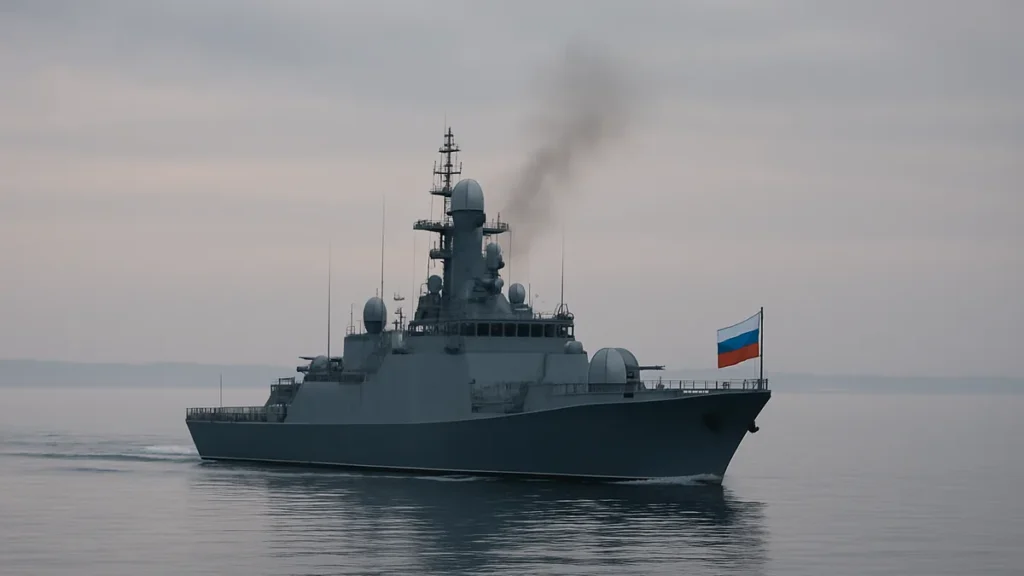
Officials in Finland have verified that a Russian naval vessel came under attack in the Gulf of Finland on Wednesday, although details of the incident remain limited. Ukraine’s SBU security service says the ship, named as the Naro-Fominsk, was one of the targets of a wider drone campaign against the Ust-Luga oil export depot on Russia’s Baltic coast.
The vessel is thought to have turned back towards its home port in St Petersburg after the strike. The attack is believed to be the first time Ukrainian drones have hit a Russian ship in a part of the Baltic Sea that is open to civilian maritime traffic, prompting questions about whether Kyiv could widen the scope of its attacks.
Ukraine’s SBU details the targeted warship
The SBU described the Naro-Fominsk as a small Buyan-M class corvette, a type it said carried Kalibr and Oniks cruise missiles. Unconfirmed reports also claimed that Russian combat helicopters had been destroyed, although those claims have not been confirmed.
Finland’s military has released few details. The incident appears to have taken place in a narrow stretch of water some distance from the Finnish coast. Foreign Minister Elina Valtonen insisted that the situation in the Baltic Sea remained stable and safe, and that there was no threat of any kind to marine traffic.
Finnish officials have described the attack as a direct result of Russia’s continued full-scale war, and Helsinki has been one of Kyiv’s closest partners in Europe.
Estonia gives its account of the timing and smoke
Estonia, which borders the Gulf, has also offered information. Its defence minister, Martin Herem, told the public broadcaster ERR that the ship was hit at about 05:30 (03:30 GMT) on Wednesday, but he did not say how the attack was carried out. “We know that smoke came from the ship afterwards. The ship itself went back towards St Petersburg,” he said.
The extent of any casualties or damage remains unclear, and Moscow rarely provides such details. Defence officials are understood to have stressed to Kyiv that the Gulf is a relatively narrow waterway used by oil tankers and civilian vessels, and that it is also home to subsea data cables.
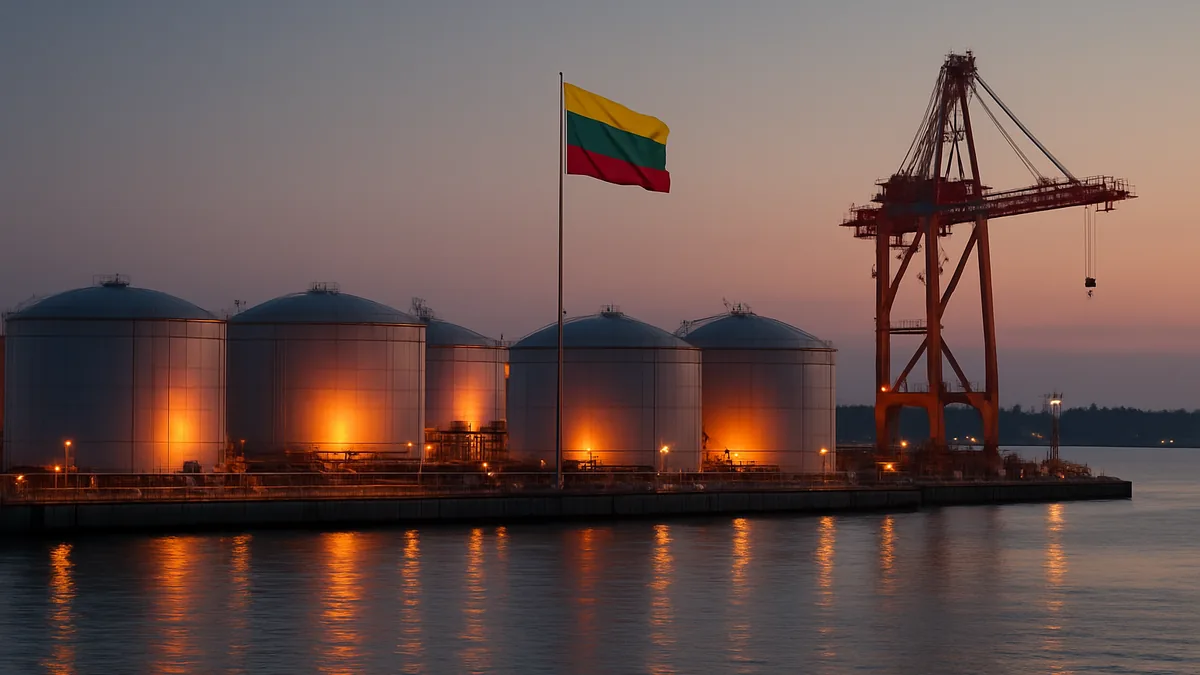
Herem said Ukrainian drones attacked the Ust-Luga region from midnight until about 06:00. Most flew close to the Estonian border while remaining in Russian airspace. Several storage tanks at the terminal are thought to have been hit overnight, and fires at the port could be seen across the border in Estonia.
Analysts weigh escalation risks in the Baltic
Military analyst Emil Kastehelmi, co-founder of the Black Bird monitoring group, said the Baltic Sea fleet had been untouched until now, and that Ukraine had seen a window of opportunity and understandably moved to use it.
Russian and Ukrainian vessels have been repeatedly targeted in the Black Sea since Russia launched its full-scale invasion in February 2022. Although the latest strike on a ship in the Baltic is unprecedented, Kastehelmi told an interview that he did not consider it a serious escalation.
Ukrainian drones are regularly launched into Russia from northern Ukraine, and the drones that struck the Ust-Luga area have been a recurring feature of these operations.
Ukraine rejects Moscow’s airspace allegations
Herem said one drone briefly entered Estonian airspace from Latvia before heading on towards Russia. NATO aircraft based in the Baltic states were in the air at the time, but Herem said it had not been considered safe for them to destroy the drones.
Late on Wednesday, Ukrainian foreign ministry spokesman Heorhiy Tykhyy described Moscow’s claims that Kyiv had used the airspace of the Baltic states to attack Russia as “baseless”. He nonetheless acknowledged that “incidents might occur when Russia diverts drones from its airspace using electronic warfare”.