


A year after Donald Trump’s Board of Peace helped broker a ceasefire in Gaza, Palestinians in the enclave are still being attacked and forced from their homes, while Israeli forces have widened their control of the territory. The board’s record so far is mixed, with several elements of the peace plan only partly delivered.
Trump first proposed the board in September 2025, saying it would stabilise Gaza and secure lasting peace. In November, a United Nations Security Council resolution recognised it as a transitional administration for the territory. The ceasefire between Israel and Hamas took effect on October 10, 2025, under a 20-point plan that also set out the board’s mission.
Captive releases, funding and the Gaza governing committee
Under the plan, the board was to serve as a transitional governing body until the Palestinian Authority, which runs parts of the occupied West Bank, could take over. The plan also envisaged a possible route to Palestinian statehood and called for rebuilding Gaza, arguing its people had endured enough hardship.
On the prisoner and hostage terms, Hamas has freed all 168 living captives, and Israel has released Palestinian prisoners. Hamas has also announced that it is dissolving its government in the Gaza Strip, a move Israel has dismissed as a stunt.
A National Committee for the Administration of Gaza, intended to act as the territory’s governing authority, has been formed. It reports directly to the board and is led by Chief Commissioner Ali Shaath along with other Palestinian technocrats, operating from Cairo. Israel has not allowed it to enter Gaza and has not explained why.
Funding has also fallen short of need. Each member state joined the board in exchange for a $1bn annual fee, and at a February summit in Washington, DC, members pledged $7bn. Aid agencies have estimated that rebuilding Gaza would cost closer to $70bn. Last month, on the sidelines of the UN General Assembly in New York, the board unveiled a recovery plan of 66 projects worth $2.4bn.
Aid shortfalls, hunger and continuing deaths in Gaza
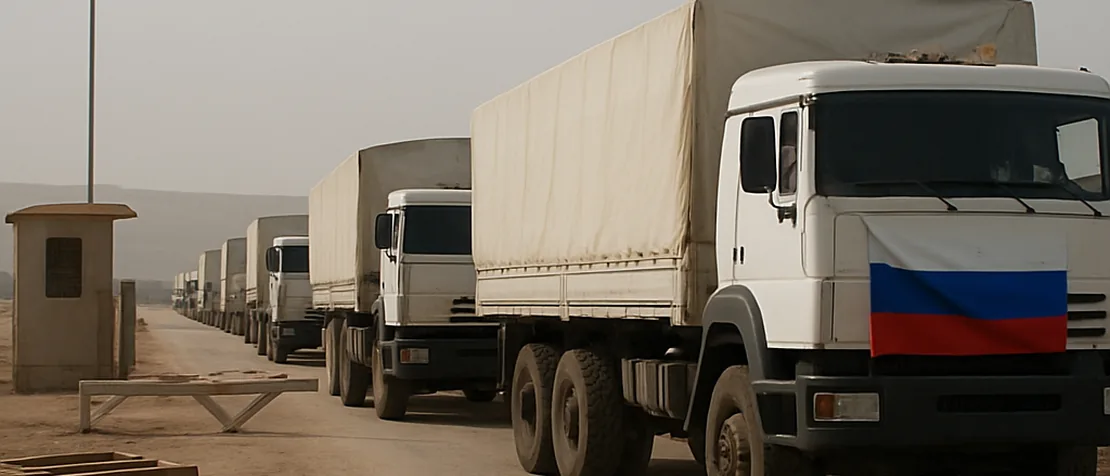
Aid deliveries remain far below plan. According to the Integrated Food Security Phase Classification, which monitors hunger, about 227 trucks enter the Strip each day, while 600 were supposed to. Israel has labelled thousands of basic goods, including tents and medical equipment such as ventilators, as dual-use items with both military and civilian applications, restricting their entry.
The same monitor has warned that about 1.4 million Palestinians, most of Gaza’s population of more than 2 million, are expected to face hunger until at least December. That is 200,000 more than in May, which it said points to a sharply worsening situation. Observers have argued that the board has entirely failed to secure the ceasefire, given that Israeli strikes have continued almost every day.
Since October 10, 2025, more than 1,400 Palestinians have been killed, mostly women and children. Across the three years since the war began, more than 74,000 Palestinians have died, and thousands more are missing and presumed dead under rubble. Israel says its strikes target Hamas members, a claim Hamas strongly denies.
Israel now occupies around 60 percent of the Strip, above the 50 percent envisaged in Trump’s plan. The so-called Yellow Line, which marks the area under Israeli occupation, has been moved deeper into Gaza, displacing more people and squeezing the population into a shrinking space. Palestinians who unknowingly cross the line have been shot dead. In December, Israeli Defence Minister Israel Katz said the army would never fully withdraw from the Strip.
Disarmament deadlock, an unfilled security force and the UNRWA dispute
The plan’s second phase has stalled because Hamas has not disarmed. Although the group has agreed to hand its weapons to the committee, it rejects the disarmament clause, arguing that Israel has neither stopped its attacks nor pulled back from the Strip as agreed. Israel has said it will not advance the plan unless Hamas disarms, leaving both sides in a standoff.
No international stabilisation force has yet been deployed. Six countries, Indonesia, Morocco, Kazakhstan, Albania, Kosovo and Uganda, have so far committed personnel to a planned force of 20,000 soldiers and 12,000 police, to be headed by the US military’s Central Command. Meanwhile, there has been no meaningful reconstruction, and Palestinians continue to live in tent camps infested with rodents and insects, with little protection from heat or rain.
The Trump administration and the board have echoed Israel’s rejection of UNRWA, the UN agency for Palestinian refugees, which has long provided lifesaving aid, schooling, development programmes and social services in Gaza and employs about 11,000 Palestinians. The board said last month that it would not work with the agency, effectively sidelining it. A board official told a news agency that UNRWA could keep operating in Gaza if its programmes were judged relevant, but said its time had passed. UNRWA responded that the decision made no sense.
In June, the UN General Assembly overwhelmingly voted to extend UNRWA’s mandate to 2029. The board’s own mandate runs until December 2027, when the UN is to review its progress for a possible renewal. Analysts and rights groups have worried that the board could take over every aspect of Gaza’s rebuilding, and France and other European countries have objected to any attempt to replace the UN in the territory.
Elmasry, a researcher at the Doha Institute of Graduate Studies, said no country was willing to act, because many international actors did not want to cross the United States. He said that effectively left the fate of more than 2 million Palestinians in Trump’s hands. He also described Israel’s conduct as part of a broader policy of ethnic cleansing in Gaza and the occupied West Bank, saying: “This is all by design.”
Simon Mabon, a professor at Lancaster University, concluded that the board has failed. He argued that its inability to carry out its own plan shows it lacks influence, and that it has not kept Israel, and to a lesser extent Hamas, bound by their commitments, which he said had allowed the genocide to continue.