

Anne Carson, the Canadian poet and writer renowned for her inventive and genre-defying work, has been awarded the 2026 Nobel Prize in Literature. The Swedish Academy recognized her for creating new literary forms through a playful dialogue with classical traditions. The prize carries a reward of 12 million Swedish crowns, approximately $1.2 million.
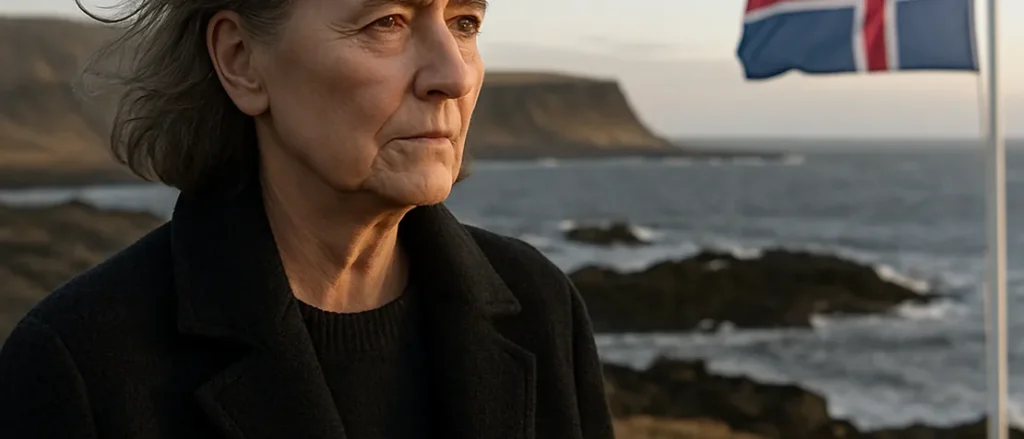
Ingrid Carlberg, the academy’s permanent secretary, revealed that Carson was surprised by the announcement. At the time, Carson was in Iceland, where she was quietly listening to the wind, leaving little time for conversation.
Carson, born in Toronto and now also an Icelandic citizen since 2022, is celebrated for blending verse, prose, dialogue, and translation in her work. She has spent significant time in Iceland in recent years. Her literary output includes opera libretti, literary criticism, and verse novels, notably the 1998 work “Autobiography of Red.” Her translations of classical Greek literature have been particularly influential, with the academy noting that these translations stand as independent works.
The academy highlighted Carson’s focus on the intersection between a philologist’s obsession with words and a poet’s pursuit of new meanings. She often begins her creative process by exploring the etymology of words. Her 2019 performance piece “Norma Jeane Baker of Troy,” which intertwines the stories of Helen of Troy and Marilyn Monroe, exemplifies her distinctive style.
Carson’s exploration of writing’s possibilities is evident in her 2016 work “Float,” a collection of 22 chapbooks on various subjects designed to be read in any order. The academy praised this approach as a testament to her innovative literary process.
Among her most acclaimed works, “Autobiography of Red” reinterprets classical literary traditions and addresses timeless questions such as the pain of loving someone who ultimately causes harm. Drawing from modern influences, Carson also reflected on Marcel Proust’s character Albertine in her book “The Albertine Workout,” which she wrote after spending seven years immersed in Proust’s “In Search of Lost Time.” She described experiencing withdrawal after finishing Proust’s work, inspiring her to extend the experience through her own writing.
In her seventies, Carson began boxing lessons as a therapeutic response to Parkinson’s disease, a condition that affects her handwriting. She has spoken candidly about the shame she feels over her deteriorating penmanship during a 2024 literary festival in Denmark.
Carson has taught classics at universities in Canada and the United States and regards herself as both a visual and literary artist. She likens poem creation to making physical objects or drawings that can be entered through language.
Before the announcement, Carson was considered a leading contender for the prize. Her win places her among distinguished laureates such as Alexander Solzhenitsyn, Alice Munro, and Ernest Hemingway. The Nobel Prize in Literature often sparks debate, with critics pointing to notable omissions like Leo Tolstoy, Virginia Woolf, and Jorge Luis Borges, and accusations of obscure choices. However, supporters argue the academy balances popular recognition with highlighting lesser-known literary traditions.
Last year’s Nobel Prize in Literature was awarded to Hungarian author Laszlo Krasznahorkai. Established by Alfred Nobel’s will, the Nobel Prizes have been awarded since 1901 across literature, science, and peace. This year’s literature prize was the fourth announced, following those in medicine, physics, and chemistry. The peace prize winner will be revealed in Oslo on Friday.