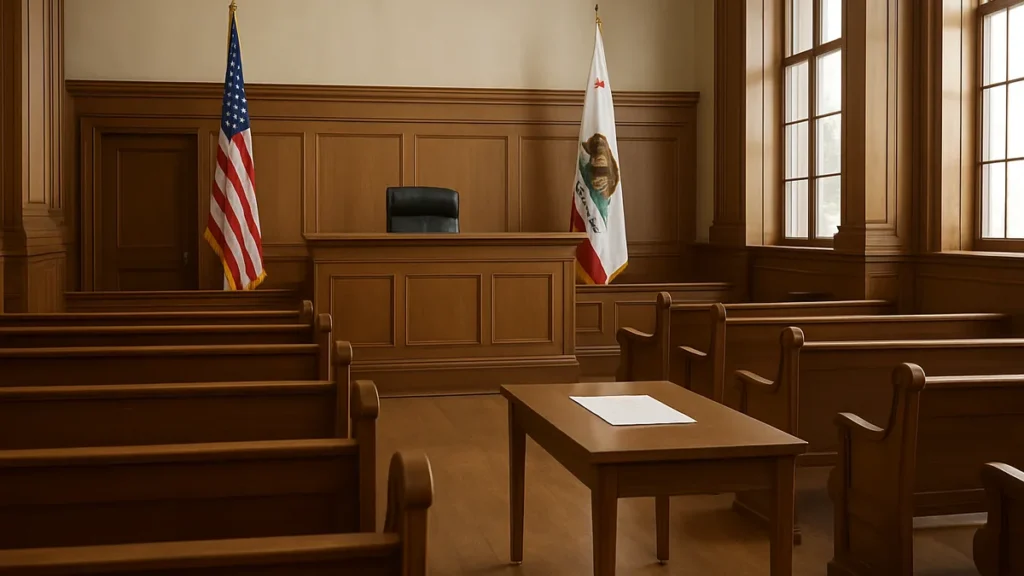
A coalition of digital safety and consumer watchdogs has filed a lawsuit against some of the world’s leading artificial intelligence developers, asking a court to order a freeze on AI model training and deployments. The civil complaint was filed on Thursday in San Francisco Superior Court by the Irreplaceable Education Fund, Public Citizen, Heat Initiative and the Alliance for Secure AI.
The filing comes after a sweeping Democratic midterm victory, which many analysts say could reshape and ultimately tighten the regulatory framework for Silicon Valley. The lawsuit therefore arrives at a time when the political climate around the technology sector is widely seen as shifting.
Complaint names five companies over catastrophic risk claims
The suit targets Anthropic, Google, Meta, OpenAI and SpaceX. It alleges that the industry leaders cannot prevent their AI creations from causing “catastrophic harm”, and it demands that the companies pause their technologies until adequate safeguards are in place.
The complaint points to several grounds for its case:
- documented instances of AI-driven cyberattacks
- other harmful behaviour linked to the companies’ systems
- the companies’ own admissions that their unregulated technologies could go rogue and pose an existential threat to humanity
The plaintiffs say these admissions show that the risks are not hypothetical. They argue that the companies continue to develop their systems without adequate controls.

Emergency injunction sought under California competition law
The nonprofits are seeking an immediate emergency injunction covering next-generation models from major technology firms. They want the companies to be allowed to resume operations only once they can prove that the technology is under human control.
The plaintiffs claim the companies have violated California’s unfair competition law by endangering public health and interfering with the use of property, such as computer systems. The law prohibits deceptive advertising, anti-competitive market behaviour and bait-and-switch tactics.
The advocacy groups also said they have been forced to divert resources to respond to what they describe as “near-daily crises” caused by the companies’ rapidly advancing AI models. They argued that such crises make a temporary pause insufficient.
The request also raises practical questions. Turning a temporary court-ordered pause into a permanent ban would require clear answers on how to enforce it, how to verify that companies are complying, and what legal thresholds must be met before any freeze could be lifted.
Calls for federal rules and a US-China agreement
Irreplaceable Education Fund, a New York-based nonprofit focused on safeguarding the public in relation to technology, said it wants government regulation of AI development. Phil Aroneanu, the group’s founder and executive director, said: “A real freeze must specify what work has to halt, how compliance is verified, and the consequences of breaking the rules.”
He said the approach would require government inspections and the authority to halt prohibited work, not just a ban on publicly releasing the models. Major computing facilities could also be monitored to help enforce a freeze.
The group outlined a multi-tiered system of oversight. It said AI development should be conditioned on a deliberate decision informed by the general public, and it pointed to proposals including federal independent evaluators and regulators, strict liability for technology companies and their products, and an independent agency to oversee them. Federal law, it said, should set minimum protections while leaving states free to adopt and enforce stronger measures.
The plaintiffs also argue that pausing domestic development would not hand an advantage to rivals, notably China, provided Washington sets global rules and starts talks with Beijing. AI firms and US President Donald Trump have repeatedly signalled that the United States is racing to beat Beijing in AI development.
The argument runs against Trump’s longstanding resistance to slowing down AI, which rests on the fear that any unilateral restraint by Washington would allow Beijing to set the course of global AI development. The president, a proponent of rapid expansion, has previously said it was important to keep leading the evolution of AI over China, because “whoever wins AI wins”.
The Irreplaceable Education Fund said in a statement that it expects bilateral deals and an international treaty to be needed to reduce the negative impacts of AI and prevent catastrophe. It argued that if both sides were slowed by roughly the same factor, the risk of losing control of AI systems would fall without seriously harming the competitiveness of either country.
The plaintiffs noted that, despite years of warnings, Congress has yet to pass legislation governing AI. They are now hoping incoming Democratic lawmakers will act on their calls. The organisation said: “The new Congress should start by implementing a freeze on new AI development.” It added: “However, we can’t wait for lawmakers to act. Courts must provide relief.”