


ISLAMABAD: Adviser to the Prime Minister on Political Affairs Rana Sanaullah emphasized on Tuesday that while the government remains open to negotiations, no demands can be accepted if they involve holding the state hostage or causing political instability. He called on political parties to put national interests above personal agendas.
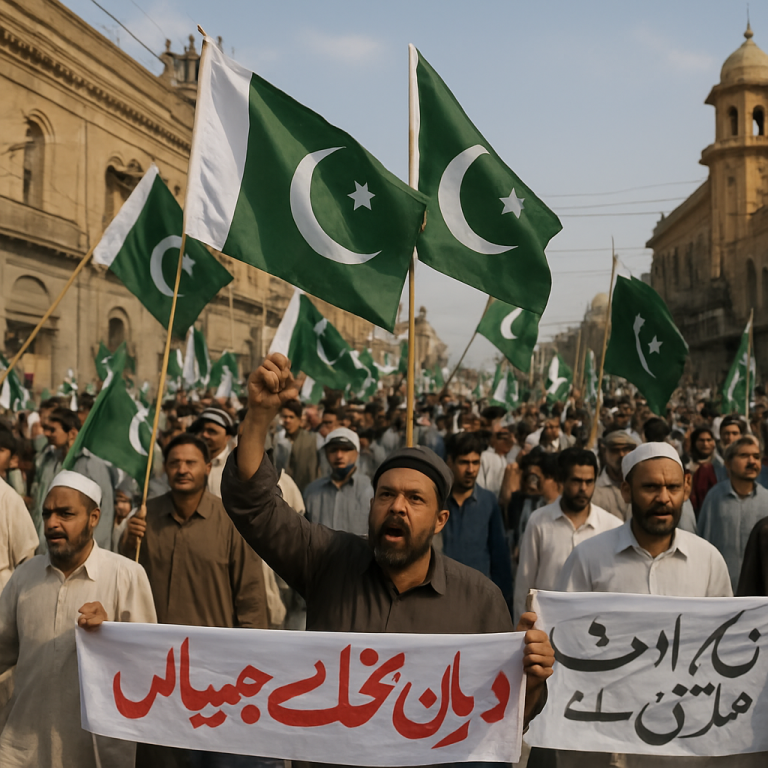
His remarks came as the Pakistan Tehreek-e-Insaf’s (PTI) long march on Islamabad entered its fourth day on Wednesday, with the convoy preparing to advance into Khyber district from Mattani near Peshawar.
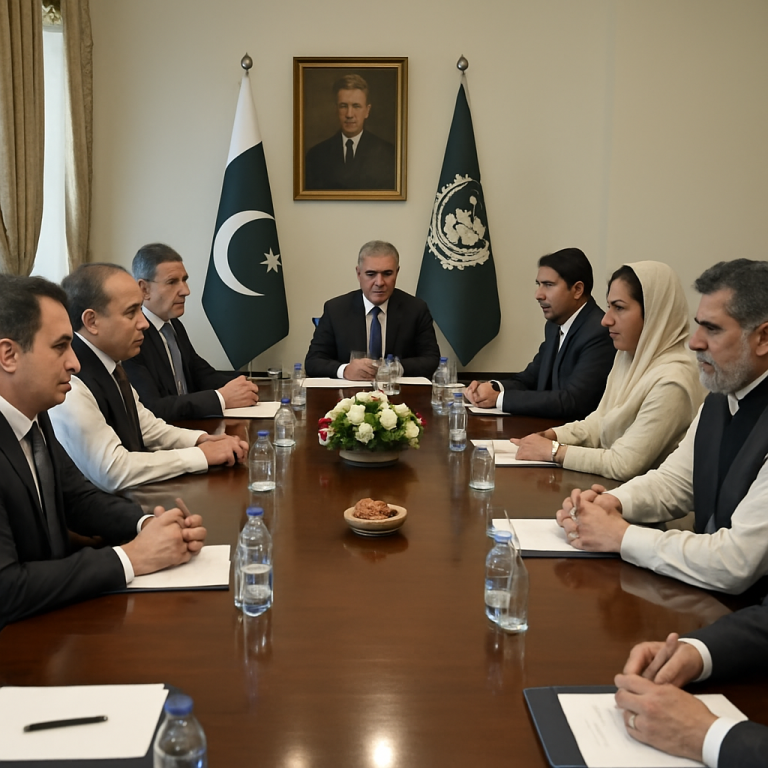
At a press conference in Islamabad, Sanaullah noted that Prime Minister Shehbaz Sharif had already invited the opposition for talks, urging that all pending issues be resolved through dialogue. He highlighted the government’s repeated efforts to engage both the Khyber Pakhtunkhwa (KP) government and PTI, including negotiations regarding the party’s planned march on the capital.
However, Sanaullah accused PTI of fostering a culture of abuse, intolerance, and political confrontation. He claimed the party has aimed to besiege Islamabad since 2014 and is currently exploiting KP government resources to further this objective.
He expressed concern that political tolerance, essential for democratic politics, has deteriorated, with PTI prioritizing its political agenda over broader national interests.
Regarding the PTI’s long march, Sanaullah criticized the KP government for mobilizing people through rallies, slogans, and drums to gather and march toward Islamabad. He found this particularly troubling given ongoing terrorist attacks in the province that have claimed the lives of security personnel and civilians.
“While the bodies of martyrs lie on one side, the entire provincial government is beating drums and raising slogans to encourage people to march towards Islamabad,” he said.
Sanaullah pointed out that the victims included customs officials, police officers, civilians, and armed forces personnel, all residents of KP rather than supporters of any specific political party or region. He also noted that many armed forces members martyred in the fight against terrorism hailed from KP.
The adviser claimed the KP government’s mobilization efforts have not attracted significant public support, with the marchers failing to gather more than a few thousand people at any location since October 4, when the march began. He also questioned the conditions at camps set up for protesters, alleging that despite millions of rupees reportedly collected, basic facilities such as mats were not provided.
Sanaullah urged the provincial government to reconsider its approach and focus on governance and public welfare. He said the KP government’s agenda was driven by loyalty to PTI founder Imran Khan rather than the province’s welfare, stressing that a province of around 40 million people should not be destabilized for individual or political interests.
Addressing a deadlock in talks between the government and PTI, Sanaullah rejected claims that the government refused to incorporate opposition views into its counterterrorism policy. He clarified that the existing policy is actively implemented, based on intelligence-led operations by the armed forces and law enforcement in KP.
He praised the courage and sacrifices of security forces combating militants responsible for attacks on officials and civilians. Sanaullah questioned how PTI could oppose intelligence-based operations targeting terrorists who attack Pakistani citizens and security personnel.
He referenced attacks on customs officials, police, a passport office, and a suicide bombing at a jirga in Swat involving civilians. Sanaullah firmly denied suggestions of a new military operation in KP or the creation of fresh internally displaced persons, citing assurances from Field Marshal Asim Munir and the federal government.
Intelligence-based operations will continue, he said, expressing confidence that terrorists will eventually be eliminated from Pakistan’s territory.
On the issue of Afghanistan, Sanaullah stated Pakistan’s clear demand: Afghan territory must not be used for terrorism against Pakistan. He said Pakistan sought assistance from friendly nations including Saudi Arabia, Qatar, China, and Türkiye to persuade the Afghan regime to guarantee that its soil would not be used for terrorist activities targeting Pakistan.
Despite efforts, the Afghan authorities have acknowledged evidence of such activities but have refused to provide the required assurances. Sanaullah noted that Defence Minister Khawaja Asif publicly addressed the issue and traveled to Istanbul twice for negotiations, with Pakistan’s military leadership also involved.
Pakistan reserves the right to neutralize threats originating from Afghan soil if terrorist training camps or activities exist there, he added, referencing Pakistan’s decades-long experience dealing with Afghanistan, the Taliban, Tehreek-e-Taliban Pakistan (TTP), and other groups.
Sanaullah dismissed claims that PTI or the KP government were excluded from policy discussions, stating the counterterrorism policy enjoys national consensus and is based on extensive experience. He argued that only PTI is placing political interests above the national good.
He stressed the critical role of the KP government in the success of counterterrorism efforts, especially after security forces clear militant-held areas. Sanaullah questioned the participation of KP Chief Minister Sohail Afridi in the provincial Apex Committee, which he chairs, noting that Afridi had held only one meeting in 11 months.



Leave an opinion