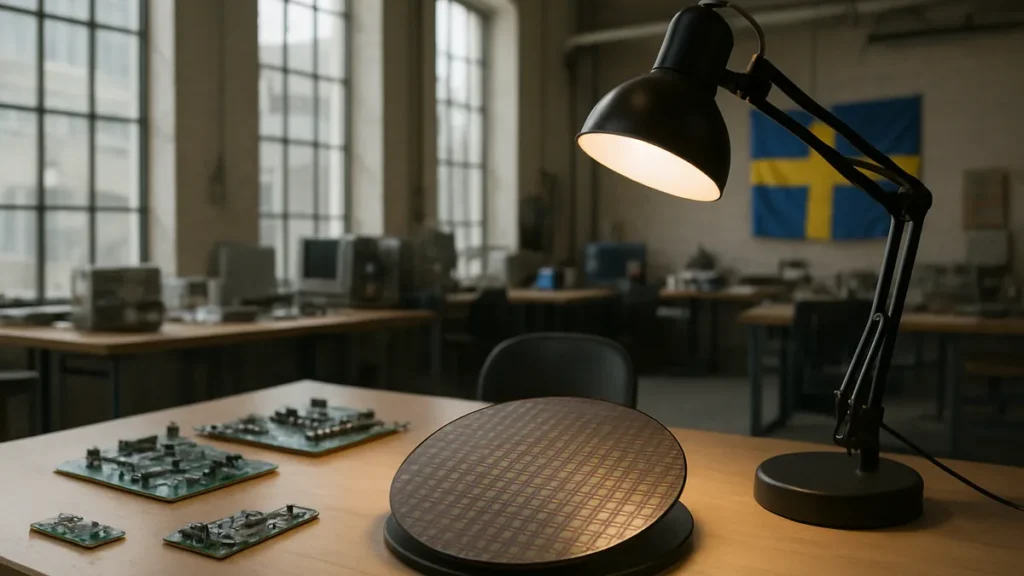
Planning Minister Ahsan Iqbal has announced government plans for ten National Catapults, a network meant to help universities and industry turn research into commercially successful technologies and products.
Iqbal made the announcement after touring IRADA in Islamabad. He presented the network as part of the Science, Technology and Engineering for Development initiative, which he described as a key pillar of URAAN Pakistan. IRADA will be the first public enterprise formally appointed to lead a Catapult, managing the Semiconductor and Advanced Electronics Catapult at the start of the rollout.
How the centres would support researchers and manufacturers
Iqbal said the centres will give university researchers, startups and manufacturers hands-on access to demonstration testbeds, prototyping and pilot production lines. The aim is to stop promising ideas from remaining in academic papers or laboratories.
Also read: Pakistan proposes virtual green university and climate fund · Planning minister says 14-province plan under discussion
A university team could build a prototype alongside industry engineers, while a small manufacturer could test a process before committing heavy capital to a full production line. Investors could then assess how a technology performs in real-world conditions, which the plan links to replacing imports with better local products and creating jobs for engineers, scientists and technicians.
Ten focus areas across the proposed network
The ten proposed National Catapults cover the following areas:
- Semiconductor and Advanced Electronics
- High-Value Manufacturing and Industry 4.0
- Digital Economy and Artificial Intelligence
- Agri Tech and Food Technology
- Health Technology and Med Tech
- Clean Energy and Climate Technology
- Mines, Minerals and Materials
- Defence Technology and Dual-Use
- Space Technology
- Chemicals and Composites
The initiative focuses on Technology Readiness Levels 4 through 7, the stage that bridges laboratory validation and real-world prototype demonstration.
International models and wider goals
The programme draws on established international models, including the UK’s Catapult Network, Germany’s Fraunhofer Institutes, Manufacturing USA and Singapore’s A*STAR. These are being studied for proven ways to turn academic ideas into market-ready innovations.
Beyond helping universities commercialise their intellectual property, the approach is aimed at attracting fresh investment and risk capital. Real-world testing and industry alignment are also intended to help shape practical standards, regulatory frameworks and certification processes.