The Trump administration has proposed new trade tariffs on 14 of its major trading partners, among them China, the European Union and India. Officials accuse these economies of pushing cheap goods into world markets, and China is set to face the steepest rates.
The Office of the US Trade Representative, or USTR, announced the duties on Wednesday. The move followed an eight-month investigation into what Washington describes as “structural excess capacity” in other countries.
What the investigation examined
A senior US official said USTR defines excess capacity as countries “promoting production and capacity divorced from the realities of demand and market principles”. That can include subsidies and other industrial policies, the official said.
Also read: US preparing new tariffs on China, the EU and Japan · Xi, Putin Criticise Western Pressure as Trump Lands in China
The probe began in March and covered industries ranging from steel and cars to computer chips and solar panels. It looked at government subsidies, wages that the state suppresses, and the operations of state-owned companies.
Washington argues that such support allows foreign factories to sell goods more cheaply around the world. That, it says, undercuts American manufacturers and discourages investment in the US. The official said the new duties would not be stacked on top of the forced labour tariffs already in place.
The investigation covered 16 economies, and tariffs have been proposed for 14 of them:
- China
- Bangladesh
- Cambodia
- European Union
- India
- Indonesia
- Japan
- South Korea
- Malaysia
- Singapore
- Switzerland
- Taiwan
- Thailand
- Vietnam
For now, Mexico and Norway, which were also investigated, have been spared.
China faces the steepest proposed rate
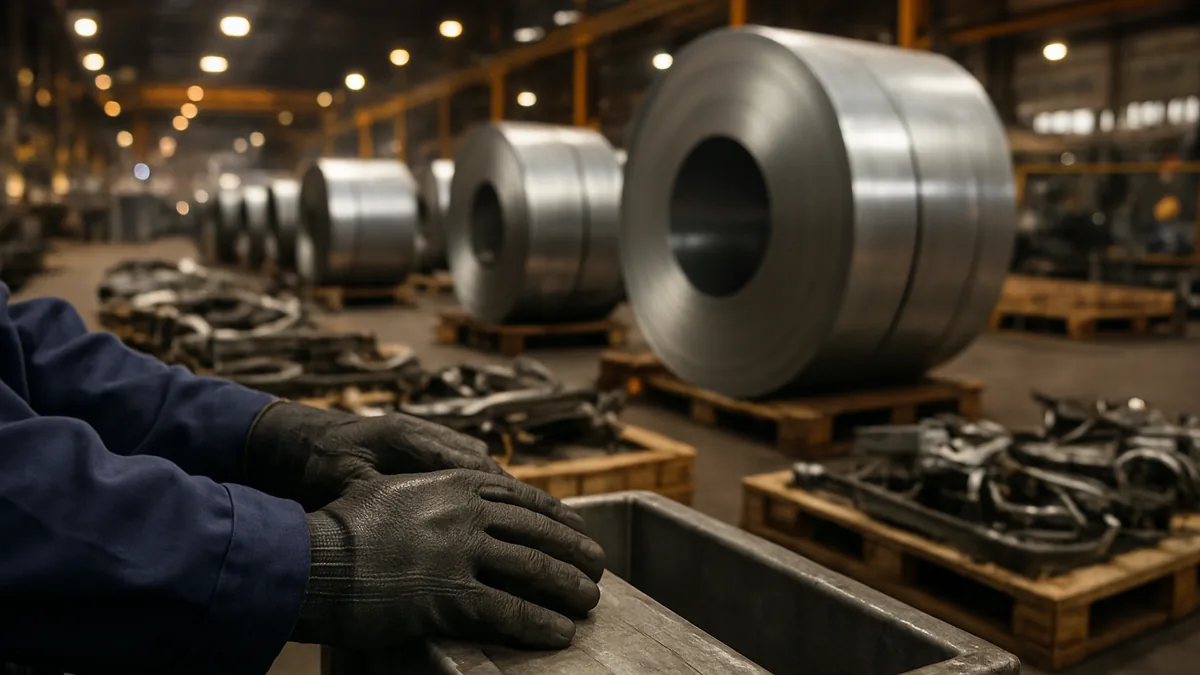
The administration regards China as the biggest offender, pointing to its steel, aluminium, electric car, household appliance and solar panel industries. Beijing rejects the accusation and says its exports are simply competitive. Washington also accuses Chinese companies of investing in Vietnam, Indonesia and Cambodia in order to get around earlier US tariffs.
For the other economies, Washington cited the large trade surpluses of Germany and Ireland as evidence against the EU. It also criticised the car industries of China and Japan, Singapore’s computer chips, and Norway’s fuel and seafood exports.
The official did not give rates for most countries before their publication in the Federal Register. China will nonetheless face the highest charges. Its proposed 20 percent excess capacity tariff would sit on top of the roughly 25 percent in tariffs set during Trump’s first term. Vietnam also faces a proposed rate of 20 percent, which leaves China ahead of it.
The official said the new duties would not break the tariff limits in trade deals the administration has negotiated. Earlier reporting put those caps at 15 percent for the EU, Japan and South Korea, and 19 percent for Malaysia. For China, the limit is 20 percent on tariffs imposed during Trump’s second term, under a trade truce that expires on January 10.
India has no signed trade deal with the US. The two sides agreed the outline of one in February, but it was never finalised and talks have dragged on for months. On November 14, Indian foreign minister S Jaishankar said a deal could be sealed soon.
Legal footing after the Supreme Court ruling
The new measures are the latest attempt to rebuild Trump’s sweeping import taxes, which the US Supreme Court struck down in February. They rely on Section 301 of a 1974 trade law, which lets Washington penalise countries it judges to be treating US businesses unfairly. Trump used the same provision for large tariffs on Chinese goods in his first term, and those survived court challenges.
The “Liberation Day” tariffs Trump announced in April 2025, shortly after starting his second term, were imposed under an emergency powers law. The Supreme Court ruled in February that this law did not permit him to impose trade tariffs. The administration then used another law to set temporary 10 percent tariffs, which expired in July, before replacing them with tariffs of 10 to 12.5 percent on 60 economies. Those economies together supply almost everything the US imports, and the administration argued they do not do enough to keep out goods made with forced labour.
Trade policy expert Dmitry Grozoubinski said Section 301 was meant to let a president respond quickly to one country over one industry, not to tax nearly every import. “The legislation is supposed to be a scalpel, and they used it like a flamethrower,” he said.
Grozoubinski said the new tariffs will almost certainly be challenged in court. He expects them to stay in place while cases proceed, since lower court rulings are usually appealed and put on hold. He noted that the emergency tariffs remained in force for months after a trade court first ruled against them. He also said subsidy complaints are easier to defend than the forced labour reasoning, which US importers are already challenging at the US Court of International Trade. “Of the tariffs he has imposed so far, these, at least from the outside and without having any of the details, are probably the most legally robust,” he said.
Midterm pressure and the costs for US businesses
Grozoubinski said the timing is significant. The proposal came just weeks after midterm elections in which Trump’s Republican Party suffered heavy losses, with the cost of living and trade tariffs among the main issues. A post-election poll found that 62 percent of respondents would support efforts to scrap trade tariffs.
Independent political analyst Hisham Wahby said the key question after the vote was whether Trump would “double down or pull back”. Days after the midterms, Trump named Stephen Miller, a longtime adviser and hardline anti-immigration activist, as White House chief of staff. Wahby said that “was a clear indicator he is going to double down”.
Grozoubinski said tariffs could help American firms that compete with imports, but would hurt those that rely on them. A US carmaker gains when foreign cars cost more, he said, but loses when the imported steel, engines and parts it needs also become more expensive. Because Trump raises and lowers tariffs as negotiations shift, companies also face uncertainty about how long the measures will last.
Markets were already uneasy, and US stocks came under pressure on Tuesday as reports of the plan emerged. Abroad, the tariffs risk straining the China truce and could complicate talks with India. They are also likely to anger US allies who already accuse Washington of breaching existing trade agreements. At home, the move sets up a clash with Democrats, who take control of both chambers of Congress in January. Wahby said they would push back, but their power is limited because Trump can veto legislation.