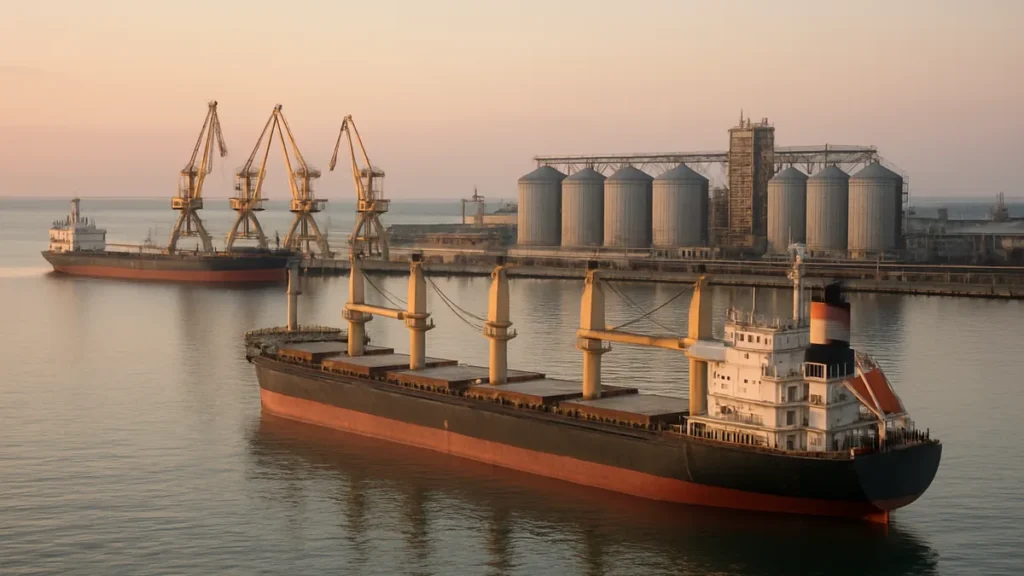
Ukraine has put forward a proposal for a possible ceasefire in the Black Sea, as Kyiv tries to protect its grain exports while attacks on shipping and port infrastructure escalate. Foreign Minister Andrii Sybiha announced the plan on Friday at the “Food from Ukraine” conference. He said Kyiv was prepared to restore freedom of navigation and guarantee the uninterrupted export of farm products.
Sybiha said Ukraine was waiting for Moscow’s answer. “We are now awaiting a response from Russia. All of our proposals have been conveyed,” he said. He also accused Russia of repeatedly presenting “unrealistic demands” in reply to Kyiv’s proposals, according to Ukraine’s national public broadcaster.
Moscow’s demands over oil shipments and the energy truce
Moscow has sought to add oil transportation to the proposed ceasefire deal. Ukrainian officials say that subject belongs in a wider energy ceasefire instead.
Also read: Russia warns Ukraine over Libya and Baltic Sea ship attacks
The Ukrainian proposal came on the same day Russian President Vladimir Putin attended a flag-raising ceremony for a new nuclear-powered submarine. Moscow claims it is the first vessel of its kind equipped with Russia’s Zircon hypersonic missile. Russian news agencies reported that Putin said he was confident plans to build a powerful naval force would be carried out on time and in full.
Earlier attempts to halt Black Sea attacks
The latest initiative comes amid growing international concern about the safety of commercial shipping and global food supplies. Ukraine and Russia are both major farm exporters, and strikes on vessels and port facilities have disrupted shipments through the Black Sea.
An earlier agreement, brokered by the United Nations and Turkiye, allowed Ukrainian grain exports to resume after Russia’s full-scale invasion in February 2022. Moscow withdrew from that arrangement in July 2023, and Kyiv then set up an alternative maritime export corridor.
In August, a news agency reported that Ukraine had passed an earlier proposal through a third party for both sides to stop attacks on civilian targets in the Black Sea. At that point, Ukrainian grain exports had dropped 76 percent year on year, as shipowners avoided ports in the Odesa region after repeated Russian strikes. On October 31, US Secretary of State Marco Rubio said Washington was reviewing proposals from Turkiye and India aimed at keeping grain and energy shipments moving without interruption.
Zelenskyy criticises Washington’s stance on Moscow
The diplomatic standoff also coincides with a public dispute between Ukrainian President Volodymyr Zelenskyy and US President Donald Trump over how to deal with Moscow. In a Friday interview with a British broadcaster, Zelenskyy criticised Trump for calling Russian President Vladimir Putin “my friend” after their meeting in China last week. “It’s strange. He is an aggressor and a killer. He can’t be a friend. Just cannot be,” Zelenskyy said.
He also faulted Washington for what he called excessive neutrality towards Moscow. He argued that the United States should use its influence to push Russia into meaningful negotiations. “When you try to be very neutral with the aggressor … it means you support victims and you support also aggressor. It’s not right,” he said.
After talks in Florida on Wednesday, NATO Secretary-General Mark Rutte urged Russia to avoid actions that could widen the war and called for a peaceful settlement as soon as possible. Rutte has also stressed that any eventual peace agreement or long-term ceasefire must include security guarantees for Ukraine.