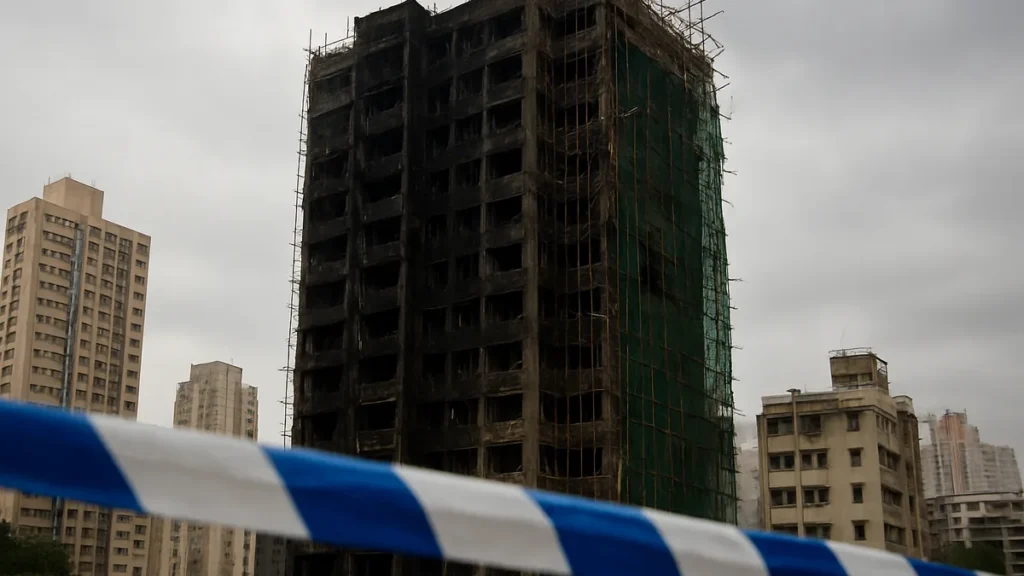
A final report by an independent committee has found that the Wang Fuk Court fire in Hong Kong, which killed 168 people, was entirely preventable. The blaze broke out on the afternoon of 26 November, a sunny Wednesday, and spread through the eight-block apartment complex at a peak speed of about 10 metres a second. The report described that rate as “unprecedented”.
The committee said the disaster resulted from a series of human errors, fire safety failures, alleged fraud and suspected corruption. Wang Fuk Court had been undergoing mandated renovations since 2024, work that residents, many of them over 65, were required to pay for. The report, which runs to 1,154 pages, examined how the project was carried out and how the fire spread.
Safety lapses on site and in the estate’s management
The report suggested the fire was caused by a lit cigarette. Residents had complained that workers smoked constantly on site and dropped butts across the estate. The committee also identified a number of other failures:
- Most of the eight buildings had their windows covered with foam boards for months, blocking daylight and views.
- All eight buildings were wrapped in protective mesh netting and bamboo scaffolding.
- After typhoons damaged the original netting in 2025, cheaper replacements that were not fire-retardant were chosen, which the report called a “cost-saving measure at the expense of the safety of the residents”.
- A staff member of the estate’s property manager, ISS, had switched off the power to the fire alarms in all eight buildings, which is why no alarms sounded on the day.
Residents had filed nearly 140 complaints with six government departments, including the fire services and the buildings department, in and after 2024. According to the report, most were largely ignored. ISS later told the it had reviewed and reinforced its procedures and staff training in Hong Kong, and said it takes the findings “very seriously”.
For those who managed to leave their flats, the emergency stairwells proved dangerous. Some windows in fire escape stairwells had been removed to create temporary openings for workers, which let in smoke and cut off escape routes. Dozens of people, including one of the residents interviewed for this story, died in those stairwells.
Alleged fraud, charges and the government’s response
The city’s Independent Commission Against Corruption (ICAC) alleges that the management company hired to supervise the project, Will Power, conspired with the contractor, Prestige Construction and Engineering (PC&E), to defraud residents. The contractor had submitted the most expensive of as many as 57 bids, at HK$336m ($42.8m; £32.4m), and the ICAC says it had previously breached safety requirements and building department rules on other projects. Homeowners were nonetheless told the firm had a clean record.
The ICAC further alleges that Will Power’s director, Wong Hap-yin, and others laundered more than $5m in suspected proceeds from the tendering process, including from Wang Fuk Court and other housing projects. The report also said Will Power’s registered inspector, whose job was to oversee the renovations, simply rubber-stamped documents without carrying out inspections personally. Will Power has since been liquidated, and PC&E could not be reached for comment.
Both companies and seven individuals have been charged with 25 counts of offences, including manslaughter, conspiracy to defraud, attempting to pervert the course of public justice and tax evasion. Four of the accused remain in custody, and none of the cases has yet gone to trial. The report called both companies the “main culprits responsible”, but it also criticised authorities, saying “no government department took effective ownership” of fire safety issues.
The report was released almost a year after the fire. On the same day, Hong Kong’s housing chief, Winnie Ho, resigned, and the city’s top leader, John Lee, apologised for the first time and promised that a “large number” of reforms would be introduced.
Survivors describe lost homes, families and a long road ahead
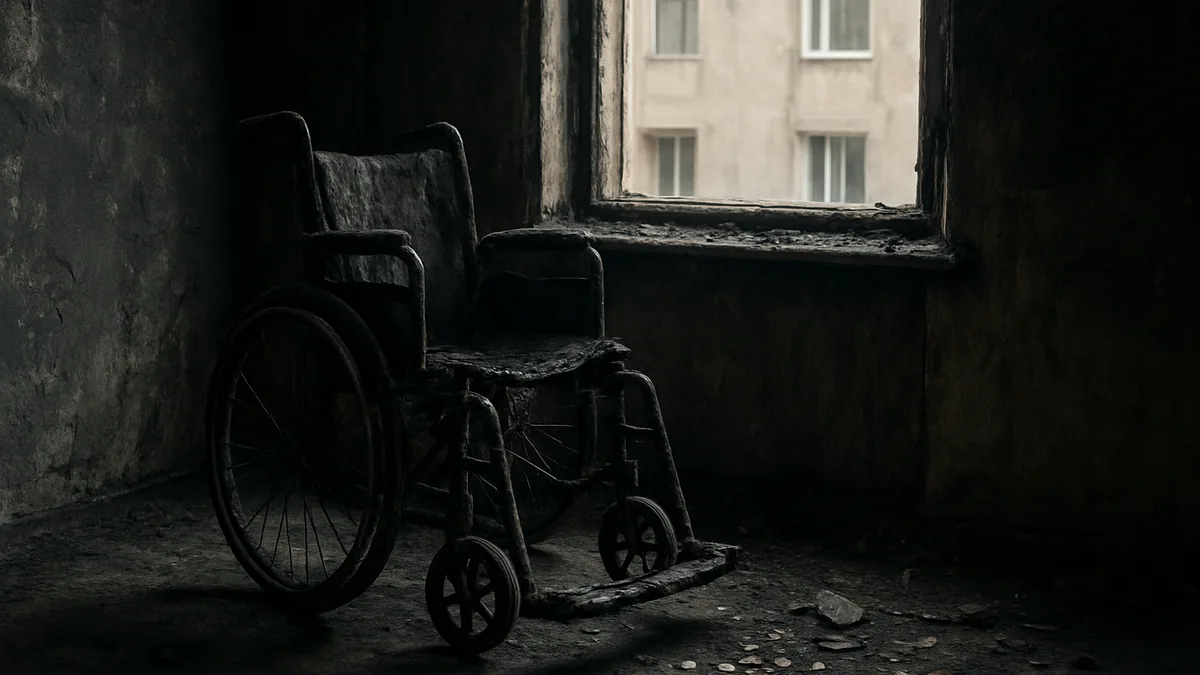
Mrs Lau had been at a dance class near her home when the fire broke out. Her 74-year-old husband, Lau Man Kwong, who used a wheelchair, was trapped inside their flat. She said he had told her not to worry, as he had not heard an alarm. He was later found by rescuers inside the toilet, where he had locked himself, still wearing his slippers and clutching his identity card.
Mrs Lau said she escaped death “by the narrowest margin”. Five months after the fire, she was allowed into the flat for three hours to collect whatever belongings remained. Her children described the home as a “war zone”, and among the rubble they found broken pieces of a piggy bank her husband had filled with coins for 20 years. “The piggy bank died with him,” she said.
The government has said it will spend $867m (£663m) to acquire the affected flats. Mrs Lau said that sum was nowhere near enough to buy a similar home in the area, and she is worried about affording one. Her family is renting a place nearby. She said other families had lost several members, and that babies under a year old had died.
Christy, whose husband died of smoke inhalation in a stairwell, said she plans to file a lawsuit against those responsible, but acknowledged that a win would not bring him back. Her youngest child, a seven-year-old boy, had covered his ears and yelled when he was first told what had happened. Christy said her daughter, who turned 10 this week, will now mark her birthday as a day to remember her father.