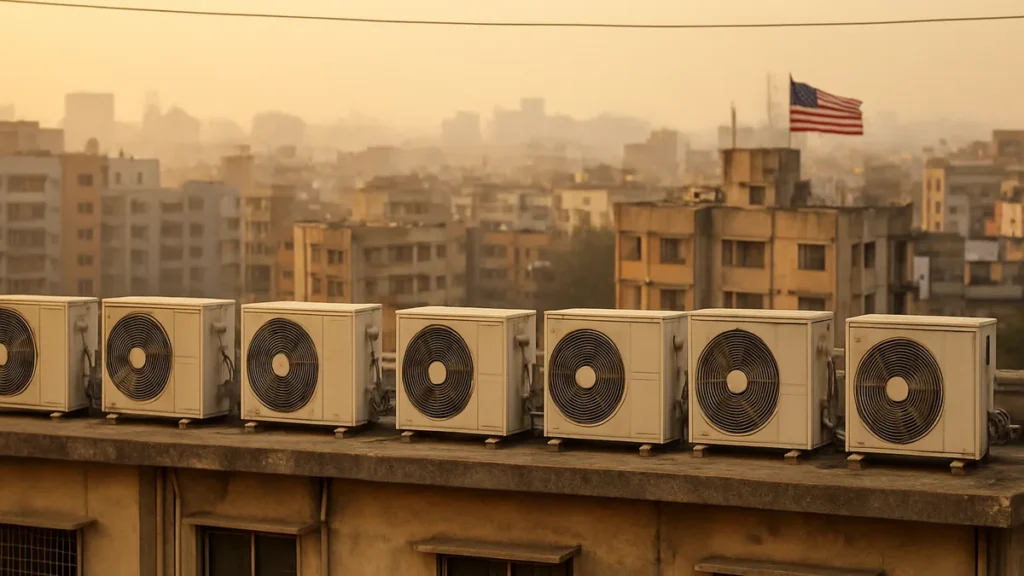
Electricity demand for cooling in the Indian subcontinent is projected to triple over the next 15 years, according to a new study. Electricity use for air-conditioning across Southeast Asia is expected to quadruple over the same period. The study links the growth to rising incomes, larger floor areas and hotter temperatures.
The Norwegian energy research and consultancy firm DNV said cooling would account for 13 per cent of global electricity demand by 2035. It framed the issue as a difficult balancing act: widening access to air-conditioning while cutting carbon emissions. The findings were published in a report titled Burning to Cool: COP31 Has a Cooling Challenge, released ahead of the United Nations climate conference COP31.
Emerging economies drive sharpest rise in cooling demand
DNV’s latest analysis expects global electricity consumption for cooling to climb from around 2,800 terawatt-hours (TWh) today to nearly 80 per cent higher by 2040. The firm said this growth would outpace the 55 per cent increase recorded over the previous 15 years. Most of the increase is expected in emerging economies, where the Indian subcontinent and Southeast Asia are forecast to see the steepest gains.
By contrast, cooling-related power demand in North America is forecast to rise by just over 5 per cent over the next 15 years. Much of the additional load there is expected to come from cooling needs at data centres. DNV also said that by 2035, electricity needed for cooling would be twice the consumption linked to electric vehicle charging or artificial intelligence data centres.

Diverging emissions trends across regions
The report found that emissions from cooling will follow different paths in different regions. In North America, modest growth in cooling demand, combined with a shift to cleaner power generation, is expected to lower cooling-related emissions. Southeast Asia faces a more complicated picture.
In Southeast Asia, wider access to air-conditioning is initially projected to push emissions up, even as the power mix gradually becomes cleaner. Emissions are expected to fall only later, once electricity generation becomes less carbon-intensive. DNV’s framing makes clear that near-term growth and long-term decarbonisation will not move in step.
Global Cooling Pledge faces emissions gap
The Global Cooling Pledge, launched at COP28 in 2023, calls for cooling-related emissions to fall by at least 68 per cent from 2022 levels by 2050, while expanding access to sustainable cooling. DNV’s analysis, however, forecasts that carbon dioxide emissions from electricity used for space cooling will drop by only around 40 per cent from 2022 levels towards the middle of the century. The report noted that the two goals use different emissions boundaries. The pledge also covers hydrofluorocarbons (HFCs), potent greenhouse gases used in refrigeration and air-conditioning systems.
DNV identified rising incomes as the largest driver of additional cooling energy demand between 2025 and 2040. Improvements in equipment and controls were expected to offset only a small portion of that increase. The pledge aims to raise the global average efficiency of new air-conditioners by 50 per cent by 2030, compared with the installed baseline in 2022.
DNV said turning those ambitions into stronger equipment standards would be essential, especially in countries facing the fastest growth in demand. Improving access to energy-efficient cooling was also highlighted as a priority. The firm said the challenge lies in widening access to cooling, which matters more as temperatures rise, while also reducing electricity use and greenhouse gas emissions.