


Fighting is escalating across Yemen as internationally recognised government forces push a military offensive against the Iran-backed Houthis, an armed group also known as Ansar Allah, which controls part of the country. Speaking at the United Nations Security Council on Friday, the UN Special Envoy to Yemen, Hans Grundberg, said the country has effectively slid back into “full-scale war”.
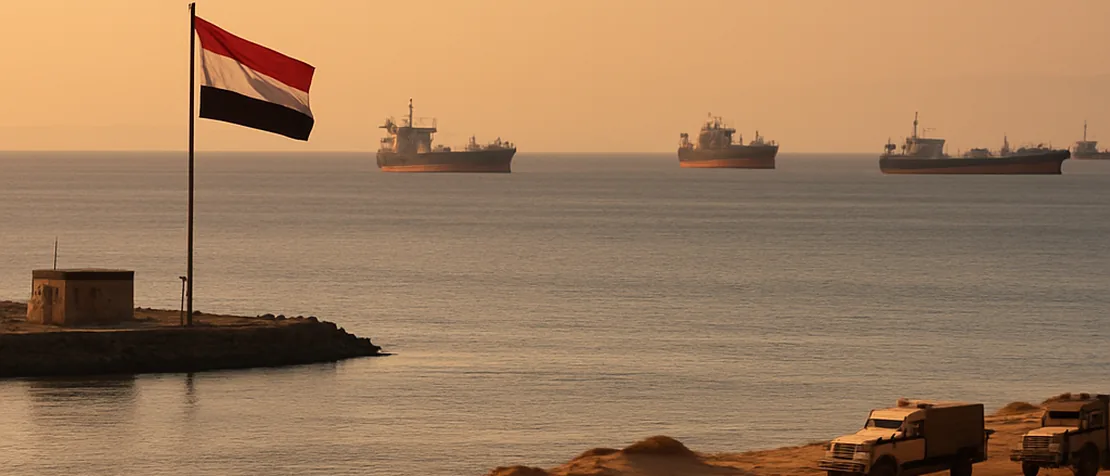
Government forces are particularly seeking to retake the Bab al-Mandeb strait, a trading chokepoint at the entrance to the Red Sea. It has become an important alternative to the Strait of Hormuz, where Iranian attacks have all but halted shipping. Experts say the fighting, Yemen’s worst in years, threatens to destabilise the region further amid the US-Iran war.
Civilian casualties and displacement mount in Yemen
According to the United Nations, at least 46 civilians have been killed and more than 130 others injured since August, many of them children. The UN’s migration agency, IOM, said more than 200,000 people have been displaced since fighting escalated in September.
Rights groups have expressed concern that Yemen has essentially returned to civil war. The relative quiet that followed a 2022 ceasefire ended after a lengthy conflict that first erupted in 2014. Grundberg said civilians, including women and children, are bearing the “brunt of escalating violence”.
Grundberg urged the Security Council to support urgent mediation once more. He warned that “unless war is to become Yemen’s permanent reality, the time to consider political strategies is now”. Analysts, however, pointed out that recent gains by government forces could make them more determined to press the offensive rather than accept a settlement.
Government offensive targets the Bab al-Mandeb strait
On Sunday, the Yemeni government announced the start of an operation called “Dawn of Yemen”, which aims to retake all remaining Houthi-held territory, including the capital, Sanaa. On Saturday, it said it had carried out more than 2,750 precision strikes over the previous 24 hours, resulting in the “neutralisation” of more than 1,400 Houthi fighters.
The armed forces spokesperson, Colonel Majid al-Nuzaili, said in a statement carried by the Saba news agency that the operations also targeted high-value military assets deep within Houthi-held territory. He said ground forces had “successfully” breached Houthi defences, recaptured positions of operational significance and continued to advance.
Battles are now raging around the southern cities of Mocha and Dubhab, on the Red Sea coast, which are strategically important for control of the strait. The Houthis seized the area in September, and both sides currently claim control of the shipping lanes. The Houthis declared a blockade on ships linked to Saudi Arabia in July, which they said was retaliation for Saudi blockades on Yemen. Analysts viewed the move as a way to give Iran more leverage in on-and-off negotiations with the United States.
Strikes on Saudi Arabia and Sanaa draw international response
Saudi Arabia’s aviation authorities said on Friday that three Saudi citizens, including a pilot, were killed and several others wounded in Houthi strikes on the international airport in Riyadh. These were the first such deaths in the kingdom since fighting resumed, and several airlines suspended flights.
Coalition forces also bombarded Sanaa heavily on Friday, with several injuries reported, including a child. A correspondent reporting from Sanaa said the campaign was beginning to resemble the 2015 Saudi-led coalition war on Yemen. According to Saudi coalition officials, strikes have destroyed 136 military targets in Houthi-controlled areas.
The Houthis accuse Saudi Arabia of targeting public infrastructure and telecommunications facilities, and warn that the campaign risks plunging the country back into a humanitarian crisis. On Friday, the United States called on the Houthis to stop attacks on Saudi Arabia and Yemen’s internationally recognised government, and demanded that Iran end its support for the group. Jeff Bartos, the US ambassador to the UN for Management and Reform, told the Council that Washington was “gravely concerned” by the escalation, including attacks on civilian infrastructure and airports.
“We demand that the Houthis cease their attacks against the legitimate governments of Yemen and Saudi Arabia and we demand that Iran cease all support to the Houthis,” Bartos said.