
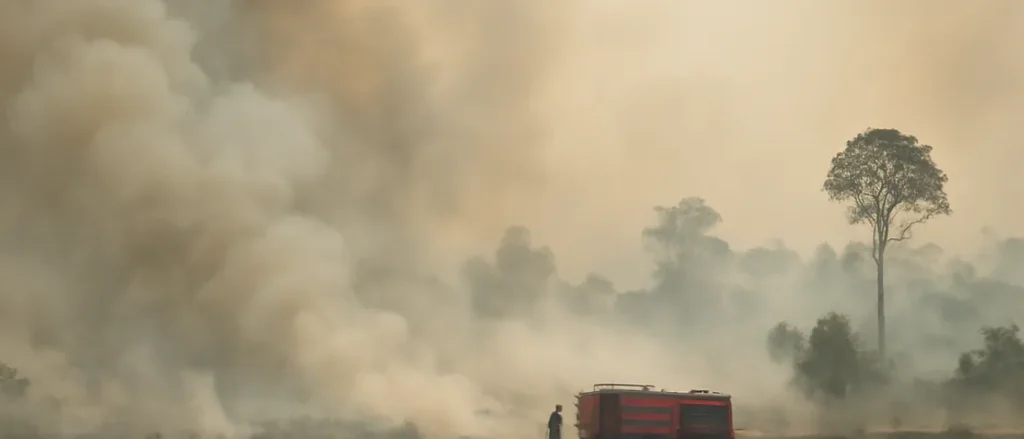

Indonesia is currently grappling with extensive peatland fires that have proven extremely challenging to control. These fires produce thick, toxic smog that blankets the region, severely impacting air quality and public health. The difficulty in putting out these fires stems largely from the nature of peatlands, which are waterlogged, carbon-rich soils that can burn underground for long periods.
Peat fires are particularly persistent because they can smolder beneath the surface, making detection and firefighting efforts complicated and resource-intensive. The dry season exacerbates the problem by lowering water levels in peatlands, increasing their flammability. This combination of environmental factors means that conventional firefighting methods are often ineffective against these subterranean blazes.
The resulting haze from these fires has significant regional consequences, affecting millions of people across Southeast Asia. It poses serious health risks, disrupts daily life, and has economic impacts due to reduced visibility and air pollution. Addressing the peatland fires requires coordinated efforts focused on prevention, sustainable land management, and improved firefighting strategies tailored to the unique challenges of peat ecosystems.